
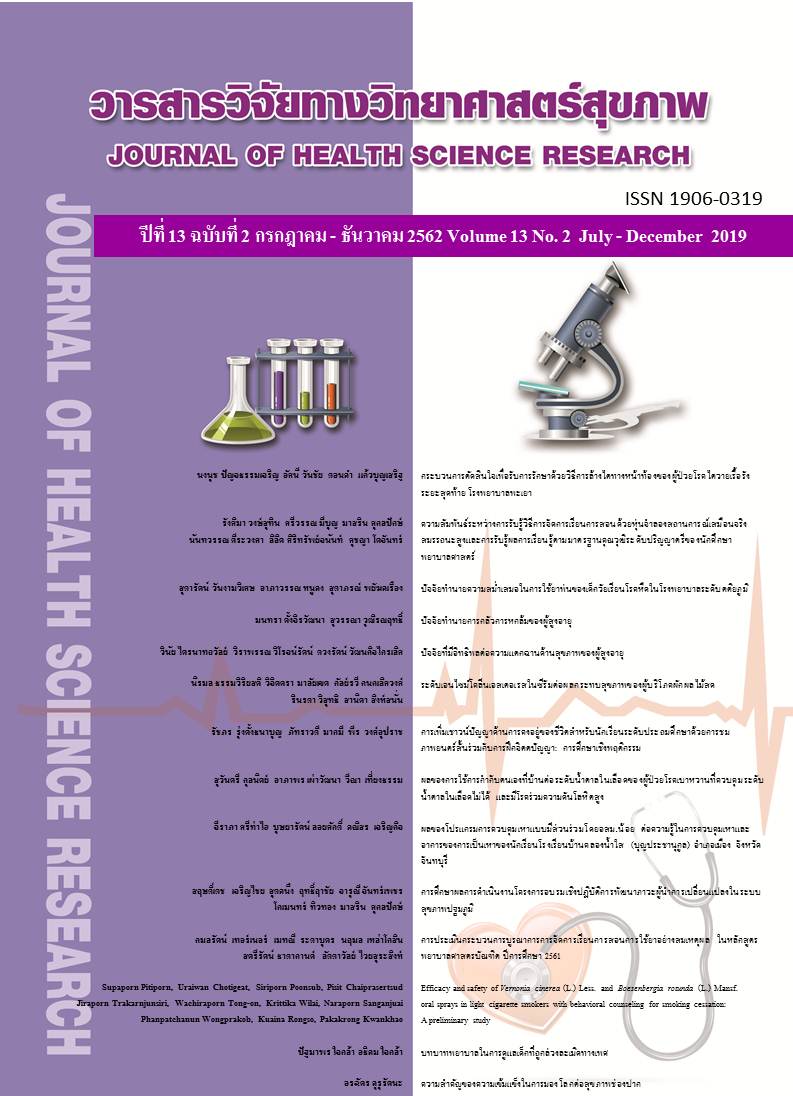
ความสัมพันธ์ระหว่างการรับรู้วิธีการจัดการเรียนการสอนด้วยหุ่นจำลองสถานการณ์เสมือนจริงสมรรถนะสูงและการรับรู้ผลการเรียนรู้ตามมาตรฐานคุณวุฒิระดับปริญญาตรีสาขาพยาบาลศาสตร์ของนักศึกษาพยาบาลศาสตร์ วิทยาลัยพยาบาลบรมราชชนนี จังหวัดนนทบุรี
Article Sidebar
Main Article Content
บทคัดย่อ
การวิจัยนี้มีวัตถุประสงค์เพื่อศึกษาความสัมพันธ์ระหว่างการรับรู้วิธีการจัดการเรียนการสอนด้วยหุ่นจำลองสถานการณ์เสมือนจริงสมรรถนะสูงและการรับรู้ผลการเรียนรู้ตามมาตรฐานคุณวุฒิระดับปริญญาตรีสาขาพยาบาลศาสตร์ของนักศึกษาพยาบาล กลุ่มตัวอย่างเป็นนักศึกษาพยาบาลศาสตร์ ชั้นปีที่ 3 ที่ผ่านการเรียนการสอนโดยใช้หุ่นจำลองสถานการณ์เสมือนจริงสมรรถนะสูง จำนวน 64 คน โดยสุ่มอย่างง่าย เครื่องมือวิจัยเป็นแบบสอบถามการรับรู้วิธีการจัดการเรียนการสอนด้วยหุ่นจำลองสถานการณ์เสมือนจริงสมรรถนะสูงและการรับรู้ผลการเรียนรู้ตามมาตรฐานคุณวุฒิระดับปริญญาตรีสาขาพยาบาลศาสตร์ของนักศึกษาพยาบาลศาสตร์ แบบสอบถามมีค่าสัมประสิทธิ์แอลฟ่าของครอนบาค ที่ระดับ .88 และ .96 ตามลำดับ วิเคราะห์ข้อมูลโดยใช้ สถิติ ร้อยละ ค่าเฉลี่ย ส่วนเบี่ยงเบนมาตรฐาน และสถิติสหสัมพันธ์ของเพียร์สัน
ผลการวิจัย พบว่า การรับรู้วิธีการจัดการเรียนการสอนด้วยหุ่นจำลองสถานการณ์เสมือนจริงสมรรถนะสูง และการรับรู้ผลการเรียนรู้ตามมาตรฐานคุณวุฒิระดับปริญญาตรีสาขาพยาบาลศาสตร์โดยรวมอยู่ในระดับมาก การรับรู้วิธีการจัดการเรียนการสอนด้วยหุ่นจำลองสถานการณ์เสมือนจริงสมรรถนะสูงมีความสัมพันธ์กับการรับรู้ผลการเรียนรู้ตามมาตรฐานคุณวุฒิระดับปริญญาตรี โดยรวมในระดับปานกลาง (r=.58, p<.001) เมื่อพิจารณารายด้านพบว่า การรับรู้วิธีการจัดการเรียนการสอนด้วยหุ่นจำลองสถานการณ์เสมือนจริงมีความสัมพันธ์กับการรับรู้ผลการเรียนรู้ตามมาตรฐานคุณวุฒิระดับปริญญาตรีสาขาพยาบาลศาสตร์ด้านการปฏิบัติการพยาบาลสูงสุด (r=.57, p=.000)
ดังนั้นสมรรถนะด้านการปฏิบัติการพยาบาล สามารถพัฒนาได้โดยสร้างการรับรู้ด้วยวิธีทางการจัดการเรียนการสอนด้วยหุ่นจำลองสถานการณ์เสมือนจริงสมรรถนะสูง
Downloads
Article Details
บทความที่ได้รับการตีพิมพ์เป็นลิขสิทธิ์ของวิทยาลัยพยาบาลบรมราชชนนี จังหวัดนนทบุรี
ข้อความที่ปรากฏในบทความแต่ละเรื่องในวารสารวิชาการเล่มนี้เป็นความคิดเห็นส่วนตัวของผู้เขียนแต่ละท่านไม่เกี่ยวข้องกับวิทยาลัยพยาบาลบรมราชชนนี จังหวัดนนทบุรี และคณาจารย์ท่านอื่น ในวิทยาลัยฯ แต่อย่างใด ความรับผิดชอบองค์ประกอบทั้งหมดของบทความแต่ละเรื่องเป็นของผู้เขียนแต่ละท่าน หากมีความผิดพลาดใด ๆ ผู้เขียนแต่ละท่านจะรับผิดชอบบทความของตนเองแต่ผู้เดียว
เอกสารอ้างอิง
2. Benner P, Sutphen M, Leonard V, Day L. Educating nurses: A call for radical transformation. San Francisco, CA: Jossey-Bass; 2010.
3. Norman, J. (2012). Systematic review of the literature on simulation in nursing education. The ABNF Journal. 23(2): 24-28.
4. Kelly, S. H. (2014). Evaluation methods used in simulation: A survey of faculty and student perceptions in undergraduate nursing program. University of Pittsburgh: Dissertation Doctor of Education.
5. Welman A-M, Spies c. High fidelity simulation in nursing education: Considerations for meaningful learning. 2016; 3(1): 1-16.
6. Shearer J N. Anxiety, nursing students, and simulation: State of the science. Journal Nursing Education. 2016; 55(10): 551-4.
7. Presado M H C V. et al. Learning with high fidelity simulation. Ciência & Saúde Coletiva, 2018; 23(1):51-59.
8. Fisher D, King L. An integrative literature review on preparing nursing students through simulation to recognize and respond to the deteriorating patient. Journal of Advanced Nursing, 2013; 69(11): 2375-88.
9. Lewis R, Strachan A, Smith M M. Is high fidelity simulation the most effective method for the development of non-technical skills in nursing? A review of the current evidence. The Open Nursing Journal, 2012; 6: 82-9.
10. Lewis R, Strachan A, Smith M M. Is high fidelity simulation the most effective method for the development of non-technical skills in nursing? A review of the current evidence. The Open Nursing Journal, 2012; 6: 82-9.
11. Burndt J. Patient safety and simulation in prelicensure nursing education: An integrative review. Teaching and Learning in Nursing. 2014; 9: 16-22.
12. O’Neill S P, Prion S. Using integrated simulation in a nursing program to improve medication administration skills in the pediatric population. Nursing Education Perspective, 2013; 34(3): I48-I53.
13. Nevin M, Neill F, Mulkerrins J. Preparing the nursing student for internship in a pre-registration nursing program: Developing a problem based approach with the use of high fidelity simulation equipment. Nurse Education in Practice. 2014; 14: 154-159.
