
การดูแลผู้สูงอายุโรคปอดอักเสบในชุมชนที่ได้รับการบำบัดด้วยออกซิเจนอัตราการไหลสูง : หลักการพยาบาลและการนำไปใช้
คำสำคัญ:
โรคปอดอักเสบในชุมชน, การบำบัดด้วยออกซิเจนอัตราการไหลสูง, คุณภาพการดูแลผู้ป่วยบทคัดย่อ
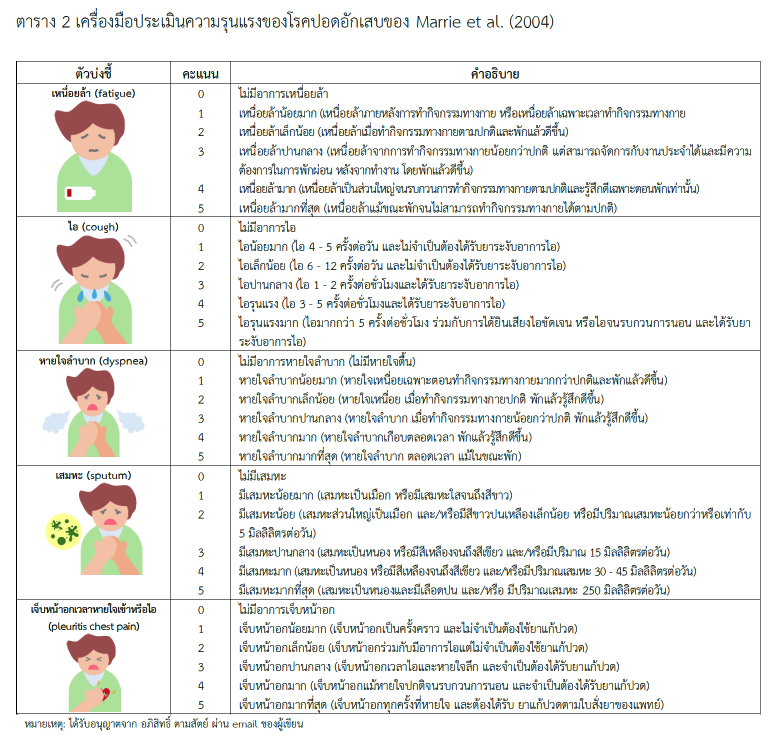
โรคปอดอักเสบในชุมชนเป็นสาเหตุหนึ่งของโรคติดเชื้อที่สำคัญ และเป็นสาเหตุของการเจ็บป่วยและการเสียชีวิตทั่วโลก ทั้งนี้สาเหตุของการเกิดโรคปอดอักเสบในชุมชนเกิดจากการติดเชื้อแบคทีเรีย ได้แก่ Streptococcus pneumoniae, Haemophilus influenzae และ Moraxella catarrhalis การประเมินความรุนแรงของโรคปอดอักเสบในชุมชน สามารถประเมินได้ด้วย CURB-65 ประกอบด้วย ความสับสน ระดับยูเรียในเลือด อัตราการหายใจ ความดันโลหิต และอายุที่มากกว่า 65 ปี ในผู้ป่วยที่เข้ารับการรักษาในโรงพยาบาล อาการแสดงของผู้ป่วยโรคปอดอักเสบในชุมชน จะนำมาด้วยไข้สูง และ
ไอมีเสมหะ หากมีความรุนแรงของโรคปอดอักเสบจะมีภาวะหายใจลำบากและภาวะติดเชื้อตามมา การบำบัดด้วยออกซิเจนอัตราการไหลสูงเป็นทางเลือกหนึ่งในการรักษาผู้ป่วยโรคปอดอักเสบในชุมชนที่มีภาวะพร่องออกซิเจน โดยการช่วยทางเดินหายใจด้วยอัตราการไหลของอากาศสูงถึง 60 ลิตรต่อนาที ร่วมกับให้ความชื้นและอุณหภูมิที่เหมาะสม ให้ความเข้มข้นของออกซิเจนคงที่ผ่านสายรูจมูก ดังนั้น พยาบาลควรมีความรู้เกี่ยวกับความหมายและชนิดของโรคปอดอักเสบ สาเหตุและปัจจัยเสี่ยงโรคปอดอักเสบในชุมชน การประเมินความรุนแรงของโรคปอดอักเสบในชุมชน แนวทางการรักษา แนวคิดและหลักการใช้ออกซิเจนอัตราการไหลสูง สำหรับผู้ป่วยโรคปอดอักเสบในชุมชน เพื่อส่งเสริมคุณภาพการดูแลผู้ป่วยโรคปอดอักเสบในชุมชนที่เข้ารับการรักษาในโรงพยาบาลได้อย่างมีประสิทธิภาพและประสิทธิผล
Downloads
เอกสารอ้างอิง
Carlos, P., Gomes, R., Coelho, J., Chaves, C., Tuna, C., & Louro, M. (2023). CURB-65 and long-term mortality of community-acquired pneumonia: A retrospective study on hospitalized patients. Cureus, 15(3), e36052. https://doi.org/10.7759/cureus.36052
Chintapanyakun, T. & Tamsat, A. (2021). High flow nasal cannula oxygen for adults and elders: From evidence to clinical nursing practice. Journal of The Police Nurses, 13(1), 253–264.
Crotty, K. M., & Yeligar, S. M. (2022). Hyaladherins may be implicated in alcohol-induced susceptibility to bacterial pneumonia. Frontiers in Immunology, 13, 865522. https://doi.org/10.3389/fimmu.2022.865522
Davis, D., Thadhani, J., Choudhary, V., Nausheem, R., Vallejo-Zambrano, C. R., Mohammad Arifuddin, B., . . . Nagarajan, L. (2023). Advancements in the management of severe community-acquired pneumonia: A comprehensive narrative review. Cureus, 15(10), e46893.
Fine, M. J., Auble, T. E., Yealy, D. M., Hanusa, B. H., Weissfeld, L. A., Singer, D. E., . . . Kapoor, W. N. (1997). A prediction rule to identify low-risk patients with community-acquired pneumonia. The New England Journal of Medicine, 336(4), 243–250. https://doi.org/10.1056/NEJM199701233360402
Guglielmo, R. D., Hotz, J. C., Ross, P. A., Deakers, T. W., Diep, J. E. L., Newth, C. J. L., . . . Khemani, R. G. (2022). High-flow nasal cannula reduces effort of breathing but not consistently via positive end-expiratory pressure. Chest, 162(4), 861–871. https://doi.org/10.1016/j.chest.2022.03.008
Jiang, C., Chen, Q., & Xie, M. (2020). Smoking increases the risk of infectious diseases: A narrative review. Tobacco Induced Diseases, 18, 60. https://doi.org/10.18332/tid/123845
Jones, B. E., Herman, D. D., Dela Cruz, C. S., Waterer, G. W., Metlay, J. P., Ruminjo, J. K., . . . Thomson, C. C. (2020). Summary for clinicians: Clinical practice guideline for the diagnosis and treatment of community-acquired pneumonia. Annals of the American Thoracic Society, 17(2), 133–138.
Marrie, T. J., Beecroft, M., Herman-Gnjidic, Z., & Poulin-Costello, M. (2004). Symptom resolution in patients with mycoplasma pneumoniae pneumonia. Canadian Respiratory Journal, 11(8), 573–577. https://doi.org/10.1155/2004/659187
Martin-Loeches, I., Torres, A., Nagavci, B., Aliberti, S., Antonelli, M., Bassetti, M., . . . Wunderink, R. (2023). ERS/ESICM/ ESCMID/ALAT guidelines for the management of severe community-acquired pneumonia. Intensive Care Medicine, 49(6), 615–632.
Mauri, T., Wang, Y. M., Dalla Corte, F., Corcione, N., Spinelli, E., & Pesenti, A. (2019). Nasal high flow: Physiology, efficacy and safety in the acute care setting: A narrative review. Open Access Emergency Medicine, 11, 109-120. https://doi.org/10.2147/OAEM.S180197
Metlay, J. P., Waterer, G. W., Long, A. C., Anzueto, A., Brozek, J., Crothers, K., . . . Whitney, C. G. (2019). Diagnosis and treatment of adults with community-acquired pneumonia. American Journal of Respiratory and Critical Care Medicine, 200(7), e45–e67.
Monro-Somerville, T., Sim, M., Ruddy, J., Vilas, M., & Gillies, M. A. (2017). The effect of high-flow nasal cannula oxygen therapy on mortality and intubation rate in acute respiratory failure: A systematic review and meta-analysis. Critical Care Medicine, 45(4), e449- e456. https://doi.org/10.1097/CCM.0000000000002091
Musher, D. M., & Thorner, A. R. (2014). Community-acquired pneumonia. The New England Journal of Medicine, 371(17), 1619–1628.
Niederman, M. S., & Torres, A. (2022). Severe community-acquired pneumonia. European Respiratory Review, 31(166), 220123. https://doi.org/10.1183/16000617.0123-2022
Nishimura, M. (2015). High-flow nasal cannula oxygen therapy in adults. Journal of Intensive Care, 3(1), 15. https://doi.org/10.1186/s40560-015-0084-5
Nishimura, M. (2016). High-flow nasal cannula oxygen therapy in adults: Physiological benefits, indication, clinical benefits, and adverse effects. Respiratory Care, 61(4), 529-541. https://doi.org/10.4187/respcare.04577
Pates, K. M., Periselneris, J. N., & Brown, J. S. (2023). Pneumonia. Medicine, 51(11), 763-767.
Pornsirirat, T., & Tongyoo, S. (2020). Nursing care for adult patients with acute hypoxic respiratory failure receiving high flow nasal cannula. Siriraj Medical Bulletin, 13(1), 60-68.
Roca, O., Hernández, G., Díaz-Lobato, S., Carratalá, J. M., Gutiérrez, R. M., Masclans, J. R., . . . Spanish Multidisciplinary Group of High Flow Supportive Therapy in Adults (HiSpaFlow). (2016). Current evidence for the effectiveness of heated and humidified high flow nasal cannula supportive therapy in adult patients with respiratory failure. Critical Care, 20(1), 109. https://doi.org/10.1186/s13054-016-1263-z
Tamsat, A. (2022). Assessment of severity of symptoms among patients with pneumonia in medical ward. Journal of Royal Thai Army Nurses, 23(1), 483-489.
Tucker, E., O'Sullivan, M., & Waddell, L. (2024). Controversies in the management of community-acquired pneumonia in adults. Australian Prescriber, 47(3), 80-84. https://doi.org/10.18773/austprescr.2024.024
Vaughn, V. M., Dickson, R. P., Horowitz, J. K., & Flanders, S. A. (2024). Community-acquired pneumonia: A review. JAMA, 332(15), 1282–1295.
Zhou, X., Liu, J., Pan, J., Xu, Z., & Xu, J. (2022). The ROX index as a predictor of high-flow nasal cannula outcome in pneumonia patients with acute hypoxemic respiratory failure: A systematic review and meta-analysis. BMC Pulmonary Medicine, 22(1), 121. https://doi.org/10.1186/s12890-022-01914-2
ดาวน์โหลด
เผยแพร่แล้ว
รูปแบบการอ้างอิง
ฉบับ
ประเภทบทความ
สัญญาอนุญาต
ลิขสิทธิ์ (c) 2025 วารสารพยาบาลตำรวจและวิทยาศาสตร์สุขภาพ

อนุญาตภายใต้เงื่อนไข Creative Commons Attribution-NonCommercial-NoDerivatives 4.0 International License.
ผลงานที่ได้ตีพิมพ์แล้วจะเป็นลิขสิทธิ์ของวารสารพยาบาลตำรวจ