
ENHANCING THE EFFECTIVENESS OF FORENSIC PSYCHIATRIC OPERATIONS FOR PREVENTING RECIDIVISM AMONG PSYCHIATRIC PATIENTS
Keywords:
psychiatric patients, forensic psychiatry, recidivismAbstract
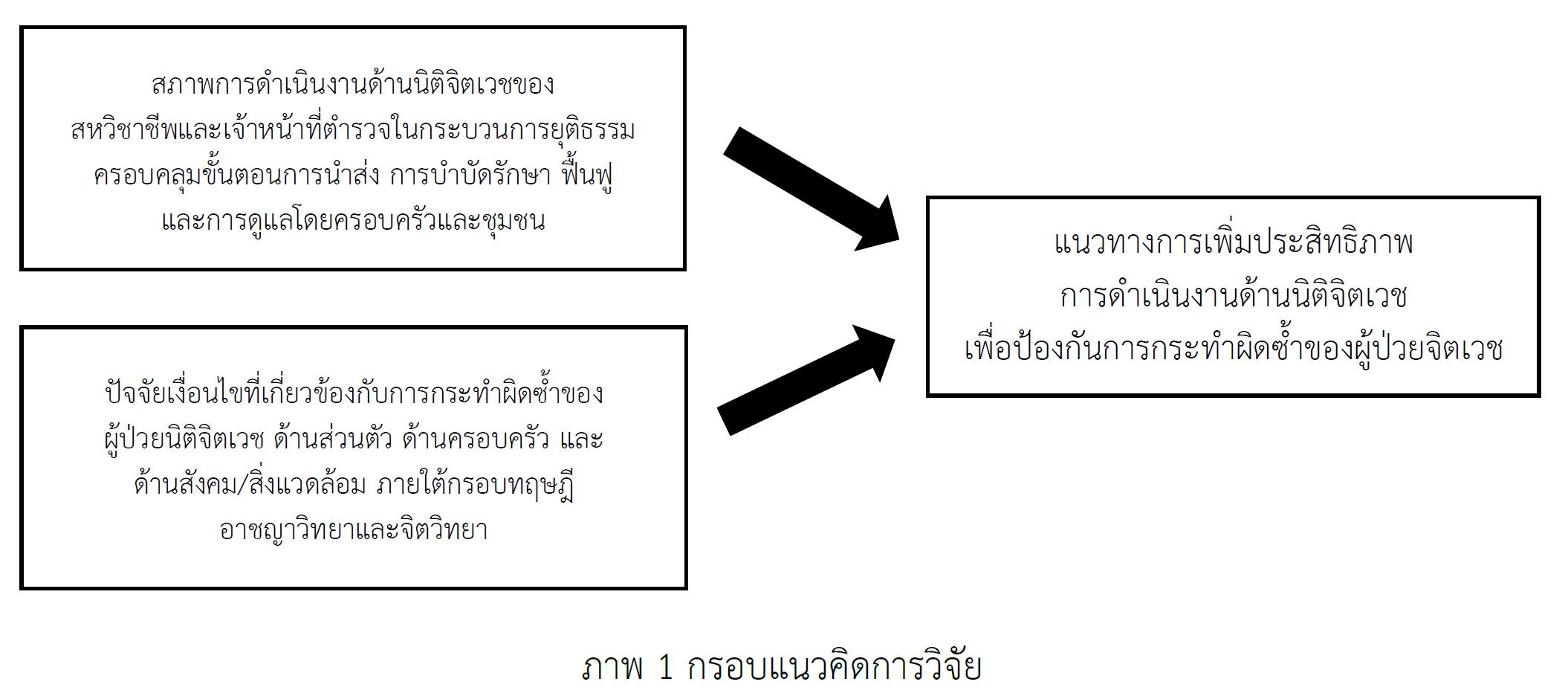
At present, the number of crimes committed by psychiatric patients is increasing, with many patients repeating offenses they have committed in the past. Enhancing the effectiveness of operations aimed at preventing recidivism is therefore critical in addressing this issue. This study aimed to examine the factors related to repeated offenses by psychiatric patients, investigate the operational context and obstacles in forensic psychiatric work within psychiatric hospitals, and explore strategies to improve the effectiveness of recidivism prevention. A qualitative research methodology was employed using in-depth interviews with 13 key informants, including multidisciplinary teams from psychiatric hospitals, police officers, and family members or caregivers. Data were analyzed using qualitative content analysis.
The research findings revealed that repeated offenses were primarily associated with medication discontinuation, lack of continuity in treatment, insufficient caregiving skills among family members, and unsupportive social or environmental contexts. Forensic psychiatric services in hospitals cover both outpatient and inpatient care, focusing on patients’ safe reintegration into society. The main challenges include shortages of mental health professionals, the need for collaborative networks, and substance abuse that exacerbates psychiatric symptoms. Recommended preventive strategies include establishing forensic psychiatric units to prepare families, caregivers, neighbors, community leaders, and local networks, along with promoting positive attitudes and accurate understanding of mental health services among the public.
Downloads
References
Anckarsäter, H., Radovic, S., Svennerlind, C., Höglund, P., & Radovic, F. (2009). Mental disorder is a cause of crime: The cornerstone of forensic psychiatry. International Journal of Law and Psychiatry, 32(6), 342–347. https://doi.org/10.1016/j.ijlp.2009.09.002
Enfield, R. E. (2010). Sullivan’s interpersonal theory. In I. B. Weiner & W. E. Craighead (Eds.), The corsini encyclopedia of psychology (4th ed.). John Wiley & Sons. https://doi.org/10.1002/9780470479216
Jennawasin, S. (2011). Forensic psychiatry. Retrieved from https://www.rama.mahidol.ac.th/ramamental/sites/default/files/public/pdf/Forensic%20psychiatry.pdf
Kaewkangwan, S. (2018). Theory of personality psychology (17th ed.). Bangkok: The Villagers Publishing House.
Khantee, P. (2015). Criminological theory and research principles and applied policy. Rangsit University.
Kongsakon, R. (2010). Textbook of Forensic Psychiatry. Department of Psychiatry. Mahidol University.
Merton, R. K. (1938). Social structure and anomie. American Sociological Review, 3(5), 672-682.
McCoy, T., & Pugh, M. (2014). Strain Theory. Retrieved from https://doi.org/10.1002/9781118517383.wbeccj104
Sirinphanu, P. (2013). Basic concepts and theories related to psychiatric nursing. Chulalongkorn University Press.
Sripa, K. (2020). Criminal psychology: Criminal Behavior analysis, Mental disorders and Homicide. Bhumi.
Stuart, G. W. (2009). Principles and practice of psychiatric nursing (9th ed.). St. Louis: Mosby.
Thaiwong, K. (2022). Development of preventive measures of recidivism in forensic psychiatric patients (Thesis master degree of arts in criminology and criminal justice). Department Of Sociology and Anthropology, Faculty of Political Science, Chulalongkorn University, Bangkok.
White, M. D. (2018). The neglected nuance of Beccaria’s theory of punishment. European Journal of Law and Economics, 46(3), 315–329. https://doi.org/10.1007/S10657-016-9530-7
Downloads
Published
How to Cite
Issue
Section
License
Copyright (c) 2025 JOURNAL OF THE POLICE NURSES AND HEALTH SCIENCE

This work is licensed under a Creative Commons Attribution-NonCommercial-NoDerivatives 4.0 International License.
ผลงานที่ได้ตีพิมพ์แล้วจะเป็นลิขสิทธิ์ของวารสารพยาบาลตำรวจ