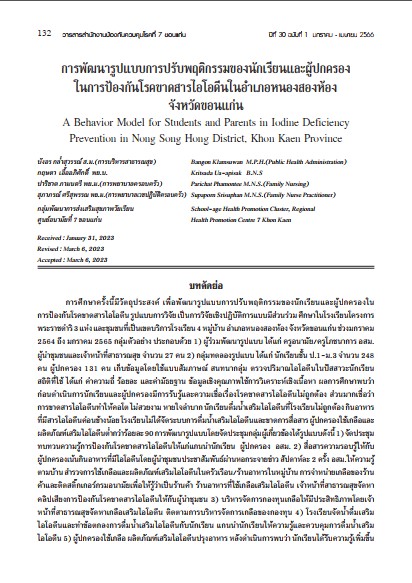
การพัฒนารูปแบบการปรับพฤติกรรมของนักเรียนและผู้ปกครองในการป้องกันโรคขาดสารไอโอดีนในอำเภอหนองสองห้อง จังหวัดขอนแก่น
คำสำคัญ:
โรคขาดสารไอโอดีน, การปรับพฤติกรรมสุขภาพ, สุขภาพนักเรียนบทคัดย่อ
การศึกษาครั้งนี้มีวัตถุประสงค์ เพื่อพัฒนารูปแบบการปรับพืฤติกรรมของนักเรียนและผู้ปกครองในการป้องกันโรคขาดสารไอโอดีน รูปแบบการวิจัย เป็นการวิจัยเชิงปฏิบัติการแบบมีส่วนร่วม ศึกษาในโรงเรียนโครงการพระราชดำริ 3 แห่ง และชุมชน ุ ที่เป็นเขตบริการโรงเรียน 4 หมู่บ้าน อำเภอหนองสองห้อง จังหวัดขอนแก่น ช่วงมกราคม 2564 ถึง มกราคม 2565 กลุ่มตัวอย่าง ประกอบด้วย 1) ผู้ร่วมพัฒนารูปแบบ ได้แก่ ครูอนามัย/ครูโภชนาการ อสม.ผู้นำชุมชนีและเจ้าหน้าที่สาธารณสุข จำนวน 27 คน 2) กลุ่มทดลองรูปแบบ ได้แก่ นักเรียนชั้น ป.1-ม.3 จำนวน 248 คน ผู้ปกครอง 131 คน เก็บข้อมูลโดยใช้แบบสัมภาษณ์ สนทนากลุ่ม ตรวจปริมาณไอโอดีนในปัสสาวะนักเรียน สถิติที่ใช้ ได้แก่ ค่าความถี่ ร้อยละ และค่ามัธยฐาน ข้อมูลเชิงคุณภาพใช้การวิเคราะห์เชิงเนี้อหา ผลการศึกษาพบว่า ก่อนดำเนินการนักเรียนและผู้ปกครองมีการรับรู้และความเชื่อเรื่องโรคขาดสารไอโอดีนไม่ถูกต้อง ส่วนมากเชื่อว่าการขาดสารไอโอดีนทำให้คอโต ไม่สวยงาม หายใจลำบาก นักเรียนดื่มน้ำเสริมไอโอดีนที่โรงเรียนไม่ถูกต้อง กินอาหารที่มีสารไอโอดีนค่อนข้างน้อย โรงเรียนไม่ได้จัดระบบการ ้ ดื่มน้ำเสริมไอโอดีนและขาดการสื่อสาร ผู้ปกครองใช้เกลือและผู้ลิตภัณฑ์เสริมไอโอดีนต่ำกว่าร้อยละ 90 การพัฒนารูปแบบโดยจัดประชุม กลุ่มผู้เกี่ยวข้องได้รูปแบบดังนี้ 1) จัดประชุมทบทวนความรู้การป้องกันโรคขาดสารไอโอดีนให้แก่แกนนำนักเรียน ผู้ปกครอง อสม. 2) สื่อสารความีรอบรู้ให้ก้บผู้ปกครองเน้นกินอาหารที่มีไอโอดีนโดยผู้นำชุมชนประชาสัมพันธ์ผ่านหอกระจายข่าว สัปดาห์ละ 2 ครั้ง อสม.ให้ความีรู้ตามบ้าน สำรวจการใช้เกลือและผลิตภัณฑ์เสริมไอโอดีนในครัวเรือน/ร้านอาหารในหมู่บ้าน การจำหน่ายเกลือของร้านค้าและติดสติกเกอร์กรมอนามัยเพื่อให้รู้ว่าเป็นร้านค้า ร้านอาหารที่ใช้เกลือเสริมไอโอดีนเจ้าหน้าที่่สาธารณสุขจัดหาคลิปเสียงการป้องกันโรคขาดสารไอโอดีนให้ก้บผู้นำชุมชน 3) บริหารจัดการกองทุนเกลือให้มีประสิทธิภาพโดยเจ้าหน้าที่สาธารณสุขจัดหาเกลือเสริมไอโอดีน ติดตามการบริหารจัดการเกลือของกองทุน 4) โรงเรียนจัดน้ำดื่มเสริมไอโอดีนและทำข้อตกลงการดื่มน้ำเสริมไอโอดีนกับนักเรียน แกนนำนักเรียนให้ความรู้และควบคุมการดื่มน้ำเสริมไอโอดีน 5) ผู้ปกครองใช้เกลือ ผลิตภัณฑ์เสริมไอโอดีนปรุงอาหาร หลังดำเนินการพบว่า นักเรียนได้ร้บความรูปเพิ่มขึ้น จากร้อยละ 75.5 เป็นร้อยละ 95.1 เชื่อว่าโรคขาดสารไอโอดีนเป็นได้กับทุกกลุ่มวัยมีผลกระทบต่อสุขภาพมากกว่าแค่คอโต ไม่สวย และกลัวว่าตนเองจะเจ็บป่วยด้วยโรคคอพอกเพื่มขึ้นจากร้อยละ 37.9 เป็นร้อยละ 72.8 กินอาหารเช้าเพิ่มขึ้นจากร้อยละ 41.1 เป็นร้อยละ 50.5 กินอาหารที่มีสารไอโอดีนเพิ่มขึ้น เช่น กินไข่ 4-7 ฟอง/สัปดาห์เพิ่มขึ้นจากร้อยละ 49.9 เป็นร้อยละ 60.8 ดื่มนมวันละ 1 กล่อง ร้อยละ 38.7 เพิ่มเป็นร้อยละ 94.8 กินอาหารทะเล 2-3 วัน/สัปดาห์ จากร้อยละ 32.5 เพิ่มเป็นร้อยละ 65.6 ส่วนผู้ปกครองมีความรู้เรื่องโรคขาดสารไอโอดีนเพิ่มขึ้นจากร้อยละ 75.6 เป็นร้อยละ 95.0 รับรู้ว่าเกลือเสริมไอโอดีนและอาหารทะเลช่วยป้องกันโรคขาดสารไอโอดีนทุกคร้วเรือนมีเกลือเสริมไอโอดีน ในชุมชนมีเกลือเสริมไอโอดีนจำหน่ายสม่ำเสมอมากขึ้นร้อยละ 72.2 และพบว่า ค่ามัธยฐานระดับไอโอดีนในปัสสาวะนักเรียนอยู่ในระดับเพียงพอทั้งกอนและหลัง (ค่ามัธยฐานก่อน 240.3 หลัง 207 ไมโครกรัม/ลิตร)
Downloads
เอกสารอ้างอิง
สำนักโภชนาการ. การควบคุมและป้องกันโรคขาดสารไอโอดีน : เส้นทางสู่ความยั่งยืน. กรุงเทพฯ: สามเจริญพาณิชย์; 2559.
Hetzel BS. The story of iodine deficiency: an international challenge in nutrition. New Delhi : Oxford University Press; 1989.
สำนักโภชนาการ. แนวทางการดำเนินงานการควบคุมและป้องกันโรคขาดสารไอโอดีนสำหรับเจ้าหน้าที่สาธารณสุข 2563. กรุงเทพฯ: สามเจริญพาณิชย์; 2562.
สำนักโภชนาการ. รายงานการดำเนีนงานโครงการควบคุมและป้องกันโรคขาดสารไอโอดีน (พฤษภาคม 2561-มีถุนายน 2563). กรุงเทพฯ: สามเจริญพาณิชย์; 2563.
กรมสุขภาพจิต.บทความด้านสุขภาพจิตเด็กไทยมีไอคิวต่ำลงจริงหรือ? [อินเทอร์เน็ต]. 2562 [เข้าถึงเมื่อ 20 ตุลาคม 2564]. เข้าถึงได้จาก: https://dmh.go.th/news/view.asp?id=2273
ชยพร พรหมสิงห์, และคณะ. สภาวะสุขภาพของประชาชนในเขตเทศบาลตำบลโคกศรี อำเภอยางตลาด จังหวัดกาฬสินธุ์. ขอนแก่น: ศูนย์อนามัยที่ 6 ขอนแก่น; 2557.
สุวิชชา สังข์ทอง,บังอร กล่ำสุวรรณ์, สุภาภรณ์ ศรีสุพรรณ. ภาวะสุขภาพเด็กวัยเรียนโรงเรียนในตำบลต้นแบบบูรณาการส่งเสริมสุขภาพ 5 กลุ่มวัยและอนามัยสิ่งแวดล้อมศูนย์อนามัยที่ 7. ขอนแก่น : ศูนย์อนามัยที่ 7 ขอนแก่น; 2562.
ปาริชาต ภามนตรี, สุภาภรณ์ ศรีสุพรรณ, บ้งอร กล่ำสุวรรณ์, สุวิชชา สังข์ทอง. ภาวะสุขภาพและพฤติกรรมสุขภาพของนักเรียนในโรงเรียนโครงการพระราชิดำริพื้นที่รับผิดชอบศูนย์อนามัยที่ 7. ขอนแก่น : ศูนย์อนามัยที่ 7 ขอนแก่น; 2562.
กฤษดา เอื้ออภิศักดิ์, จารุรัตน์ จิณะมูล, ชนิดาภา วังศ์รักษา, อภิรดี ศรีประทุม. การพัฒนารูปแบบการควบคุมโรคขาดสารไอโอดีนในโรงเรียนโครงการพระราชดำริ อำเภอหนองสองห้อง จังหวัดขอนแก่น. วารสาร ศอ.7 2021; 13: 35-51.
Kemmis S, McTaggart R. The Action Research Planner. Australia: Deakin University Press; 1988.
อารยา องค์เอี่ยม, พงศ์ธารา วิจิตเวชไพศาล. การตรวจสอบคุณภาพเครื่องมือวิจัย. วิสัญญีสาร 256; 44(1): 36-42.
บุญชม ศรีสะอาด. การวิจัยเบื้องต้น. พิมพ์ครั้งที่ 2. กรุงเทพฯ : สุวีริยาสาส์น; 2553.
ดาวน์โหลด
เผยแพร่แล้ว
รูปแบบการอ้างอิง
ฉบับ
ประเภทบทความ
สัญญาอนุญาต
ลิขสิทธิ์ (c) 2023 สำนักงานป้องกันควบคุมโรคที่7 จังหวัดขอนแก่น

อนุญาตภายใต้เงื่อนไข Creative Commons Attribution-NonCommercial-NoDerivatives 4.0 International License.
ความรับผิดชอบ
บทความที่ลงพิมพ์ในวารสารสำนักงานป้องกันควบคุมโรคที่ 7 ขอนแก่น ถือเป็นผลงานทางวิชาการหรือวิจัย และวิเคราะห์ตลอดจนเป็นความเห็นส่วนตัวของผู้เขียน ไม่ใช่ความเห็นของวารสารสำนักงาน ป้องกันควบคุมโรคที่ 7 จังหวัดขอนแก่น หรือ ของกองบรรณาธิการแต่ประการใด ผู้เขียนต้องรับผิดชอบต่อบทความของตนเอง
ลิขสิทธ์บทความ
บทความที่ได้รับการตีพิมพ์จะถือเป็นลิขสิทธิ์ของสำนักงานป้องกันตวบคุมโรคที่ 7 จังหวัดขอนแก่น