
การวิเคราะห์สถานการณ์การบริหารความเสี่ยงทางคลินิกงานบริการหอผู้ป่วยในโรงพยาบาลเอกชนแห่งหนึ่ง
คำสำคัญ:
การวิเคราะห์สถานการณ์, การบริหารความเสี่ยงทางคลินิกบทคัดย่อ
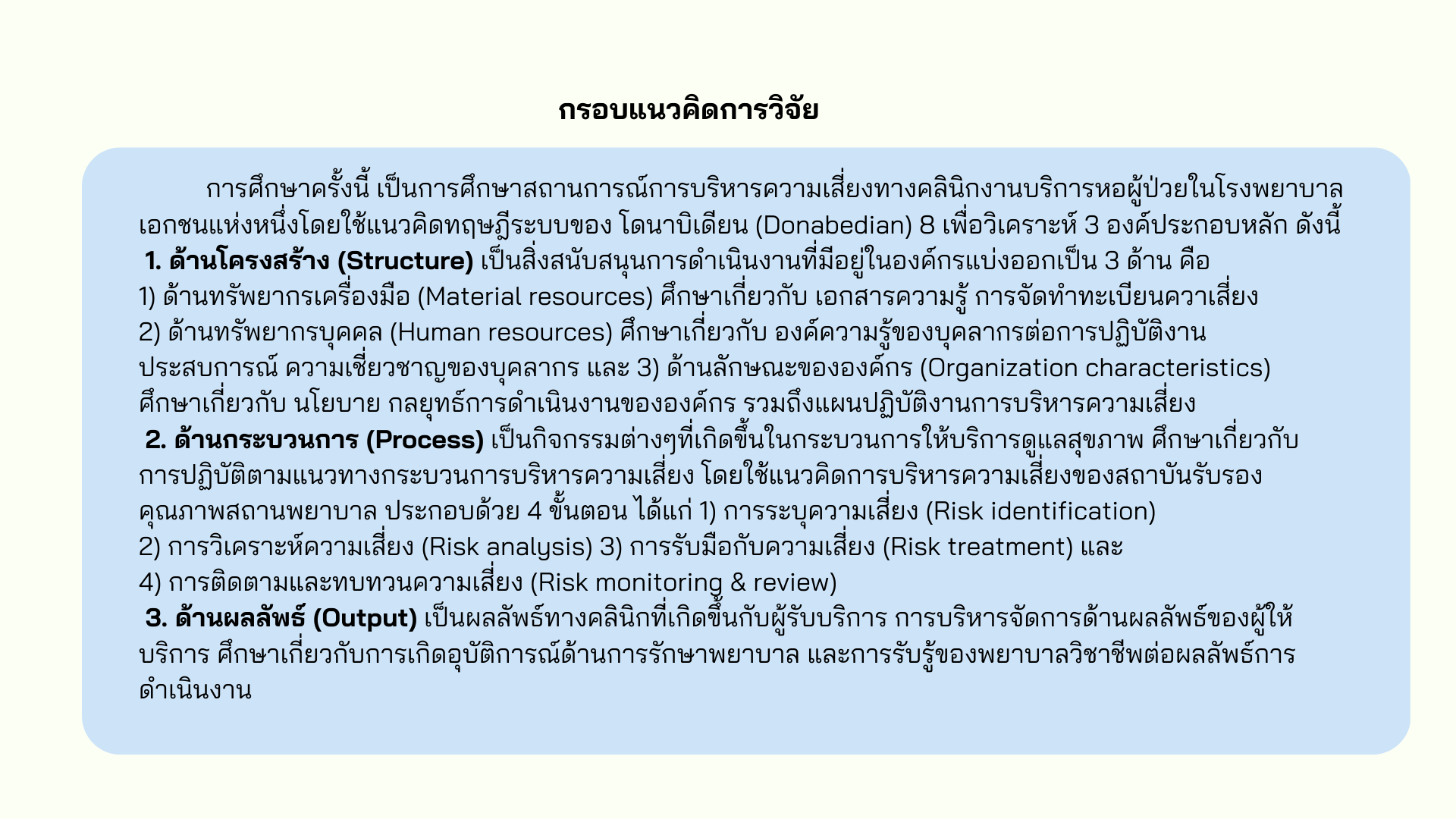
ความเสี่ยงในการดูแลผู้ป่วยเป็นความเสี่ยงสำคัญ การบริหารความเสี่ยงที่มีประสิทธิภาพ ส่งผลให้ผู้รับบริการมีความปลอดภัย องค์กรเกิดคุณภาพการดูแลผู้ป่วย การวิจัยครั้งนี้เป็นการวิจัยเชิงคุณภาพ เพื่อศึกษาสถานการณ์การบริหารความเสี่ยงทางคลินิกงานบริการหอผู้ป่วยในของโรงพยาบาลเอกชน ใช้กรอบแนวคิดทฤษฎีระบบของ โดนาบิเดียน ด้านโครงสร้าง ด้านกระบวนการ และด้านผลลัพธ์ ร่วมกับแนวคิดกระบวนการบริหารความเสี่ยงของสถาบันรับรองคุณภาพสถานพยาบาล (องค์กรมหาชน) ผู้ให้ข้อมูลเป็นพยาบาลวิชาชีพทั้งหมด 18 คน เครื่องมือที่ใช้ในการศึกษาประกอบด้วย แบบสัมภาษณ์กึ่งโครงสร้าง สัมภาษณ์เป็นรายบุคคล วิเคราะห์ข้อมูลจากการวิเคราะห์เนื้อหาเคราะห์ข้อมูลส่วนบุคคลโดยใช้สถิติ เชิงพรรณนา
ผลการศึกษา: ด้านโครงสร้าง พบว่า นโยบายการบริหารความเสี่ยงมีความครอบคลุม แต่การสื่อสารนโยบายสู่ผู้ปฏิบัติมีประสิทธิภาพไม่เพียงพอ บุคลากรยังขาดความรู้การบริการความเสี่ยง ด้านกระบวนการบริหารความเสี่ยง พบว่าการระบุความเสี่ยงมาจากขณะปฏิบัติงานสูงสุด การค้นหาความเสี่ยงเชิงรุก ยังไม่ครอบคลุมทุกด้าน การวิเคราะห์ และการรับมือความเสี่ยงมีการแก้ไขเชิงระบบไม่ครอบคลุม การติดตาม และการทบทวนความเสี่ยงปฏิบัติได้ไม่ต่อเนื่อง ด้านผลลัพธ์ พบว่า ด้านการบริหารความเสี่ยงทางคลินิกที่สำคัญ ยังไม่บรรลุเป้าหมาย สาเหตุจากการปฏิบัติตามแนวทางไม่ครบทุกขั้นตอน ภาระงานที่เพิ่มขึ้น ขาดความตระหนักในการปฏิบัติงาน และมีความรู้ไม่เพียงพอ จึงควรออกแบบการบริหารความเสี่ยง ที่มีการค้นหาความเสี่ยงเชิงรุก การพัฒนาสมรรถนะบุคลากรด้านความรู้ทางคลินิก ควบคู่กับการบริหารความเสี่ยง และหมุนวงล้อกระบวนการบริหารความเสี่ยงให้เกิดการปฏิบัติอย่างต่อเนื่อง เพื่อคุณภาพในการดูแลผู้ป่วย ผลการศึกษานี้ สามารถใช้เป็นข้อมูลสำหรับผู้บริหารโรงพยาบาล ผู้บริหารทางการพยาบาลทุกระดับ เพื่อเป็นแนวทางในการออกแบบการบริหารความเสี่ยงให้เกิดประสิทธิภาพ ทั้งด้านโครงสร้างการบริหารความเสี่ยง กระบวนการบริหารความเสี่ยง และการติดตามผลลัพธ์การดำเนินงานอย่างต่อเนื่องต่อไป
เอกสารอ้างอิง
สถาบันรับรองคุณภาพสถานพยาบาล (องค์การมหาชน). รายงานประจำปี 2565 สถาบันรับรองคุณภาพสถานพยาบาล (องค์การมหาชน). นนทบุรี: ดีเซมเบอรี่; 2565.
ภัทริษา ชุมพล, พิมพ์พรรณ ศิลปะสุวรรณ, ดุสิต สุจิรารัตน์, พรชัย สิทธิศรัณย์กุล. วัฒนธรรมความปลอดภัยในองค์กรกับการปฏิบัติงานพยาบาลตามมาตรฐานความปลอดภัยตามการรับรู้ของพยาบาลวิชาชีพที่มีต่อการเกิด และการรายงานอุบัติการณ์เหตุการณ์ไม่พึงประสงค์และเหตุการณ์เกือบพลาด. วารสารกรมการแพทย์ 2561;43:142-47.
กานต์พิชา จันทร์หงษ์, อรอนงค์ วิชัยคำ, ฐิติณัฏฐ์ อัคคะเดชอนันต์. การวิเคราะห์สถานการณ์การบริหารความเสี่ยงหอผู้ป่วยอายุรกรรมหญิงในโรงพยาบาลแห่งหนึ่งในเขตภาคเหนือตอนล่างของประเทศไทย. วารสารพยาบาล 2563;47:406-16.
บังอร เขื่อนคำ, สมใจ ศิระกมล, บุญพิชชา จิตต์ภักดี. การวิเคราะห์สถานการณ์การรายงานอุบัติการณ์ความเสี่ยงในหอผู้ป่วยหนักอายุรกรรม 1 โรงพยาบาลนครพิงค์ จังหวัดเชียงใหม่. พยาบาลสาร 2563; 47:337-49.
Plaza MG, Caballero VG, Ejarque MD, Grau CF. Association of nursing practice environment on reported adverse events in private management hospitals: A cross-sectional study. J Clin Nurs 2021;30:2990-3000.
Kim IS, Park MJ, Park MY, Yoo H, Choi J. Factors effecting the perception of importance and practice of patient safety management among hospital employees in Korea. Asian Nurs Res 2013;7:26-32.
Suprin M, Chow A, Pillwein M, Rowe J, Ryan M, Rygiel-Zbikowska B, Tomlin I. Quality risk management framework: guidance for successful implementation of risk management in clinical development. Ther Innov Regul Sci 2019;53:36-44.
Donabedian A. Evaluating the quality of medical care. Milbank Q 2015;83:691-729.
สถาบันรับรองคุณภาพสถานพยาบาล (องค์การมหาชน). มาตรฐานโรงพยาบาลและบริการสุขภาพ (ฉบับที่ 5). พิมพ์ครั้งที่ 2. นนทบุรี: ก.การพิมพ์เทียนกวง; 2564.
วิจิตรา สีแดงก่ำ. การบริหารความเสี่ยงขององค์กรในศตวรรษที่ 21. รายงานการประชุม Graduate School Conference 2561;3:141-51.
จีรนันท์ ชานนท์, ประจักร บัวผัน. ปัจจัยแห่งความสำเร็จและวัฒนธรรมความปลอดภัยขององค์การที่มีผลต่อการบริหารความเสี่ยงของพยาบาลวิชาชีพที่ปฏิบัติงานในหอผู้ป่วยโรงพยาบาลขอนแก่น.วารสารวิจัย มข. (ฉบับบัณฑิตศึกษา) 2564;21:216-27.
รจนา เล้าบัณฑิต, ปริญญาภรณ์ ธนะบุญปวง. ปัจจัยที่สัมพันธ์กับการบริหารความเสี่ยงทางคลินิก ของพยาบาลวิชาชีพในโรงพยาบาลสามร้อยยอดจังหวัดประจวบคีรีขันธ์. วารสารวิจัยเพื่อการส่งเสริมสุขภาพ และคุณภาพชีวิต 2564;1:25-36.
สุภา นาแซง, ทัศนีย์ ธนอนันต์ตระกูล, บุษบา จันทะราช, ภัทริกา ศิริสถิต, อรธนา บุญทองดี. ปัจจัยแห่งความสำเร็จในการบริหารความเสี่ยงของโรงพยาบาลอุดรธานี จังหวัดอุดรธานี. วารสารวิจัยและนวัตกรรมการอาชีวศึกษา 2564;5:168-77.
รุ่งนภา ศรีดอกไม้. Risk Management Tools: Risk Register. ถอดบทเรียนงานประชุมวิชาการ HA National Forum ครั้งที่ 20; 13-15 มีนาคม 2562; ศูนย์การประชุม Impact Form เมืองทองธานี. นนทบุรี: ม.ป.ท.; 2562.
จิราวรรณ รุ่งเรืองวารินทร์, พรพิมล พลอยประเสริฐ, สมทรง บุตรชีวัน.การพัฒนาระบบการจัดการความเสี่ยงกลุ่มการพยาบาล โรงพยาบาลพระนครศรีอยุธยา. วารสารสมาคมเวชศาสตร์ป้องกันแห่งประเทศไทย 2560;7:24-36.
นิตยา ดีอินทร์, สมพันธ์ หิญชีระนันทน์, สุคนธ์ ไข่แก้ว.ประสิทธิผลของระบบการบริหารความเสี่ยงทางการพยาบาลที่โรงพยาบาลเอกชนแห่งหนึ่งในจังหวัดปทุมธานี. วารสารโรงพยาบาลเจริญกรุงประชารักษ์ 2560;14:11-24.
สุชานาฏ มูสิการัตน์. การพัฒนารูปแบบการบริหารความเสี่ยงของคลินิก หู คอ จมูก โรงพยาบาลสงขลานครินทร์ [วิทยานิพนธ์หลักสูตรพยาบาลศาสตรมหาบัณฑิต] สงขลา: มหาวิทยาลัยสงขลานครินทร์; 2565.
ดาวน์โหลด
เผยแพร่แล้ว
รูปแบบการอ้างอิง
ฉบับ
ประเภทบทความ
สัญญาอนุญาต
ลิขสิทธิ์ (c) 2024 วิทยาลัยพยาบาลบรมราชชนนี สรรพสิทธิประสงค์

อนุญาตภายใต้เงื่อนไข Creative Commons Attribution-NonCommercial-NoDerivatives 4.0 International License.
บทความที่ได้รับการตีพิมพ์เป็นลิขสิทธิ์ของวารสารวิทยาศาสตร์สุขภาพ วิทยาลัยพยาบาลบรมราชชนนี สรรพสิทธิประสงค์ ข้อความที่ปรากฏในบทความแต่ละเรื่องเป็นความคิดเห็นส่วนตัวของผู้เขียนแต่ละท่านไม่เกี่ยวข้องกับวิทยาลัยพยาบาลบรมราชชนนี สรรพสิทธิประสงค์ และคณาจารย์ท่านอื่นๆ ในวิทยาลัยพยาบาลฯ ความรับผิดชอบเกี่ยวกับบทความแต่ละเรื่องผู้เขียนจะรับผิดชอบของตนเอง