
The Factors Related to the Quality of Sleep in Nursing Students
Keywords:
sleeping quality, stress, nursing studentsAbstract
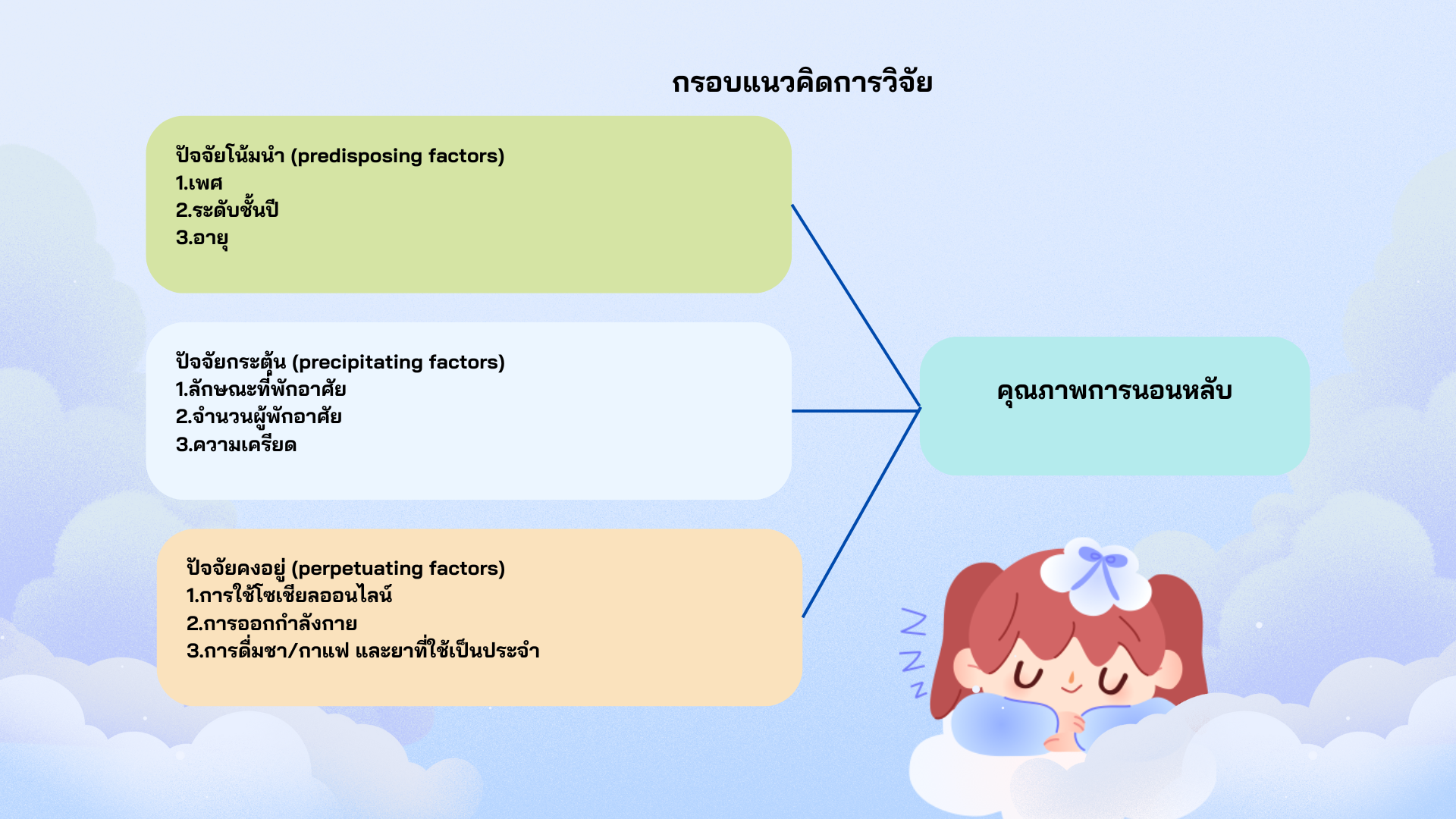
This research was a descriptive study on the quality of sleep and factors related to the quality of sleep in nursing students at a Public College of Nursing in academic year 2021. The 304 participants lived in the dormitory at the college from April to September 2020. Here were four research instruments, consisting of 1) an individual data sheet; 2) a stress measurement from the Department of Mental Health (SPST- 20) with 20 items; 3) a Lifestyle Questionnaire with four parts that covered predisposing factors (gender, age, and year class), precipitating factors (accommodation, number of residents, and stress), and perpetuating factors(using media online, exercising, drinking tea/coffee, and regularly using drugs); and 4) the Sleep Quality Assessment Form (Pittsburgh et al.: PSQI) in Thai. The research tool had a Cronbach alpha of .90. Data analysis was performed using frequencies, percentages, mean scores, and standard deviations. Correlations were analyzed using Spearman and Pearson correction coefficients between the predisposing, precipitating, and perpetuating factors for sleep quality.
Results: The sample consisted of 304 students, most were female (95.4%). The average age was 20.6 years (S.D.) and had high levels (42%) of stress. They used online social media for an average of 5.5 hours daily, did not exercise (45.4%), drank at least a cup of tea/coffee per day (60.5%), and there were 2 participants who took regularly prescribed medications, namely Nortriptyline and Diazepam. Most of the participants had poor sleep quality (75.3%). Age and year class had a statistically significant negative correlation with poor sleep quality (r=-.132, p .02 and r=-.141, p. 014, respectively). Drinking tea/coffee and stress were positively statistically significantly correlated with poor sleeping quality (r=.17, p .003 and r=.408, p= .00, respectively). From these results it can be determined that educational institutions should organize programs or activities that help and promote sleep quality for students and help them find ways to deal with stress factors that affect the quality of future graduates.
References
Potaros D. Factors Related to Sleeping Quality of Nursing Students. The Journal of Faculty of Nursing Burapha University 2017;25:25-36.
Kittivoravitkul P. Smart Respiratory Care: Promoting Good Sleep in ICU. In: Sathavorn D, Piyavejvirat K, editors. The Smart ICU. Bankok: Beyond Enterprize; 2014. P. 261-73.
Yamma C, Lueboonthavatchai P. Sleep Problems, Fatigue and WorkEfficiency among Registered Nurse at King Chulalongkorn Memorial Hospital. J Psychiatr Assoc Thailand 2013;58:183-96.
Welle P, Graf HM. Effective lifestyle habits and coping strategies for stress tolerance among college students. Am J Health Educ 2011;42:96-105.
Lege D, Guilleminault C, Bader G, Levy E, Paillard M. Medical and socio-professional impact of insomnia. Sleep 2002;25:621-5.
Gaultney JF.The prevalence of sleep disorders in college students: Impact or performance. J Am Coll Health 2010;59:91-7.
Buboltz WC, Brown F, Soper B. Sleep habits and patterns of college preliminary study. J Am Coll Health 2001;50:131-5.
Nunchai J, Kraisree N, Somboon L, Tongsawat T. Factors Predicting Sleep Quality among Nursing Students. Nursing Journal 2017;44(Supplement 2):49-59.
Karnchanakomate J, Wongsawat P. Sleep quality and related factors among university students. J Nurs Sci Health 2020;43:135-145.
Chinvararak C, Kirdchok P, Pruttithavorn W, Tiamungkornpan J, Leelaprasertwong C, et al. Sleep Quality and Associated Factors in Preclinical Medical Students in Faculty of Medicine Vajira Hospital. Vajira Medical Journal: Journal of Urban Medicine 2021;56:332-42.
Faber J, Schlarb A. The relation of sleep, distress, and coping strategies—what male and female students can learn from each other?. Health 2016;8:1356-67. doi: 10.4236/health.2016.813136.
Spielman J. Assessment of insomnia. Clin Psychol Rev. 1986;6:11-25.
Jirapramookpitak T, Tanchaisawat W. Sleep quality of staff nurses Songklanagarind Hospital. The Journal of the Psychiatric Association of Thailand 2003;42:123-31.
Yoocharoensuk K. Factors related to quality sleep of nursing students, faculty of nursing ratchathani university. Journal of Ratchathani Innovative Health Sciences 2018;2:37–49.
Almojali AI, Almalki SA, Alothman AS, Masuadi EM, Alaqeel MK. The prevalence and association of stress with sleep quality among medical students. J Epidemiol Glob Health 2017;7:169–74. doi: 10.1016/j.jegh.2017.04.005
Kabrita CS, Hajjar-Muça, TA. Sex-specific sleep patterns among university students in Lebanon: impact on depression and academic performance. Nature and science of sleep 2016:8:189–96. doi: 10.2147/NSS.S104383.
Arayasinlapathon N, Somkumlung P, Seelawut J,Phoobunerb J, Mulmuangsaen J. Factors affecting sleep quality among nursing students in one college of nursing. Journal of Phrapokklao Nursing College 2017;28:38-50.
Downloads
Published
How to Cite
Issue
Section
License
Copyright (c) 2024 Boromarajonani College of Nursing Sunpasitthiprasong

This work is licensed under a Creative Commons Attribution-NonCommercial-NoDerivatives 4.0 International License.
บทความที่ได้รับการตีพิมพ์เป็นลิขสิทธิ์ของวารสารวิทยาศาสตร์สุขภาพ วิทยาลัยพยาบาลบรมราชชนนี สรรพสิทธิประสงค์ ข้อความที่ปรากฏในบทความแต่ละเรื่องเป็นความคิดเห็นส่วนตัวของผู้เขียนแต่ละท่านไม่เกี่ยวข้องกับวิทยาลัยพยาบาลบรมราชชนนี สรรพสิทธิประสงค์ และคณาจารย์ท่านอื่นๆ ในวิทยาลัยพยาบาลฯ ความรับผิดชอบเกี่ยวกับบทความแต่ละเรื่องผู้เขียนจะรับผิดชอบของตนเอง