
Factors Related to the Reduction of Premenstrual Syndrome Reduction among Ubon Ratchathani University Students
Keywords:
premenstrual syndromes, factors, studentsAbstract
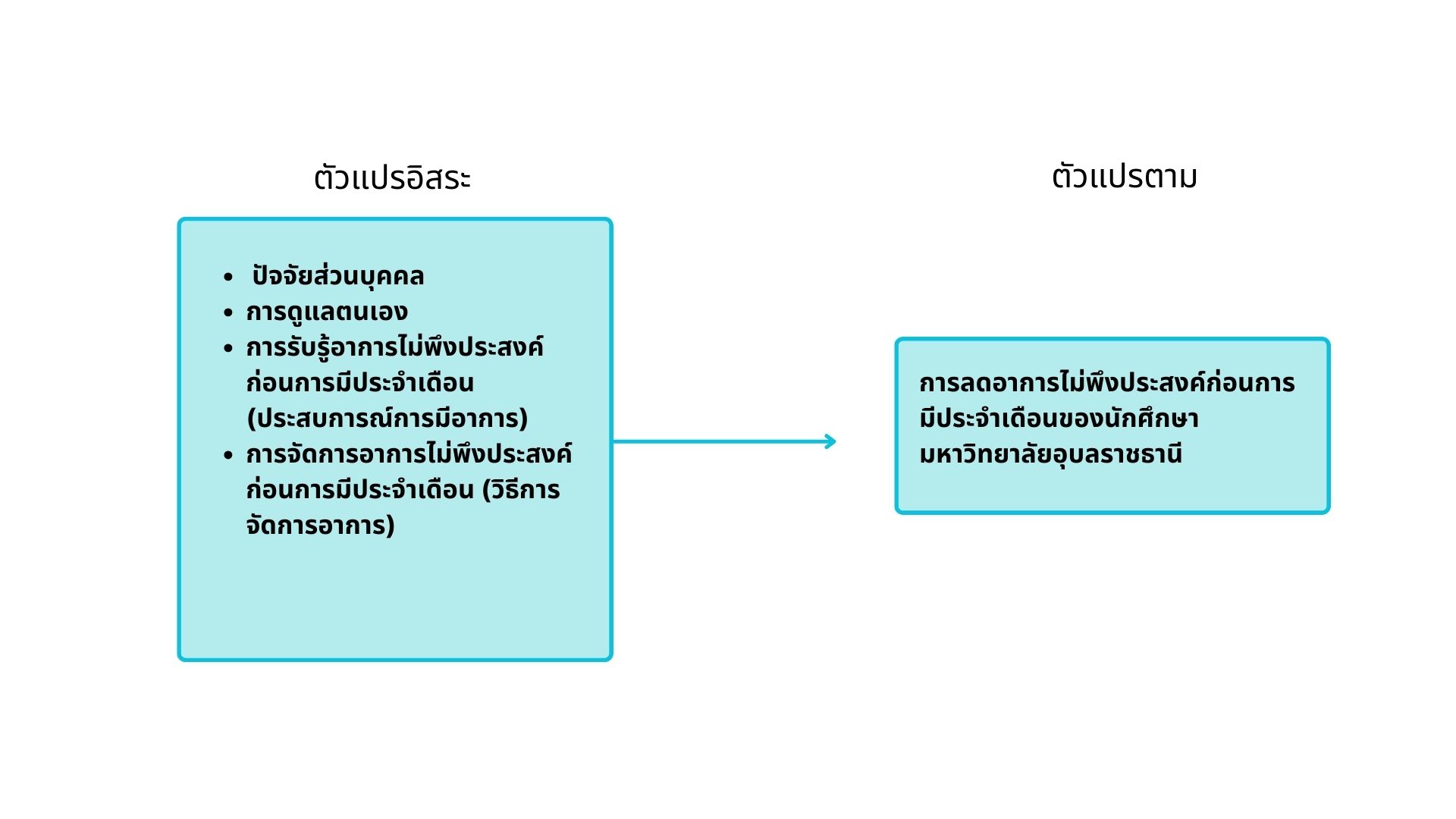
Premenstrual syndrome is a common health problem among reproductive women. Graduate students often experience stress from their studies and the adjustments they need to make, leading to an increase in the prevalence of premenstrual syndrome. This correlational descriptive research study aimed to examine the factors related to the reduction of premenstrual syndrome among students at Ubon Ratchathani University. The samples consisted of female students from all faculties pursuing a Bachelor's degree at Ubon Ratchathani University, totaling 386 students. They were selected using the Simple Random Sampling technique. The instrument included a questionnaire including sections on personal information, self-care, premenstrual syndrome recognition, premenstrual syndrome management, and reducing premenstrual syndrome. The Cronbach's alpha coefficients were .83, .71, .84, .85, and .83, respectively. The data were analyzed using descriptive statistics, the Chi-square test, and Spearman's Rank correlation coefficient. The results revealed that ages and college years were correlated with premenstrual syndrome reduction (c2 = 24.37, p= .004; c2 = 31.77, p=.00 respectively). Self-care factors were positively correlated with premenstrual syndrome reduction, with statistical significance at .01 (rs = 0.254, p < .01). The findings suggest that medical personnel should promote appropriate healthcare for women of reproductive age to help prevent adverse premenstrual symptoms.
References
Gnanasambanthan S, Datta, S. Premenstrual syndrome. Obstetrics, Gynaecology & Reproductive Medicine 2019;29:281-5.
Ryu A, Kim TH. Premenstrual syndrome: A mini review. Maturitas 2015;82:436-40.
Hofmeister S, Bodden S. Premenstrual syndrome and premenstrual dysphoric disorder. American family physician 2016;94:236-40.
Jane M, Julie B, Patrick MS, Wyatt K. Selective serotonin reuptake inhibitors for premenstrual syndrome. Cochrane 2013;6.
Nworie KM. Premenstrual syndrome: etiology, diagnosis and treatment. A mini literature review. Obstetrics and Gynecological investigations 2018;1:41-6.
ปาณิศา ฮันตระกูล, วรชร ลัทธิวงศกร. Premenstrual syndrome and Premenstrual dysphoric disorder [internet]. 2564 [เข้าถึงเมื่อ 30 มี.ค. 2566]. เข้าถึงได้จาก: https://w1.med.cmu.ac.th/obgyn/lecturestopics/topic-review/6891/
สมศักดิ์ สุทัศน์วรวุฒิ, ภารดี ชาญสมร, ยุพา พูนขำ, ปิยะรัตน์ เอี่ยมคง, สุวชัย อินทรประเสริฐ, กิตติพงศ์ แซ่เจ็ง. การให้บริการอนามัยการเจริญพันธุ์ คู่มือสำหรับเจ้าหน้าที่สาธารณสุข. พิมพ์ครั้งที่ 2. กรุงเทพมหานคร: สำนักงานกิจการโรงพิมพ์องค์การสงเคราะห์ทหารผ่านศึก; 2553.
วารุณี มีมุ่งบุญ. การศึกษาความเครียดของนักศึกษาระดับปริญญาตรี ภาคเรียนที่ 2 ประจำปีการศึกษา 2561 มหาวิทยาลัยเทคโนโลยีราชมงคลธัญบุรี. กรุงเทพฯ: มหาวิทยาลัยเทคโนโลยีราชมงคลธัญบุรี; 2562.
Tolossa FW, Bekele, ML. Prevalence, impacts and medical management of premenstrual syndrome among female students: cross sectional study in College of Health Sciences, Mekelle University, Mekelle, nothern Ethiopia. BMC Women Health 2014;14:53-62.
Rad M, Sabzevary MT, Dehnavi ZM. Factors associated with premenstrual syndrome in female high school students. Journal of education and health promotion 2018;7:64.
Seedhom AE, Mohammed ES, Mahfouz EM. Life style factors associated with premenstrual syndrome among El-Minia University Students, Egypt. International Scholarly Research Notices 2013.
วิชยา เห็นแก้ว, จรวยพร ใจสิทธิ์. ปัจจัยที่มีความสัมพันธ์กับกลุ่มอาการก่อนมีประจำเดือนในนักศึกษาพยาบาลสตรี. วารสารพยาบาลทหารบก 2561;19:299-310.
สมรัก ครองยุทธ และ เรืองฤทธิ์ โทรพันธ์. ปัจจัยที่มีความสัมพันธ์กับการจัดการอาการไม่พึงประสงค์ก่อนมีประจำเดือนในสตรีวัยรุ่น. วารสารศูนย์อนามัยที่ 9 2563;14:378-81.
Dodd M, Janson S, Facione N, Faucett J, Froelicher ES, Humphreys J. Advancing the science of symptom management. Journal of advanced nursing 2001;33:668-76.
นิรัชรา จ้อยชู, วันเพ็ญ ภิญโญภาสกุล, วิชชุดา เจริญกิจการ. ความสัมพันธ์ระหว่างอายุ การรับรู้ประโยชน์ของการปฏิบัติพฤติกรรมสุขภาพ การรับรู้อุปสรรคของการปฏิบัติพฤติกรรมสุขภาพกับการปฏิบัติพฤติกรรมสุขภาพในผู้ป่วยโรคหลอดเลือดสมองชนิดตีบตัน. วารสารวิจัยและนัวตกรรมทางการพยาบาล 2557;20:236-48
จเกศบุญชู เกษมพิพัฒน์พงศ์, ธานินทร์ สุธีประเสริฐ. ปัจจัยที่มีความสัมพันธ์กับพฤติกรรมสร้างเสริมสุขภาพและป้องกันโรคของบุคลากรโรงพยาบาลเจ้าพระยายมราชจังหวัดสุพรรณบุรี. วารสารวิชาการสาธารณสุข 2558;24:41-9
วิลาวัลย์ รัตนา. พฤติกรรมการดูแลสุขภาพ และการสนับสนุนทางสังคม กับคุณภาพชีวิตผู้สูงอายุชมรมผู้สูงอายุโรงพยาบาลสุราษฎร์ธานี [วิทยานิพนธ์ปริญญามหาบัณฑิต]. กรุงเทพฯ: มหาวิทยาลัยศรีนครินทรริโรฒ; 2553.
ธนภรณ์ จํารูญจารีต, อรณัฐ อัตวรอนันต, พิมพ์พิชญาดา มาพงศ์, ปริณดา เฉลิมถิรเลิศ, รินทร์ลิตา ชัยประสพวงศ์, พิสิษฐ์ อยู่ใจเย็น, กรดนัย ตรีรัตนกุลจรัส, ศุจิมน มังคลรังษี. การรับรู้เกี่ยวกับโรคไม่ติดต่อเรื้อรัง และพฤติกรรมสุขภาพของนักเรียนระดับมัธยมศึกษา: กรณีศึกษา. วารสารวิชาการสาธารณสุขชุมชน 2566;9:100-112.
Downloads
Published
How to Cite
Issue
Section
License
Copyright (c) 2023 Boromarajajonani College of Nursing Sunpasitthiprasong

This work is licensed under a Creative Commons Attribution-NonCommercial-NoDerivatives 4.0 International License.
บทความที่ได้รับการตีพิมพ์เป็นลิขสิทธิ์ของวารสารวิทยาศาสตร์สุขภาพ วิทยาลัยพยาบาลบรมราชชนนี สรรพสิทธิประสงค์ ข้อความที่ปรากฏในบทความแต่ละเรื่องเป็นความคิดเห็นส่วนตัวของผู้เขียนแต่ละท่านไม่เกี่ยวข้องกับวิทยาลัยพยาบาลบรมราชชนนี สรรพสิทธิประสงค์ และคณาจารย์ท่านอื่นๆ ในวิทยาลัยพยาบาลฯ ความรับผิดชอบเกี่ยวกับบทความแต่ละเรื่องผู้เขียนจะรับผิดชอบของตนเอง