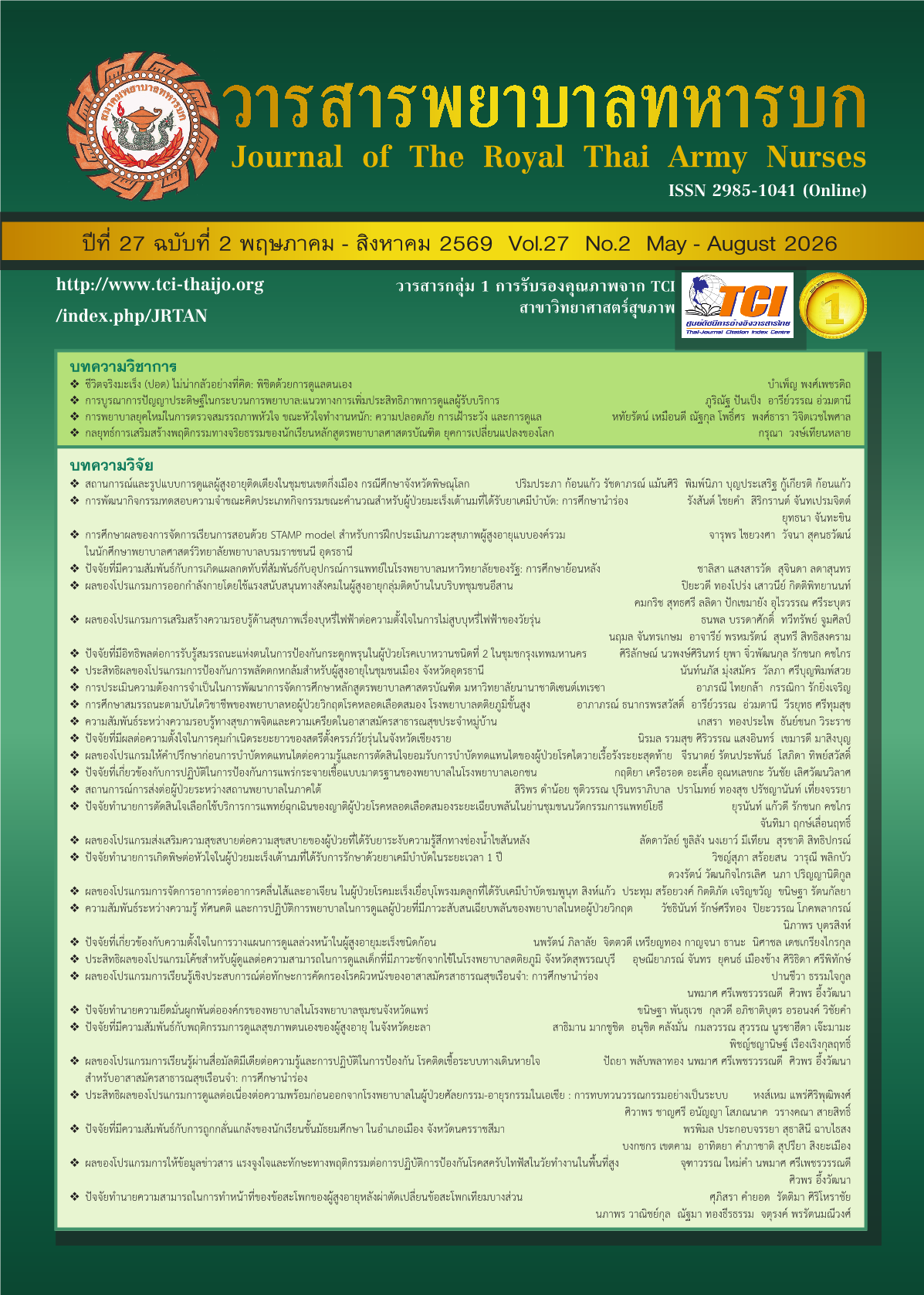
ผลของโปรแกรมการจัดการอาการต่ออาการคลื่นไส้และอาเจียนในผู้ป่วยโรคมะเร็งเยื่อบุโพรงมดลูกที่ได้รับเคมีบำบัด
คำสำคัญ:
โปรแกรมการจัดการ, อาการคลื่นไส้และอาเจียน, ผู้ป่วยโรคมะเร็งเยื่อบุโพรงมดลูก, เคมีบำบัด, การจัดการอาการบทคัดย่อ
การวิจัยกึ่งทดลองนี้มีวัตถุประสงค์เพื่อเปรียบเทียบอาการคลื่นไส้และอาเจียนในผู้ป่วยโรคมะเร็ง เยื่อบุโพรงมดลูกที่ได้รับเคมีบำบัดระหว่างกลุ่มทดลองที่ได้รับโปรแกรมการจัดการอาการร่วมกับการดูแลตามมาตรฐานของโรงพยาบาลกับกลุ่มควบคุมที่ได้รับการดูแลตามมาตรฐานของโรงพยาบาล กลุ่มตัวอย่าง คือ ผู้ป่วยโรคมะเร็งเยื่อบุโพรงมดลูกที่ได้รับเคมีบำบัดที่เข้ามารับการรักษา ณ โรงพยาบาลมหาวิทยาลัยแห่งหนึ่ง คัดเลือกกลุ่มตัวอย่างแบบเฉพาะเจาะจง จำนวน 56 ราย แบ่งเป็นกลุ่มควบคุมและกลุ่มทดลองกลุ่มละ 28 ราย เครื่องมือที่ใช้ในการวิจัย ประกอบด้วย 1) โปรแกรมการจัดการอาการคลื่นไส้และอาเจียน พัฒนาตามกรอบแนวคิดการจัดการอาการ 2) คู่มือการจัดการอาการคลื่นไส้และอาเจียนสำหรับผู้ป่วย 3) สมุดบันทึกวิธีการจัดการอาการคลื่นไส้และอาเจียน 4) แบบบันทึกการติดตามเยี่ยมผ่านทางโทรศัพท์ และ 5) แบบวัดอาการคลื่นไส้และอาเจียน เครื่องมือวิจัยผ่านการตรวจสอบคุณภาพก่อนนำไปใช้เก็บรวบรวมข้อมูล วิเคราะห์ข้อมูลโดยใช้สถิติพรรณนา สถิติทดสอบแมน–วิทนีย์ยูและสถิติการทดสอบวิลคอกซัน ผลการวิจัยพบว่า กลุ่มทดลองมีคะแนนอาการคลื่นไส้ อาเจียน และอาการคลื่นไส้และอาเจียนโดยรวมน้อยกว่ากลุ่มควบคุมโดยเฉพาะ
วันที่ 5, 6 และ 7 หลังได้รับเคมีบำบัดอย่างมีนัยสำคัญทางสถิติ (p < .05) กลุ่มทดลองที่ได้รับโปรแกรมการจัดการอาการ มีคะแนนอาการคลื่นไส้ อาเจียน ขย้อน และอาการคลื่นไส้และอาเจียนโดยรวมน้อยกว่าก่อนได้รับโปรแกรมการจัดการอาการ อย่างมีนัยสำคัญทางสถิติ (p < .05) ผลการวิจัยครั้งนี้ได้รูปแบบการพยาบาลที่สามารถนำไปใช้ผสมผสานกับการดูแลตามปกติ เพื่อลดอาการคลื่นไส้และอาเจียนสำหรับผู้ป่วยโรคมะเร็งกลุ่มนี้ต่อไป
Downloads
เอกสารอ้างอิง
Dennis SC, Berchuck A, Dizon DS, & Yashar C. Principles and practice of gynecologic oncology. 7th ed. Philadelphia: Lippincott Williams & Wilkins; 2017.
Aapro M, & Tarricone R. Initiatives to Improve Control, Resource Use, and Quality of Life Associated with Chemotherapy-Induced Nausea and Vomiting. Emergency Medicine Journal. 2020; 8(1): 2-13.
Rhodes VA, & McDaniel RW. Nausea, vomiting, and retching: Complex problems in palliative care. A Cancer Journal for Clinicians. 2001; 51(4): 232-48.
Gour S, Kore A, Das A, Dane J, & Maurya RK. A Qualitative Study to Explore Patient’s experiences on Chemotherapy-induced Nausea and Vomiting: Focusing Impact on Daily Life. Asian Pacific Journal of Cancer Care. 2023; 8(1): 21-8.
Mahendra INB, & Setiawan WA. Current management of CINV. European Journal of Medical and Health Sciences. 2023; 5(3): 55-9.
Das S, Banra MP, & Joseph NM. Effect of ginger tea on chemotherapy-induced nausea and vomiting among cancer patients in selected hospitals, Bhubaneswar, Odisha. International Journal of Research in Pharmaceutical Sciences. 2020; 11(1): 1165-71.
Mahdizadeh MJ, Tirgari B, Rashtabadi OR, & Bahaadinbeigy K. Guided imagery: reducing anxiety, depression, and selected side effects associated with chemotherapy. Clinical Journal of Oncology Nursing. 2019; 23(5): E87-E92.
Dadkhah B, Anisi E, Mozaffari N, Amani F, & Pourghasemian M. Effect of music therapy with periorbital massage on chemotherapy-induced nausea and vomiting in gastrointestinal cancer: A randomized controlled trial. Journal of Caring Sciences. 2019; 8(3): 165-71.
Dodd M, Janson SL, Facione NC, Faucett J, Froelicher ES, & Humphreys J, et al. Advancing the science of symptom management. Journal of Advanced Nursing. 2001; 33(5): 668-76.
Gidsrinopdon A. Effects of the symptom management program on fatigue among lung cancer patients receiving chemotherapy. [thesis]. Chiang Mai: Chiang Mai University; 2019. (in Thai)
Pimbung N, Wattana C, & Harnirattisai T. The Effects of a Symptom-management Program on Severity of Symptom and Nutritional Status among Colorectal Cancer Patients Receiving Chemotherapy. Nursing Journal 2015; 42(Supplement): 73-83. (in Thai)
Hawkins R. Chemotherapy-induced nausea and vomiting: challenges and opportunities for improved patient outcomes. Clinical Journal of Oncology Nursing. 2009; 13(1): 55-64.
Department of Medical Services Ministry of Public health. Handbook for Palliative and End of Life Care. Bangkok: WVO Office of Printing Mill; 2020. (in Thai)
Chiangmai Provincial public health Office. Health screening guide for the elderly health promotion. Chiang Mai: Chiangmai Provincial Public Health Office; 2018. (in Thai)
Sroiwong P. Patterns of nausea and vomiting associated factors, and self-care among breast cancer patients receiving chemotherapy. [thesis]. Bangkok: Mahidol University; 1995. (in Thai)
Wongpanarak N. The Therapeutic Relationship: Application in Nursing Process. Journal of The Royal Thai Army Nurses. 2014; 15(2): 84-91. (in Thai)
Jongkhetkit W. The Effects of a Gastrointestinal and Fatigue Symptom Cluster Management Promoting Program on Symptom Experiences in Patients with Breast Cancer Receiving Chemotherapy. [thesis]. Songkhla: Prince of Songkla University; 2017. (in Thai)
ดาวน์โหลด
เผยแพร่แล้ว
รูปแบบการอ้างอิง
ฉบับ
ประเภทบทความ
สัญญาอนุญาต
ลิขสิทธิ์ (c) 2026 วารสารพยาบาลทหารบก

อนุญาตภายใต้เงื่อนไข Creative Commons Attribution-NonCommercial-NoDerivatives 4.0 International License.
บทความหรือข้อคิดเห็นใดใดที่ปรากฏในวารสารพยาบาลทหารบกเป็นวรรณกรรมของผู้เขียน ซึ่งบรรณาธิการหรือสมาคมพยาบาลทหารบก ไม่จำเป็นต้องเห็นด้วย
บทความที่ได้รับการตีพิมพ์เป็นลิขสิทธิ์ของวารสารพยาบาลทหารบก
The ideas and opinions expressed in the Journal of The Royal Thai Army Nurses are those of the authors and not necessarily those
of the editor or Royal Thai Army Nurses Association.