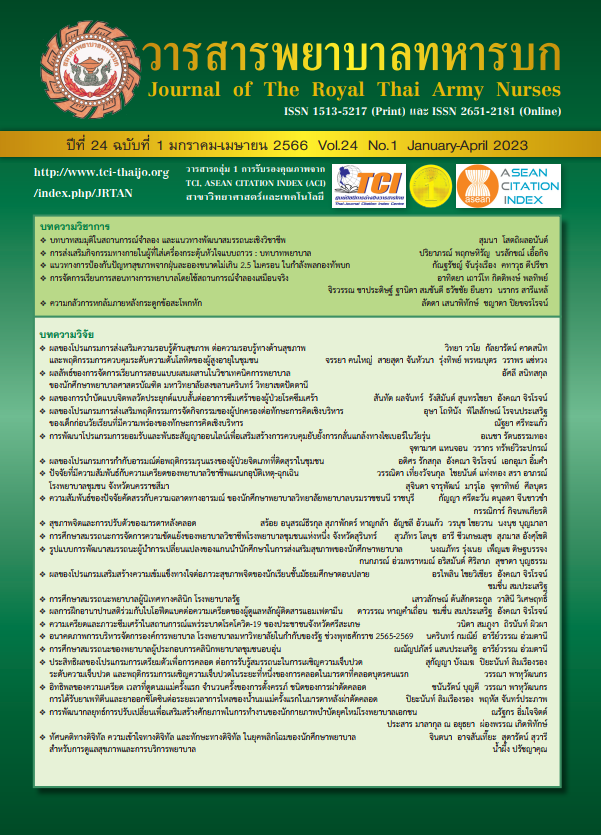
ผลของโปรแกรมการกำกับอารมณ์ต่อพฤติกรรมรุนแรง ของผู้ป่วยจิตเภทที่ติดสุราในชุมชน
คำสำคัญ:
โปรแกรมการกำกับอารมณ์, พฤติกรรมรุนแรง, ผู้ป่วยจิตเภทที่ติดสุราบทคัดย่อ
การวิจัยนี้เป็นการวิจัยกึ่งทดลอง โดยมีวัตถุประสงค์เพื่อศึกษาผลของโปรแกรมการกำกับอารมณ์ต่อพฤติกรรมรุนแรง ในผู้ป่วยจิตเภทที่ติดสุราในชุมชน กลุ่มตัวอย่างเป็นผู้ป่วยจิตเภทที่ติดสุรา อายุ 18-59 ปี คัดเลือกกลุ่มตัวอย่างตามเกณฑ์คัดเข้า จำนวน 62 คน ที่มารับบริการในโรงพยาบาลส่งเสริมสุขภาพตำบลแห่งหนึ่งของจังหวัดนครราชสีมา แบ่งกลุ่มควบคุมและกลุ่มทดลอง ด้วยวิธีการสุ่มอย่างง่าย กลุ่มละ 31 คน กลุ่มทดลองได้รับโปรแกรมการกำกับอารมณ์ที่สร้างขึ้นโดยผู้วิจัย ตามแนวคิดการกำกับ อารมณ์ของแมคเรและกรอซ ประกอบไปด้วย 10 กิจกรรม รวมระยะเวลาทั้งสิ้น 10 สัปดาห์ กลุ่มควบคุมจะได้รับการดูแลตามปกติ ประเมินผลโดยใช้แบบประเมินพฤติกรรมรุนแรงฉบับภาษาไทย วัดผล 2 ครั้ง คือ ก่อนการทดลอง และสิ้นสุดการทดลองทันที วิเคราะห์ข้อมูลโดยใช้สถิติเชิงพรรณนาและสถิติทดสอบค่าที
ผลการวิจัยสรุปได้ ดังนี้ 1) ค่าคะแนนเฉลี่ยพฤติกรรมรุนแรงของกลุ่มทดลอง ภายหลังได้รับโปรแกรมการกำกับอารมณ์ ต่ำกว่าก่อนทดลอง อย่างมีนัยสำคัญทางสถิติที่ระดับ .001 2) ผลต่างค่าคะแนนเฉลี่ยพฤติกรรมรุนแรงระหว่าก่อนและหลังการทดลอง ของกลุ่มทดลอง มากกว่ากลุ่มควบคุมอย่างมีนัยสำคัญทางสถิติที่ระดับ .001 สรุปได้ว่า โปรแกรมการกำกับอารมณ์สามารถลดพฤติกรรมรุนแรงในผู้ป่วยจิตเภทที่ติดสุราได้จึงเหมาะสมในการออกแบบ กิจกรรมหรือโปรแกรมเพื่อลดพฤติกรรมรุนแรงในผู้ป่วยจิตเภทที่ติดสุรา
Downloads
เอกสารอ้างอิง
Chambers, R. A., Sentir, A. M., Conroy, S. K., Truitt, W. A., & Shekhar, A. Cortical-striatal integration of cocaine history and prefrontal dysfunction in animal modeling of dual diagnosis. Biological psychiatry. 2010,67(8):788-92.
Takviriyanan N. Nursing care of clients receiving psychiatric drugs 3rd. Bangkok: Thammasat University; 2010. 277-34. (in Thai).
Lotrakul M and Sukanit P. Psychiatric Ramathibodi. 4th. Bangkok: Department of Psychiatry, Faculty of Medicine Ramathibodi Hospital, Mahidol University. (2012);129-54. (in Thai).
Petrakis IL. How to best treat patients with schizophrenia and co-occurring alcohol use disorder. The Journal of clinical psychiatry. 2015;76(10):1338-9.
Junsirimongkol B, Suriyachai S, Booncharoen H, Wiroteurairuang K, Joowong S and Khunarak U. Psychiatric comorbidity among in-patients with alcohol use disorders. Journal of Mental Health of Thailand. 2013;21(2):76-87 (in Thai)
Department of Mental Health, Ministry of Public Health. Serious Mental Illness with High Risk to Violence: SMI-V. 1st. Nonthaburi: Prosperous plus company limited printing; 2020. (in Thai)
Nakhon Ratchasima Rajanagarindra psychiatric Hospital. Annual report: Serious Mental Illness with High Risk to Violence (SMI-V) patients. 2020. (in Thai)
Juntapim S and Nuntaboot K. Care of Schizophrenia Patients by the Community. Journal of Nursing Health Care. 2017,36(2):69-76.
Department of Mental Health, Ministy of Public Health. Suicide rate report. 2020 [cited 2020 Oct 17]. Available from: http://Suicide.dmh.go.th
Haenjohn J. Brain & Emotions: A Miracle Connection. Ratchaphruek Journal 2015; 13(3): 11-9. (in Thai)
Sullivan EV, Harris RA, and Pfeffer Baum A. Alcohol’s effects on brain and behavior. Alcohol Research & Health. 2010;33(1-2):127-43.
Gunzerath L, Faden V, Zakhari S, and Warren K. National Institute on Alcohol Abuse and Alcoholism report on moderate drinking. Alcohol: Clinical and Experimental Research. 2014;28(6): 829-47.
Bualakorn N, Soonthornchaiya R, and Vuthiarpa S. The Effects of a Motivation Enhancement Therapy Program with Family Involvement on The Medication Adherence of Inpatients with Co-Occurring Schizophrenia and Alcohol Use Disorder. Journal of The Royal Thai Army Nurses. 2018;19 (Supplement): 423-32. (in Thai).
McRae K and Gross JJ. Emotion regulation. Emotion (Washington, DC). 2020;20(1): 1-9.
Choopan H, Kalantarkousheh SM, Aazami Y, Doostian Y, Farhoudian A, Massah O. Effectiveness of Emotion Regulation Training on the Reduction of Craving in Drug Abusers. Addict Health. 2016;8(2): 68-75.
Yudofsky SC, Silver JM, Jackson W, Endicott J, and Williams D. The Overt Aggression Scale for the objective rating of verbal and physical aggression. The American journal of psychiatry. 1986;143(1):35-39.
Perry Y, Henry JD, Nangle MR, Grisham JR. Regulation of negative affect in schizophrenia: The effectiveness of acceptance versus reappraisal and suppression. Journal of Clinical and Experimental Neuropsychology. 2012;34(5): 497-508.
Painter JM, Stellar JE, Moran EK, Kring AM. A multicomponent approach toward understanding emotion regulation in schizophrenia. Journal of clinical psychology. 2019;75(1): 178-89.
Gross JJ, Jazaieri H. Emotion, Emotion Regulation, and Psychopathology. Clinical Psychological Science. 2014;2(4):387-401.
Cisler JM, Olatunji BO, Feldner MT, Forsyth JP. Emotion Regulation and the Anxiety Disorders: An Integrative Review. Journal of Psychopathology and Behavioral Assessment. 2010;32(1): 68-82.
Grezellschak S, Lincoln TM, Westermann S. Cognitive emotion regulation in patients with schizophrenia: Evidence for effective reappraisal and distraction. Psychiatry Research. 2015;229(1): 434-9.
Azizi A, Borjali A, and Golzari M. The effectiveness of emotion regulation training and cognitive therapy on the emotional and additional problems of substance abusers. Iran Journal of Psychiatry. 2010;5(2): 60-5.
Vancampfort D, De Hert M, Knapen J, Wampers M, Demunter H, Deckx S, et al. State anxiety, psychological stress and positive well-being responses to yoga and aerobic exercise in people with schizophrenia: a pilot study. Disability and Rehabilitation. 2011;33(8): 684-89.
Nowicka M. Emotional regulation in schizophrenia. Personality and Individual Differences. 2014; 60: 56-67.
ดาวน์โหลด
เผยแพร่แล้ว
รูปแบบการอ้างอิง
ฉบับ
ประเภทบทความ
สัญญาอนุญาต
ลิขสิทธิ์ (c) 2023 วารสารพยาบาลทหารบก

อนุญาตภายใต้เงื่อนไข Creative Commons Attribution-NonCommercial-NoDerivatives 4.0 International License.
บทความหรือข้อคิดเห็นใดใดที่ปรากฏในวารสารพยาบาลทหารบกเป็นวรรณกรรมของผู้เขียน ซึ่งบรรณาธิการหรือสมาคมพยาบาลทหารบก ไม่จำเป็นต้องเห็นด้วย
บทความที่ได้รับการตีพิมพ์เป็นลิขสิทธิ์ของวารสารพยาบาลทหารบก
The ideas and opinions expressed in the Journal of The Royal Thai Army Nurses are those of the authors and not necessarily those
of the editor or Royal Thai Army Nurses Association.