
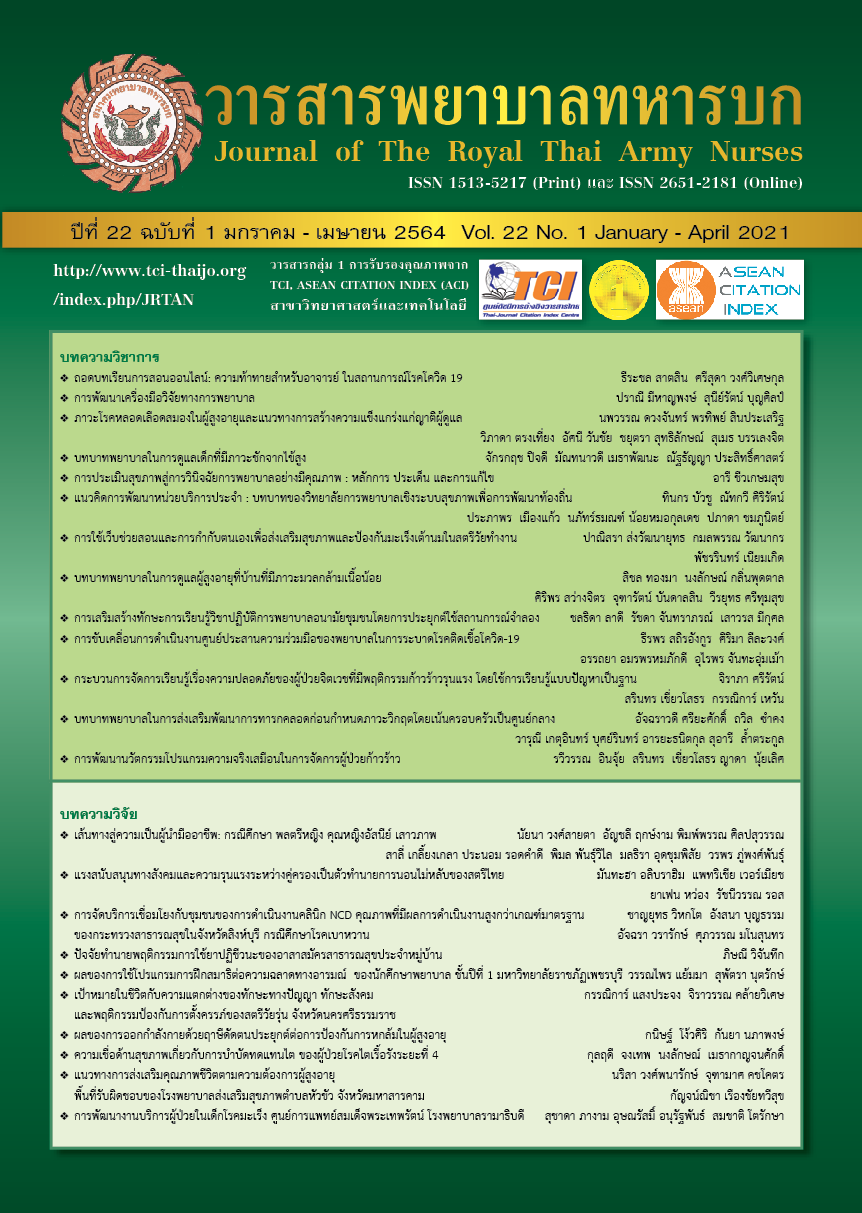
แนวคิดการพัฒนาหน่วยบริการประจำ :บทบาทของวิทยาลัยการพยาบาลเชิงระบบสุขภาพเพื่อการพัฒนาท้องถิ่น
คำสำคัญ:
หน่วยบริการประจำ, ระบบสุขภาพ, การพัฒนาท้องถิ่นบทคัดย่อ
ระบบสุขภาพชุมชนเป็นรากฐานที่สำคัญของการสร้างให้ประชาชนมีสุขภาพดี การทำงานเพื่อสร้างสุขภาวะชุมชนจึงเป็น งานที่สร้างสรรค์และสำคัญ โดยหัวใจสำคัญของระบบสุขภาพชุมชนคือการสร้างชุมชนเข้มแข็ง ซึ่งบทบาทของมหาวิทยาลัยควรเข้า มามีส่วนในการศึกษาวิจัยให้เกิดปัญญาเชิงระบบ จะช่วยให้ระบบสุขภาพพัฒนาไปสู่ความถูกต้องสมบูรณ์มากยิ่งขึ้น ที่สำคัญบทความ นี้ต้องการนำเสนอแนวคิดการพัฒนาหน่วยบริการประจำ ของวิทยาลัยการพยาบาลมหาวิทยาลัยราชภัฏพิบูลสงครามเชิงระบบเพื่อ การพัฒนาท้องถิ่น ในการส่งเสริมสุขภาพตลอดจนการดูแลรักษาโรคที่พบบ่อยทั้งหมดในชุมชนได้โดยไม่จำเป็นต้องไปโรงพยาบาล ลดภาระโรค ลดความแออัดทำให้โรงพยาบาลสามารถให้บริการด้วยคุณภาพที่ดีขึ้นและลดภาระค่าใช้จ่ายทั้งของประชาชนและภาค รัฐ ทั้งนี้แนวคิดการพยาบาลชุมชนมีเป้าหมายเพื่อดูแลบุคคล ครอบครัวและชุมชนให้มีภาวะสุขภาพที่ดี ซึ่งแนวคิดการพัฒนาหน่วย บริการประจำจะต้องบูรณาการองค์ความรู้ศาสตร์ด้านการพยาบาลและการสาธารณสุขมาประยุกต์ใช้ให้บริการสุขภาพ โดยใช้ชุมชน เป็นฐานการบริการที่ครอบคลุม 4 มิติ ประกอบด้วยการส่งเสริมสุขภาพ การป้องกันโรค การรักษาพยาบาลและการฟื้นฟูสภาพ ร่วม กับแนวคิดของกระบวนการพยาบาลและการพยาบาลแบบองค์รวม
Downloads
เอกสารอ้างอิง
World Health Organization. Monitoring the building blocks of health systems:a handbook of indicators and their measurement strategies. Geneva: the WHO document production services; 2010.
Yana T, Bookboon P. Community health system by community for community. Bangkok: Beyond Publishing Co., Ltd; 2013. (in Thai)
Yamabhai I, et al. Thailand future health system in 2033. Journal of health systems research. 2016; 10(3): 201-214. (in Thai)
Wasi P. Thai healthcare system in decade. Nonthaburi: Moh-Chao-Ban Publishing House; 2017. (in Thai)
Rasiri T, Songthap A. Health promotion for the elderly: guidelines for strong partnership and dynamic network participation in the 21st century. The southern college network journal of nursing and public health. 2018; 5(1): 315-328. (in Thai)
Koocharoenprasit S, Siriwanarangsun P. Primary care service system in urban setting: a case study in bangkok area, b.e. 2560. Journal of preventive medicine association of thailand. 2018; 8(2): 182-190. (in Thai)
Office of the Permanent Secretary, Ministry of Public Health. Guide establishment primary care units and contracting units of primary care according to the Law of primary health system b.e. 2019; (in Thai)
Nursing Division Ministry of Public Health. Community nursing standards. Pathumthani: Publishing of Suetawan Co., Ltd; 2016. (in Thai)
Suwanasaeng N, Yingyoud P. Primary care cluster: concept and management of registered nurses’ roles. Thai journal of nursing council. 2020; 35(1): 5-17. (in Thai)
Chitpitaklert S, et al. Learn the management for a new model of primary care network: Nakhonchaiburin area’s autonomous CUP. Nakhon Ratchasima: Mittapap kanpim 1995; 2011:15-20. (in Thai)
Office of Community Based Health Care Research and Development, ASEAN Institute for Health Developement, Mahidol University. Welding strategy primary care services provide network, lessons from rural CUP: in academic conference document, community health & primary care expo 2nd: Nonthaburi: Sahamit Printing and Publishing; 2012:12-13. (in Thai)
Chitpitaklert S, Khongkam L, Mungklasiri R. Working together in the primary care service, Muang Ya (CUP Muang Ya). Nakhon Ratchasima: Mittapap kanpim 1995; 2011:47-72. (in Thai)
Khongsatid M, Suksamran S. Rajabhat universities with local development: a comparative study rajabhat universities in rural and urban areas. Journal of administrative and management. 2018; 6(3): 1-10. (in Thai)
Buachu T., Soiphet N, Muangkuew P, Chomphunit P, Chayathab S. Transformative Learning: Apply to Nursing Administration and management Subject. Journal of The Royal Thai Army Nurses. 2020;21(3):20-28. (in Thai)
ดาวน์โหลด
เผยแพร่แล้ว
รูปแบบการอ้างอิง
ฉบับ
ประเภทบทความ
สัญญาอนุญาต
บทความหรือข้อคิดเห็นใดใดที่ปรากฏในวารสารพยาบาลทหารบกเป็นวรรณกรรมของผู้เขียน ซึ่งบรรณาธิการหรือสมาคมพยาบาลทหารบก ไม่จำเป็นต้องเห็นด้วย
บทความที่ได้รับการตีพิมพ์เป็นลิขสิทธิ์ของวารสารพยาบาลทหารบก
The ideas and opinions expressed in the Journal of The Royal Thai Army Nurses are those of the authors and not necessarily those
of the editor or Royal Thai Army Nurses Association.