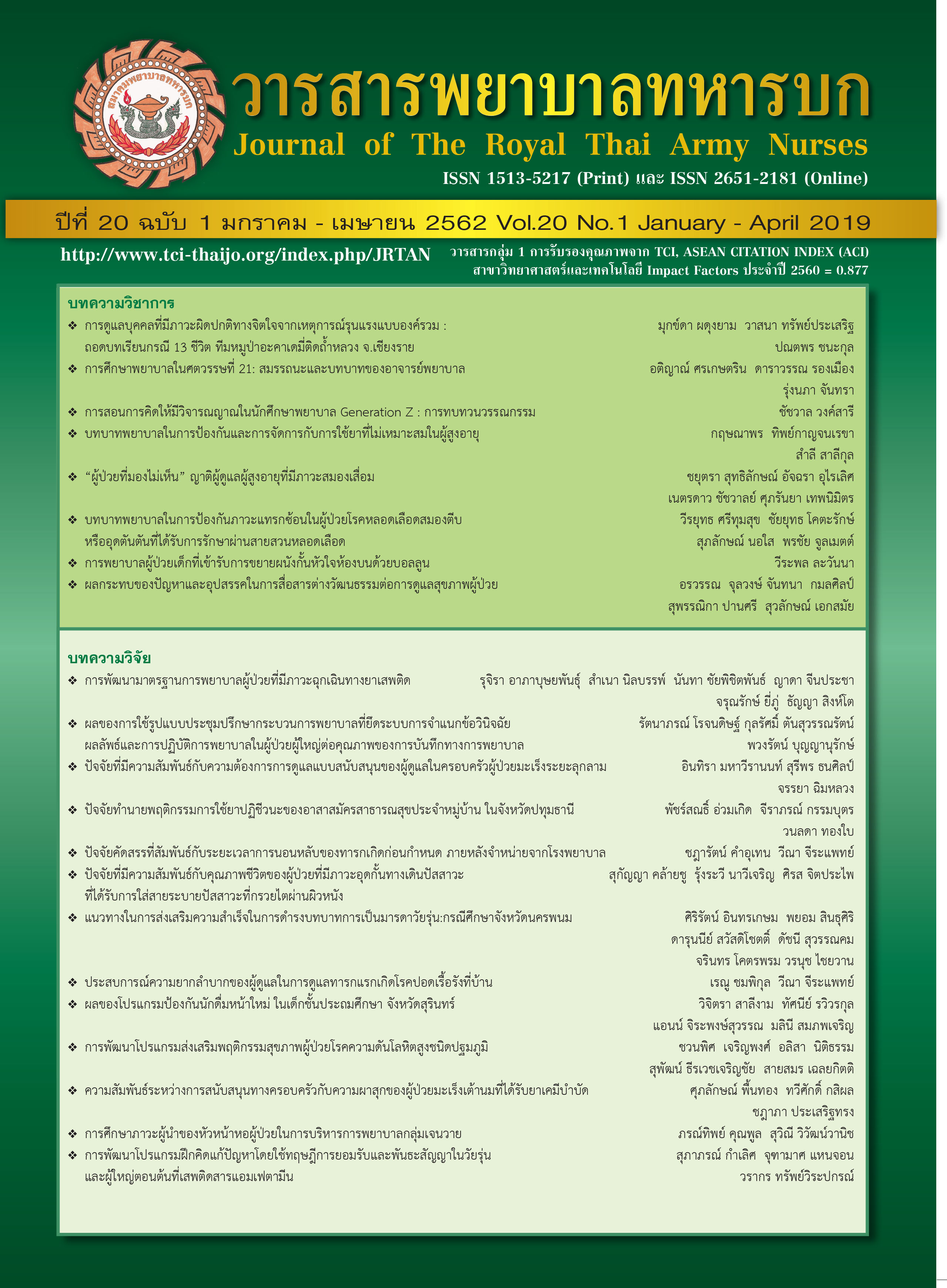
การศึกษาพยาบาลในศตวรรษที่ 21: สมรรถนะและบทบาทของอาจารย์พยาบาล
คำสำคัญ:
การศึกษาพยาบาลในศตวรรษที่ 21, สมรรถนะ, อาจารย์พยาบาลบทคัดย่อ
บทความนี้มีจุดมุ่งหมายเพื่อนำเสนอแนวคิดเกี่ยวกับการเรียนการสอนสาขาพยาบาลศาสตร์ ในทักษะแห่งศตวรรษที่ 21 ของนักศึกษาพยาบาล สมรรถนะและบทบาทของอาจารย์พยาบาลในศตวรรษที่ 21 จากการเปลี่ยนแปลงระบบบริการสุขภาพ และการนำรูปแบบการเรียนรู้สู่การเปลี่ยนแปลงมาใช้ในการจัดการศึกษา พยาบาลสำหรับศตวรรษที่ 21 ทำให้การจัดการศึกษาต้อง มีการเปลี่ยนแปลง อาจารย์พยาบาลเป็นบุคคลหนึ่งซึ่งมีบทบาทหน้าที่ในการส่งเสริมการปฏิรูปการเรียนการสอน ให้ก้าวทันความ เปลี่ยนแปลงที่เกิดขึ้น และมีบทบาทสำคัญในการพัฒนาศักยภาพนักศึกษาพยาบาลให้เป็นไปตามมาตรฐานวิชาชีพที่สภาการพยาบาล ได้กำหนดไว้ มีทักษะแห่งการเรียนรู้ในศตวรรษที่ 21 ดังนั้นในการจัดการศึกษาพยาบาลในศตวรรษที่ 21 ให้มีประสิทธิภาพนั้น อาจารย์พยาบาลผู้สอนจำเป็นต้องมีสมรรถนะ และบทบาทในด้านต่าง ๆ ดังนี้ ด้านการใช้ทฤษฎีและหลักการเรียนรู้แบบผู้ใหญ่ ด้านการพัฒนาหลักสูตร และการนำไปใช้ ด้านการปฏิบัติการพยาบาล ด้านการวิจัยและการใช้หลักฐานเชิงประจักษ์ ด้านการสื่อสาร ความร่วมมือ และการประสานความร่วมมือระหว่างหน่วยงาน ด้านกฎหมาย/จริยธรรม และความเป็นมืออาชีพ ด้านการติดตาม และประเมินผล รวมถึงด้านการจัดการ ภาวะผู้นำ และการเป็นผู้สนับสนุน
Downloads
เอกสารอ้างอิง
2. Panich V. Transformative learning. Bangkok: S. R. Printring Massproduct Co, Ltd.; 2015. (in Thai)
3. Sethasathien S. A model of interprofessional education (IPE) in department of physical medicine and rehabilitation, Udonthani Hospital. J Thai Rehabil Med. 2015; 25(2):65-70. (in Thai)
4. The Higher Education Commission. Guidelines for promoting the quality of teaching and learning management of instructors in higher education institutions. Bangkok: Pappim; 2018. (in Thai)
5. Rujkorakarn D. Summary report of the educational management in nursing for the 21st century conference. 12 - 13 February 2014, Boromarajonani College of Nursing, Saraburi; 2014. (in Thai)
6. Kamanee T. Science of teaching knowledge for effective learning management. 17th ed. Bangkok: Chulalongkorn University Press;2013. (in Thai)
7. Kunlaka S, Chantra R, Sornkasatrin A, Kansukcharean A. A synthesis of research on nursing instruction. . Nursing Journal of the Ministry of Public Health. 2016; 26(1): 93-106. (in Thai)
8. Watanapa P. Health education for the 21st century: From concept to practice. Handout for the conference on Dean and Director of nursing institute “Nursing education management for the 21st century”, 13 February 2014, Amari Don Muang Airport Bangkok; 2014. (in Thai)
9. Turner K, Leungratanamart L, Niranrat S, Jarnarerux J, Wattanakull B, Reunreang T. Twenty first century skills of nursing students of Boromarajonani College of Nursing, Chonburi. Nursing Journal of the Ministry of Public Health.2015; 25(2): 178-93. (in Thai)
10. Chantra R, Sarakshetrin A. Learning skills in 21st century of nursing students at Boromarajonani College of Nursing, Suratthani. The Southern College Network Journal of Nursing and Public Health. 2017; 4(1):180-90. (in Thai)
11. Mishra P, Kereliik K. What 21st Century Learning? A Review and a Synthesis 2012. 2015. [cited 2018 May 9].
12. Bellanca J, Brandt R, editors. 21st Century Skills: Rethinking How Students Learn. Bloomington: Solution Tree Press. 2010.
13. Srimongkon S. Promoting 21st century skills: Communication and collaboration skill in the science classroom on cell and its component by simulation techniques. Master of Education in Curriculum and Instruction Graduate School Khon Kaen University.; 2014. (in Thai)
14. Panich V. Enjoy learning in 21st century. Bangkok: Sodsri-Saridwongso Foundation; 2013. (in Thai)
15. Panich V. 21st century learning path for disciples.Bangkok: Sodsri-Saridwongso Foundation;2012. (in Thai)
16. Kunaviktikul W. Teaching and learning in the discipline of nursing in the 21stcentury. Nursing Journal. 2015; 42(2), 152-56. (in Thai)
17. Turner K, Petkong J, Howharn C, Mamark N. Teach less, learn more: A conceptual model and application for nursing education. Nursing Journal of the Ministry of Public Health. 2016;26(3), 13-26. (in Thai)
18. National League for Nursing. The scope of practice for academic nurse educators. New York, NY:Author; 2005.
19. Trilling B, Fadel C. Learning and innovation skills. 21st century skills learning for life in our times. San Francisco: Jossey-Bass; 2009.
20. World Health Organization. Nurse educator core competencies. Geneva: The WHO Document Production Services; 2016
21. Prajankett O. Transformative learning: Nursing education perspective. Journal of The Royal Thai Army Nurses. 2014; 15(3), 179-184.(in Thai)
22. Thongphet P, Samphawamana O. Components and indicators of nurse instructors competencies in 21st century, nursing colleges under Praboramarajchanok Institute the Ministry of Public Health. Research report Boromarajonani College of Nursing Suratthani; 2016. (in Thai)
23. Siritarungsri B. Leadership for nurses in ASEAN community. Nonthaburi: Sukhothaithammathirat University Press; 2016. (in Thai)
24. Prajankett O. An educational innovative organization: A new choice of educational administration. Journal of The Royal Thai Army Nurses. 2014; 15(1), 45-51. (in Thai)
ดาวน์โหลด
เผยแพร่แล้ว
รูปแบบการอ้างอิง
ฉบับ
ประเภทบทความ
สัญญาอนุญาต
บทความหรือข้อคิดเห็นใดใดที่ปรากฏในวารสารพยาบาลทหารบกเป็นวรรณกรรมของผู้เขียน ซึ่งบรรณาธิการหรือสมาคมพยาบาลทหารบก ไม่จำเป็นต้องเห็นด้วย
บทความที่ได้รับการตีพิมพ์เป็นลิขสิทธิ์ของวารสารพยาบาลทหารบก
The ideas and opinions expressed in the Journal of The Royal Thai Army Nurses are those of the authors and not necessarily those
of the editor or Royal Thai Army Nurses Association.