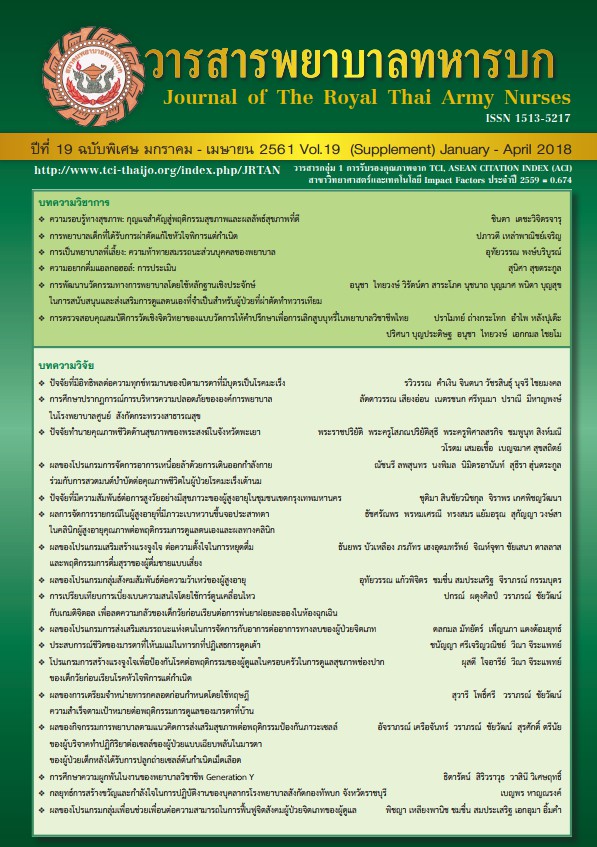
การพัฒนารูปแบบพยาบาลพี่เลี้ยงสำหรับพยาบาลเจนเนอเรชั่นวาย ที่จบใหม่โรงพยาบาลวชิรพยาบาล
คำสำคัญ:
พยาบาลพี่เลี้ยง, พยาบาลเจนเนอเรชั่นวาย, พยาบาลจบใหม่บทคัดย่อ
การวิจัยและพัฒนานี้ มีวัตถุประสงค์เพื่อ 1) วิเคราะห์สภาพการณ์และความต้องการรูปแบบพยาบาลพี่เลี้ยงสำหรับ พยาบาลเจนเนอเรชั่นวายที่จบใหม่ โรงพยาบาลวชิรพยาบาล 2) พัฒนารูปแบบพยาบาลพี่เลี้ยงสำหรับพยาบาลเจนเนอเรชั่นวายที่ จบใหม่ และ 3) ประเมินความเหมาะสมของรูปแบบที่พัฒนาขึ้น ผู้ให้ข้อมูลหลักปฏิบัติงานในหอผู้ป่วยสาขาการพยาบาลสูตินรีเวช กรรม ศัลยกรรม อายุรกรรม และกุมารเวชกรรม เป็นหัวหน้าหอผู้ป่วย 4 คน พยาบาลพี่เลี้ยง 4 คน และพยาบาลเจนเนอเรชั่นวาย ที่จบใหม่ 8 คน เครื่องมือที่ใช้ ได้แก่ แนวคำถามในการสนทนากลุ่ม และแบบประเมินความเหมาะสมของรูปแบบพยาบาลพี่เลี้ยงที่ พัฒนาขึ้น มีค่าดัชนีความสอดคล้องอยู่ระหว่าง 0.5-1.0 วิเคราะห์ข้อมูลด้วยการวิเคราะห์เนื้อหาและคำนวณค่าความเหมาะสมของ รูปแบบ ผลการวิจัยพบว่า 1) สภาพการณ์และความต้องการรูปแบบพยาบาลพี่เลี้ยงที่พัฒนาขึ้น ได้แก่ ด้านโครงสร้าง ด้าน กระบวนการ และด้านผลลัพธ์ที่เป็นรูปธรรมและชัดเจน 2) รูปแบบพยาบาลพี่เลี้ยงที่พัฒนาขึ้น มีองค์ประกอบ 3 ประการดังกล่าว ที่สร้างบนพื้นฐานของสภาพการณ์และความต้องการรูปแบบพยาบาลพี่เลี้ยง และบูรณาการกับแนวคิดและทฤษฎี ดังนี้ รูปแบบ พยาบาลพี่เลี้ยงสำหรับพยาบาลจบใหม่ คุณลักษณะของพยาบาลวิชาชีพไทยรุ่นอายุวาย การบริหารพยาบาลวิชาชีพเจนเนอเรชั่ นวาย และการเสริมสร้างพลังอำนาจในองค์กร และ 3) รูปแบบพยาบาลพี่เลี้ยงที่พัฒนาขึ้นมีความเหมาะสมในการนำไปใช้ร้อยละ 81.73
Downloads
เอกสารอ้างอิง
2. Chaubankoh S. A study of trait components of generation Y Thai profession nurses, Regional hospitals of 5th Regional health authority. Journal of the Royal Thai Army Nurse 2017;18:155-162. (in Thai)
3. Netharn P. Work values and organizational commitment of two generations of professional nurses in private hospitals, Bangkok Metropolis. Journal of the Royal Thai Army Nurse 2014;15:320-330. (in Thai)
4. Tassanaananchai P. The management characteristics of generation Y professional nurses [dissertation]. Bangkok: Chulalongkorn University; 2013. (in Thai)
5. Lavoie-Tremblay M, Wright D, Desforges N, Gelinas C, Marchionni C, Drevniok U. The needs and expectations of generation Y nurses in the workplace. Journal for nurses in staff development 2010;26:2-8.
6. Boonrod W. A guideline for development the mentoring effectiveness in nursing for the Royal Thai Army hospitals. Journal of the Royal Thai Army Nurse 2009;10:32-46. (in Thai)
7. Kittidacha S. Resilience of new graduated nurses in Siriraj hospital [dissertation]. Nakhon Pathom: Silpakorn University; 2010. (in Thai)
8. Morrow K L. Preceptorships in nursing staff development. America: Aspen Systems Corporation; 1984.
9. Figueroa S. Bulos M. Forges E. Cohn T J. Stabilizing and retaining a quality nursing work force through the use of the Married State
preceptorship model. Journal of continuing education in nursing 2013;44:365-373.
10. Hamidah H. Maziah M. Ayesha B. Subahan T. Siti Rahayah A. The development of a Malaysian model intership programme (MyMIP): A preceptor model for nurses in their early stage of profession. Procedia – social and behavioral sciences 2012;64:492-500.
11. Rodphothong J. The development of nurse mentorship model for new profession nurse, Pakkred hospital, Nontaburi province [dissertation]. Nonthaburi: Sukhothai Thammathirat Open University; 2015. (in Thai)
12. Poonpermsuksombut S. The development of a mentor model for novice nurses at Bangkok metropolitan administration general hospital [dissertation]. Nonthaburi: Sukhothai Thammathirat Open University; 2007. (in Thai)
13. Rungthanakiat P. The development of a preceptor model for new graduate nurses at Surin hospital Surin province [dissertation]. Nonthaburi: Sukhothai Thammathirat Open University; 2013. (in Thai)
14. Weerajit S. Development of a nursing mentor model for Suratthani hospital [dissertation]. Nonthaburi: Sukhothai Thammathirat Open University; 2013. (in Thai)
15. Faculty of Medicine Vajira Hospital, Navamindradhiraj University. Management approach. Bangkok: Nursing Department;2009.
16. Kanter R M. Men and women of the corporation. New York: Basics Books; 1993.
17. Department of Medical Services. Appraisal of guideline for research & evaluation II; AGREE II. Nonthaburi; 2013. (in Thai)
ดาวน์โหลด
เผยแพร่แล้ว
รูปแบบการอ้างอิง
ฉบับ
ประเภทบทความ
สัญญาอนุญาต
บทความหรือข้อคิดเห็นใดใดที่ปรากฏในวารสารพยาบาลทหารบกเป็นวรรณกรรมของผู้เขียน ซึ่งบรรณาธิการหรือสมาคมพยาบาลทหารบก ไม่จำเป็นต้องเห็นด้วย
บทความที่ได้รับการตีพิมพ์เป็นลิขสิทธิ์ของวารสารพยาบาลทหารบก
The ideas and opinions expressed in the Journal of The Royal Thai Army Nurses are those of the authors and not necessarily those
of the editor or Royal Thai Army Nurses Association.