
ผลของโปรแกรมบำบัดด้วยการแก้ปัญหาต่ออาการวิตกกังวลในผู้ป่วยโรควิตกกังวลทั่วไป
คำสำคัญ:
: โรควิตกกังวลทั่วไป, อาการวิตกกังวล, โปรแกรมบำบัดด้วยการแก้ปัญหาบทคัดย่อ
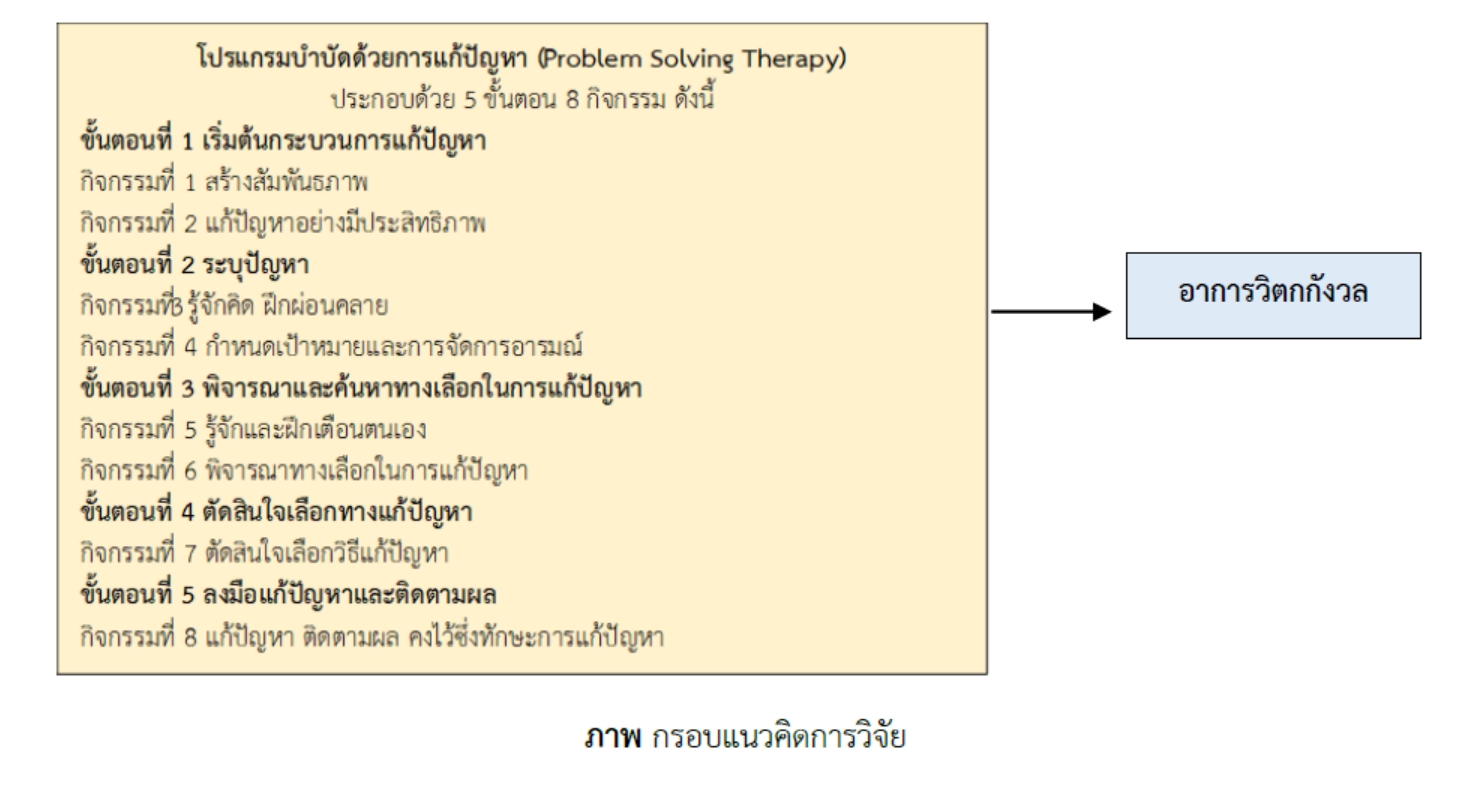
การวิจัยกึ่งทดลองแบบสองกลุ่มวัดก่อนและหลังการทดลองนี้ มีวัตถุประสงค์เพื่อเปรียบเทียบอาการวิตกกังวลของผู้ป่วยโรควิตกกังวลก่อนและหลังได้รับโปรแกรมบำบัดด้วยการแก้ปัญหา และเปรียบเทียบอาการวิตกกังวลระหว่างกลุ่มที่ได้รับโปรแกรมบำบัดด้วยการแก้ปัญหาและกลุ่มที่ได้รับการพยาบาลตามปกติ กลุ่มตัวอย่างคือป่วยโรควิตกกังวลที่มารับบริการรักษาที่โรงพยาบาลชุมชนแห่งหนึ่ง มีอายุ 18 ปีขึ้นไป คำนวณขนาดกลุ่มตัวอย่างโดยใช้โปรแกรมสำเร็จรูป G*Power ได้กลุ่มตัวอย่างจำนวน 30 ราย แบ่งเป็นกลุ่มทดลองและกลุ่มควบคุม กลุ่มละ 15 ราย กลุ่มทดลองได้รับโปรแกรมบำบัดด้วยการแก้ปัญหา จำนวน 6 ครั้ง ๆ ละ 30-60 นาที สัปดาห์ละ 1 ครั้ง เป็นระยะเวลา 6 สัปดาห์ต่อเนื่องกัน กลุ่มควบคุมได้รับการพยาบาลตามปกติ การรวบรวมข้อมูลโดยใช้แบบสอบถามข้อมูลส่วนบุคคล และ แบบวัดอาการวิตกกังวล ที่มีค่าความเชื่อมั่น เท่ากับ 0.78 วิเคราะห์ข้อมูลพื้นฐานของกลุ่มตัวอย่าง ใช้สถิติพรรณนา คำนวณค่าร้อยละ ค่าเฉลี่ยส่วนเบี่ยงเบนมาตรฐาน สถิติที่ใช้คือ t-test ผลการวิจัยพบว่า
- เฉลี่ยคะแนนอาการวิตกกังวลของผู้ป่วยภายหลังได้รับโปรแกรมบำบัดด้วยการแก้ปัญหาต่ำกว่าก่อนได้รับโปรแกรมบำบัดด้วยการแก้ปัญหา อย่างมีนัยสำคัญทางสถิติ (M=40.04, SD=3.72; M=27.04, SD=4.62; t=14.024, p<0.05)
- ผลต่างของค่าเฉลี่ยอาการวิตกกังวลของผู้ป่วยที่ได้รับโปรแกรมบำบัดด้วยการแก้ปัญหา หลังจากเสร็จสิ้นการทดลองแตกต่างจากกลุ่มที่ได้รับการพยาบาลตามปกติ อย่างมีนัยสำคัญทางสถิติ (D1=-13.87, D2= -3.60; t = 8.451, p<0.05)
โปรแกรมบำบัดด้วยการแก้ปัญหาสามารถลดความวิตกกังวลในผู้ป่วยโรควิตกกังวลทั่วไป จึงเป็นทางเลือกสำหรับบุคลากรสุขภาพ ที่จะนำไปประยุกต์ในการบำบัดด้านจิตสังคมอีกทางเลือกหนึ่งสำหรับผู้ป่วยโรคทางจิตเวช อื่น ๆ นอกจากนั้น การลดความวิตกกังวล และการแก้ปัญหาอย่างมีประสิทธิภาพ นำไปสู่การดำเนินชีวิตอย่างปกติสุข
เอกสารอ้างอิง
กรมสุขภาพจิต. (2563). แนวทางการเฝ้าระวังโรคทางจิตระดับจังหวัด. ปรับปรุงครั้งที่ 3. นนทบุรี: กรมสุขภาพจิต กระทรวงสาธารณสุข.
เกรียงศักดิ์ เจริญวงศ์ศักดิ์. (14 มีนาคม 2564). ทักษะการแก้ปัญหาเรื่องจำเป็นสำหรับเด็กไทย. สืบค้นจาก http//.www.Kriengsak.com.
เจษฎา โชคดำรงสุข. (2557). Healthy–POCARE. สืบค้นเมื่อ 14 พฤษภาคม 2564. สืบค้นจาก http://www.pocare.net/healthy-detail.phpid=200.
นิตยา ตากวิริยะนันท์. (2559). การพยาบาลผู้ได้รับยาทางจิตเวช. พิมพ์ครั้งที่ 2. กรุงเทพฯ: สำนักพิมพ์มหาวิทยาลัยธรรมศาสตร์.
ประเวช ตันติพิวัฒนสกุล. (2556). ขุมทรัพย์ความสุข. สืบค้นเมื่อ 14 พฤษภาคม 2564. สืบค้นจาก http://www.manarom.com/article-detail.php?id=106.
ประเวศ วะสี และพระไพศาล วิสาโล. (2561). กลไกความสุข. กรุงเทพฯ: กรีนปัญญาญาณ.
โรงพยาบาลท่าสองยาง. (2564). สถิติผู้ป่วยที่เข้ารับบริการรักษา ณ โรงพยาบาลท่าสองยาง ปีพ.ศ. 2563. เอกสารอัดสำเนา. ตาก: โรงพยาบาลท่าสองยาง จังหวัดตาก
ศันสนีย์ สมิตระเกษตริน. (2558). การศึกษาสุขภาพจิตของผู้ป่วยโรคเรื้อน. วิทยานิพนธ์ศึกษาศาสตรมหาบัณฑิต. บัณฑิตวิทยาลัย, กรุงเทพฯ: มหาวิทยาลัยมหิดล.
สุณิสา ศรีโมอ่อน, อทิตยา พรชัยเกตุโอวยอง และอัจฉราพร สี่หิรัญวงค์. (2554). การบำบัดโดยการแก้ปัญหาในการลดอาการซึมเศร้าในวัยผู้ใหญ่: การพยาบาลตามหลักฐานเชิงประจักษ์. วารสารสภาการพยาบาล, 26(3) : 107-116.
Belzer,K.D., Mayden-OlivaresA. (2002). Social problem solving & trait anxiety as predictors of worry in a college student population. Personality and Individual Differences, 33(2), 98-116.
Davey, G. C. L. & Wells, A. (2016). Worry and its Psychological Disorders: Theory assessment and treatment. Chichester: John Wiley & Sons.
D’Zurilla, T. J., Nezu, A. M., & Maydue Olivares. A. (2012). Social problemsolving inventory revise (SPSI-R) North tornawanda. NY, Multi health system, Inc.
Faul, F, Erdfelder, E. & Buchner, A. (2017). G*Power 3: A flexible statistical power analysis program for the social, behavioral, and biomedical sciences. Behav Res Methods. 39(2), 175-191.
Glasgow, R. E, Mullan, J., Fisher, L., Toobert, D. J. & Skaff, M. (2017). Problem solving and Diabetes self management. Diabetes Care, 30.
Gonzales, H. M., Tarraf, W., Whitfield, K. E., Vega, W.A. (2010). The Epidermiology of Anxiety and Depression in the United States. Journal Psychiatric Research, 44(15): 182-199.
Ladouceur, R., Talbot, F. M., & Dugas, M. J. (1997). Behavioura expressions of intolerance of sincertainly in worry. Experimental findings. Behav Modif. 21(3), 355 - 371.
Layard, R. (2015). หลากหลายข้อค้นพบของศาสตร์ใหม่แห่งความสุข. แปลจาก Lessons from a New Science. โดย รักดี โชติจินดา และเจริญเกียรติ ธนสุขถาวร. กรุงเทพฯ: สวนเงินมีมา.
Provencher, M. D., Michel ,J., Dugas., & Robert Ladouceur. (2014). Efficacy of Problem-Solving Training and Cognitive Exposure in the Treatment of Generalized Anxiety Disorder: A case replicational series. Cognitive and behavior practice, 404.
William, W.K. Zung. (1971). Rating Instrument for anxiety disorder. Psychosomatics.
ดาวน์โหลด
เผยแพร่แล้ว
ฉบับ
ประเภทบทความ
สัญญาอนุญาต
ลิขสิทธิ์ (c) 2023 วารสารสภาการสาธารณสุขชุมชน

อนุญาตภายใต้เงื่อนไข Creative Commons Attribution-NonCommercial-NoDerivatives 4.0 International License.
- บทความหรือข้อคิดเห็นใด ๆ ที่ปรากฏในวารสารสภาการสาธารณสุขชุมชน ที่เป็นวรรณกรรมของผู้เขียน บรรณาธิการ ไม่จำเป็นต้องเห็นด้วย
- บทความที่ได้รับการตีพิมพ์ถือเป็นลิขสิทธิ์ของ วารสารสภาการสาธารณสุขชุมชน


