
การเรียนรู้โดยใช้สถานการณ์จำลองเสมือนจริง
คำสำคัญ:
การเรียนรู้โดยใช้สถานการณ์จำลองเสมือนจริง, การจัดการเรียนการสอนบทคัดย่อ
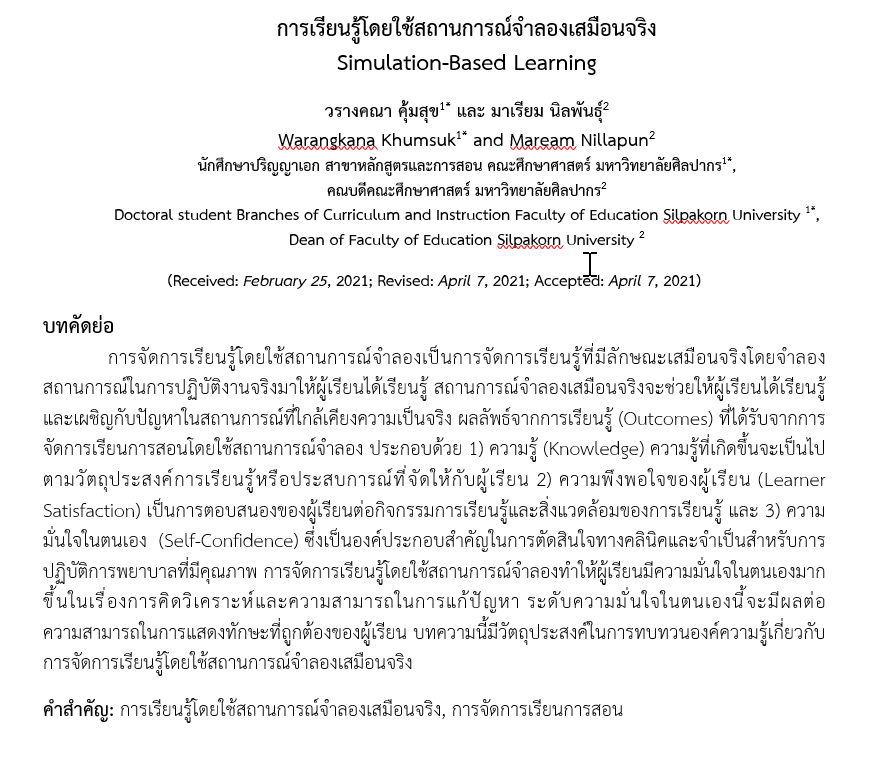
การจัดการเรียนรู้โดยใช้สถานการณ์จำลองเป็นการจัดการเรียนรู้ที่มีลักษณะเสมือนจริงโดยจำลองสถานการณ์ในการปฏิบัติงานจริงมาให้ผู้เรียนได้เรียนรู้ สถานการณ์จำลองเสมือนจริงจะช่วยให้ผู้เรียนได้เรียนรู้และเผชิญกับปัญหาในสถานการณ์ที่ใกล้เคียงความเป็นจริง ผลลัพธ์จากการเรียนรู้ (Outcomes) ที่ได้รับจากการจัดการเรียนการสอนโดยใช้สถานการณ์จำลอง ประกอบด้วย 1) ความรู้ (Knowledge) ความรู้ที่เกิดขึ้นจะเป็นไปตามวัตถุประสงค์การเรียนรู้หรือประสบการณ์ที่จัดให้กับผู้เรียน 2) ความพึงพอใจของผู้เรียน (Learner Satisfaction) เป็นการตอบสนองของผู้เรียนต่อกิจกรรมการเรียนรู้และสิ่งแวดล้อมของการเรียนรู้ และ 3) ความมั่นใจในตนเอง (Self-Confidence) ซึ่งเป็นองค์ประกอบสำคัญในการตัดสินใจทางคลินิคและจำเป็นสำหรับการปฏิบัติการพยาบาลที่มีคุณภาพ การจัดการเรียนรู้โดยใช้สถานการณ์จำลองทำให้ผู้เรียนมีความมั่นใจในตนเองมากขึ้นในเรื่องการคิดวิเคราะห์และความสามารถในการแก้ปัญหา ระดับความมั่นใจในตนเองนี้จะมีผลต่อความสามารถในการแสดงทักษะที่ถูกต้องของผู้เรียน บทความนี้มีวัตถุประสงค์ในการทบทวนองค์ความรู้เกี่ยวกับการจัดการเรียนรู้โดยใช้สถานการณ์จำลองเสมือนจริง
เอกสารอ้างอิง
วงเดือน สุวรรณคีรี, อรพิน จุลมุสิและฐิติอาภา ตั้งค้าวานิช. (2559). การจัดการเรียนรู้โดยใช้สถานการณ์จำลองสำหรับนิสิตนักศึกษาพยาบาล. วารสารพยาบาลศาสตร์ จุฬาลงกรณ์มหาวิทยาลัย, 28(2), 1-14.
สมจิตต์ สินธุชัยและกันยารัตน์ อุบลวรรณ. (2559). การเรียนรู้โดยใช้สถานการณ์จำลองเสมือนจริง: การนำไปใช้จัดการเรียนการสอน. วารสารพยาบาลกองทัพบก, 18(4), 29-38.
Black, P. B., & Chitty, K. K. (2011). Professional Nursing: Concept & Challenge. Missouri: Mosby.
Chong, C.(2009). Is reflective practice a useful task for student nurse. Asian Nursing Research, 3(3), 111-120.
Ckickering, A.W., & Reisser, L. (1993). Education and identity. San Francisco: Jasey-Bass.
Groom, J.A., Handerson, D., & Sittner,B.J. (2014). NLN/Jeffries simulation framework state of science project: Simulation design characteristic. Clinical Simulation in Nursing, 10, 337-344.
Hallmark, B.F., Thomas, C.M., & Gantt, L. (2014).The educational practices construct of the NLN/Jeffries simulation framework: State of science project: Simulation design characteristic. Clinical Simulation in Nursing, 10, 345-352.
Jefferies, P. R. (2005). A framework for designing, implementing, and evaluating simulations used as teaching strategies in nursing. Nurs Educ Perspect, 26, 96-103.
Jefferies, P. R. (2008). Getting in S.T.A.P. with simulation: Simulations take educator preparation. Nurs Educ Perspect, 29(2), 70-73.
Joyce, B. R., Weil, M. & Showers, B. (2010). The effects of cooperative learning experience on eighth grade students’s achievement and attitude toward science. Education 2010, 131(1), 169-180.
Motola, I., Devine, L.A. Chung, H.S., Sullivan, J. E., & Issenberg, S.B. (2013). Simulation in healthcare education: a best evidence practical guide. AMEE Guide No.82. Med Teach, 35, e1511-1530.
Oyserman, D., Elmore, K., and Smith, G. (2012). Handbook of self and identity. London: Guilford Press.
Steinwachs, B. (1992). How to Facilitate a Debriefing. Simulation & Gaming, 23(2), 186-195.
ดาวน์โหลด
เผยแพร่แล้ว
ฉบับ
ประเภทบทความ
สัญญาอนุญาต
- บทความหรือข้อคิดเห็นใด ๆ ที่ปรากฏในวารสารสภาการสาธารณสุขชุมชน ที่เป็นวรรณกรรมของผู้เขียน บรรณาธิการ ไม่จำเป็นต้องเห็นด้วย
- บทความที่ได้รับการตีพิมพ์ถือเป็นลิขสิทธิ์ของ วารสารสภาการสาธารณสุขชุมชน


