
ปัจจัยที่มีอิทธิพลต่อพฤติกรรมการป้องกันโรคติดเชื้อไวรัสโคโรนา 2019 ของประชาชนในเขตเทศบาลเมืองคอหงส์ จังหวัดสงขลา
คำสำคัญ:
ปัจจัยที่มีอิทธิพล, พฤติกรรมการป้องกันโรค, โรคติดเชื้อไวรัสโคโรนา 2019บทคัดย่อ
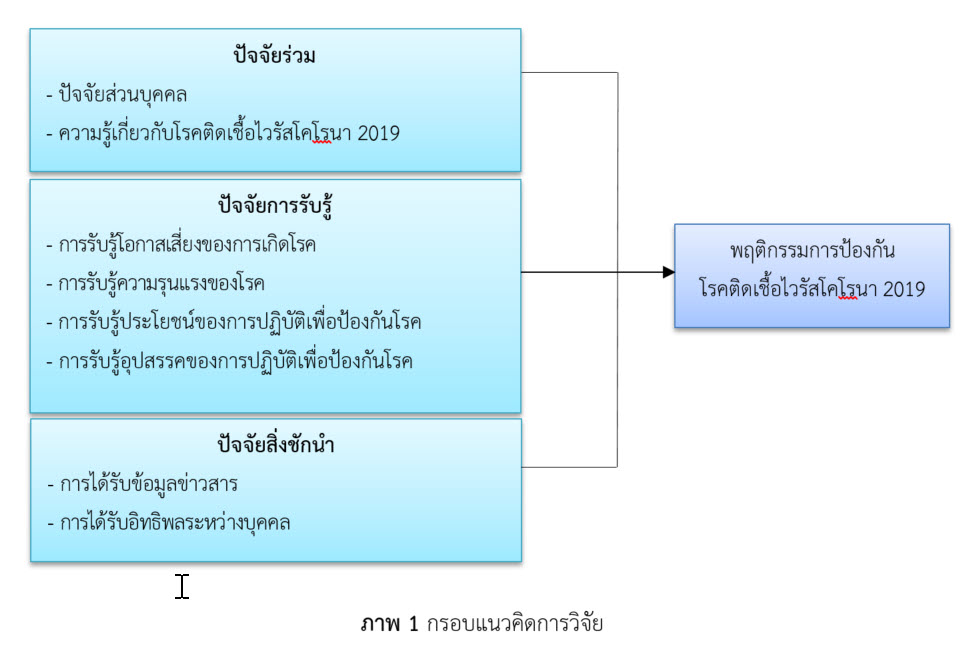
การวิจัยเชิงทำนายนี้มีวัตถุประสงค์เพื่อศึกษาปัจจัยที่มีอิทธิพลต่อพฤติกรรมการป้องกันโรคติดเชื้อไวรัสโคโรนา 2019 ของประชาชนในเขตเทศบาลเมืองคอหงส์ จังหวัดสงขลา กลุ่มตัวอย่างคือ ประชาชนที่อาศัยอยู่ในเขตเทศบาลเมืองคอหงส์ จังหวัดสงขลา จำนวน 381 คน เครื่องมือที่ใช้ในการวิจัยคือแบบสอบถาม ประกอบด้วย แบบสอบถามปัจจัยส่วนบุคคล แบบสอบถามความรู้เกี่ยวกับโรคติดเชื้อไวรัสโคโรนา 2019 แบบสอบถามเกี่ยวกับปัจจัยด้านการรับรู้ แบบสอบถามเกี่ยวกับปัจจัยด้านสิ่งชักนำ และแบบสอบถามพฤติกรรมการป้องกันโรคติดเชื้อไวรัสโคโรนา 2019 ผ่านการตรวจสอบเชิงเนื้อหาจากผู้เชี่ยวชาญ 3 ท่าน ได้ค่าความตรงเชิงเนื้อหามีคะแนนอยู่ระหว่าง .67–1.00 และมีค่าสัมประสิทธิ์แอลฟา (Cronbach’s Alpha Coefficient) อยู่ระหว่าง .765 -.890 วิเคราะห์ข้อมูลโดยใช้สถิติเชิงพรรณนา สถิติการวิเคราะห์สมการถดถอยพหุคูณ
ผลการวิจัย พบว่า กลุ่มตัวอย่างส่วนใหญ่มีพฤติกรรมการป้องกันโรคติดเชื้อไวรัสโคโรนา 2019 อยู่ในระดับดี (M=2.89, SD=0.32) คิดเป็นร้อยละ 88.45 ปัจจัยส่วนบุคคล ได้แก่ เพศ อายุ สถานภาพสมรส ระดับการศึกษาสูงสุด อาชีพ และรายได้ต่อเดือน ความรู้เกี่ยวกับโรคติดเชื้อไวรัสโคโรนา 2019 การรับรู้โอกาสเสี่ยงของการเกิดโรค การรับรู้ความรุนแรงของโรค การรับรู้ประโยชน์ของการปฏิบัติเพื่อป้องกันโรค การรับรู้อุปสรรคของการปฏิบัติเพื่อป้องกันโรค การได้รับอิทธิพลระหว่างบุคคล และการได้รับข้อมูลข่าวสาร สามารถร่วมกันอธิบายความแปรปรวนของพฤติกรรมการป้องกันโรคติดเชื้อไวรัสโคโรนา 2019 ของประชาชนในเขตเทศบาลเมืองคอหงส์ จังหวัดสงขลา ได้ร้อยละ 31.1 (R2 =.311) อย่างมีนัยสำคัญทางสถิติที่ระดับ .01 โดยปัจจัยที่มีอิทธิพลต่อพฤติกรรมการป้องกันโรคติดเชื้อไวรัสโคโรนา 2019 มากที่สุด คือ การรับรู้ความรุนแรงของโรค (b=.242, p=.000)
ผลการศึกษาสามารถนำไปใช้เป็นแนวทางในการกำหนดรูปแบบ วางแผน และจัดกิจกรรมที่เหมาะสม และสอดคล้องกับวิถีการดำเนินชีวิตของประชาชนในช่วงที่มีการแพร่ระบาดของโรคติดเชื้อไวรัสโคโรนา 2019 เช่น การจัดตั้งกลุ่มหรือเครือข่ายออนไลน์ สำหรับให้ข้อมูลเกี่ยวกับความรุนแรงของโรคติดเชื้อไวรัสโคโรนา 2019 เพื่อให้ประชาชนเกิดความตระหนักและนำไปสู่การปฏิบัติเพื่อป้องกันตนเองจากการติดเชื้อไวรัสโคโรนา 2019
เอกสารอ้างอิง
กรมควบคุมโรค. (2563). รายงานสถานการณ์ โควิด-19. สืบค้นเมื่อ 21 กรกฎาคม 2563. จาก https://covid19.ddc.moph.go.th/,
กรมวิทยาศาสตร์การแพทย์. (2563). คู่มือการตรวจวินิจฉัย โรคติดเชื้อไวรัสโคโรนา 2019 (COVID-19) ทางห้องปฏิบัติการ. กรุงเทพฯ:
กิตติพร เนาว์สุวรรณ, นภชา สิงห์วีรธรรม และนวพร ดำแสงสวัสดิ์. (2563). ความสัมพันธ์ระหว่างการรับรู้ความรุนแรงของโรคต่อบทบาทการดำเนินงานควบคุมโรคติดเชื้อไวรัสโคโรนา 2019 ในชุมชนของอาสาสมัครสาธารณสุขประจำหมู่บ้าน (อสม.) ในประเทศไทย. วารสารสถาบันบำราศนราดูร, 14(2), 92-103.
จารุวรรณ แหลมไธสง. (2559). ปัจจัยทำนายพฤติกรรมการป้องกันโรคติดเชื้อทางเดินหายใจของผู้ดูแลเด็กปฐมวัยในศูนย์เด็กเล็ก กรุงเทพมหานคร. วิทยานิพนธ์พยาบาลศาสตรมหาบัณฑิต (การพยาบาลเวชปฏิบัติชุมชน). มหาวิทยาลัยบูรพา.
ทัชชภร หมื่นนิพัฒ. (2555). ปัจจัยที่มีอิทธิพลต่อพฤติกรรมการป้องกันโรคหืดในผู้ป่วยโรคหืดที่มารับบริการในโรงพยาบาลระดับทุติยภูมิ จังหวัดนครปฐม. วิทยานิพนธ์พยาบาลศาสตรมหาบัณฑิต (การพยาบาลเวชปฏิบัติชุมชน). มหาวิทยาลัยคริสเตียน.
บุญใจ ศรีสถิตนรากูร. (2553). ระเบียบวิธีการวิจัยพยาบาลศาสตร์. พิมพ์ครั้งที่ 5. กรุงเทพมหานคร: ยูแอนไออินเตอร์มีเดีย.
ภิรมย์พร ใจหนักแน่น. (2557). การศึกษาพฤติกรรมตามแบบแผนความเชื่อด้านสุขภาพของการบริโภคเครื่องดื่มเกลือแร่ของนิสิตมหาวิทยาลัยเกษตรศาสตร์. วิทยานิพนธ์ศึกษาศาสตรบัณฑิต (สุขศึกษา). มหาวิทยาลัยเกษตรศาสตร์.
วิเชียร เกตุสิงห์. (2538). “ค่าเฉลี่ยกับการแปลความหมาย”. ข่าวสารการวิจัยการศึกษา, 18(2), 63-74.
วิญญ์ทัญญู บุญทัน และคณะ. (2563). ปัจจัยที่มีอิทธิพลต่อพฤติกรรมการสร้างเสริมสุขภาพในการป้องกันการติดเชื้อไวรัสโคโรนา 2019 (โควิด 19) ของผู้สูงอายุ. วารสารพยาบาลตำรวจ, 12(2), 323-337.
ศูนย์ปฏิบัติการควบคุมโรคอำเภอหาดใหญ่. (2563). รายงานสถานการณ์ COVID-19 ประจำวันที่ 3 กรกฎาคม 2563.
สำนักงานสถิติจังหวัดสงขลา. (2562). รายงานสถิติจังหวัดสงขลา พ.ศ. 2562. พิมพ์ครั้งที่ 1. สงขลา: สำนักงานสถิติจังหวัดสงขลา.
สำนักโรคติดต่ออุบัติใหม่ กรมควบคุมโรค กระทรวงสาธารณสุข. (2555). แผนยุทธศาสตร์เตรียมความพร้อม ป้องกัน และแก้ไขปัญหาโรคติดต่ออุบัติใหม่แห่งชาติ (พ.ศ. 2556-2559). พิมพ์ครั้งที่ 1. กรุงเทพฯ:
โรงพิมพ์ชุมนุมสหกรณ์การเกษตรแห่งประเทศไทย จำกัด
สำนักโรคติดต่ออุบัติใหม่ กรมควบคุมโรค กระทรวงสาธารณสุข. (2559). แผนยุทธศาสตร์เตรียมความพร้อม ป้องกัน และแก้ไขปัญหาโรคติดต่ออุบัติใหม่แห่งชาติ (พ.ศ. 2560 - 2564). พิมพ์ครั้งที่ 1. กรุงเทพฯ: สำนักงานกิจการโรงพิมพ์ องค์การสงเคราะห์ทหารผ่านศึกในพระบรมราชูปถัมภ์
อุมาพร เทียมทัด. (2550). การศึกษาความสัมพันธ์ระหว่างแบบการเรียนรู้กับพหุปัญญาของนักเรียนชั้นประถมศึกษาปีที่ 6 โรงเรียนสังกัดสำนักบริหารงานคณะกรรมการส่งเสริมการศึกษาเอกชน จังหวัดประจวบคีรีขันธ์. ปริญญานิพนธ์การบริหารการศึกษามหาบัณฑิต สาขาวิชาการวัดผลการศึกษา. มหาวิทยาลัยศรีนครินทรวิโรฒประสานมิตร.
Becker, M. H. (1974). The Health Belief Model and Sick Role Behavior. Health Education Monographs, 2, 409-419.
Bloom, B. S. (1971). Handbook on Formative and Summative Evaluation of Student Learning. New York: McGraw–Hill.
Poonaklom, P. et al. (2020). Factors Associated with Preventive Behaviors towards Coronavirus Disease (COVID-19) among Adults in Kalasin Province, Thailand, 2020. Outbreak, Surveillance, Investigation & Response (OSIR) Journal, 13(3), 78-89.
Wayne, W. D. (1995). Biostatistics: A Foundation of Analysis in the Health Sciences. 6th Ed. John Wiley&Sons, Inc., 180.
ดาวน์โหลด
เผยแพร่แล้ว
ฉบับ
ประเภทบทความ
สัญญาอนุญาต
- บทความหรือข้อคิดเห็นใด ๆ ที่ปรากฏในวารสารสภาการสาธารณสุขชุมชน ที่เป็นวรรณกรรมของผู้เขียน บรรณาธิการ ไม่จำเป็นต้องเห็นด้วย
- บทความที่ได้รับการตีพิมพ์ถือเป็นลิขสิทธิ์ของ วารสารสภาการสาธารณสุขชุมชน


