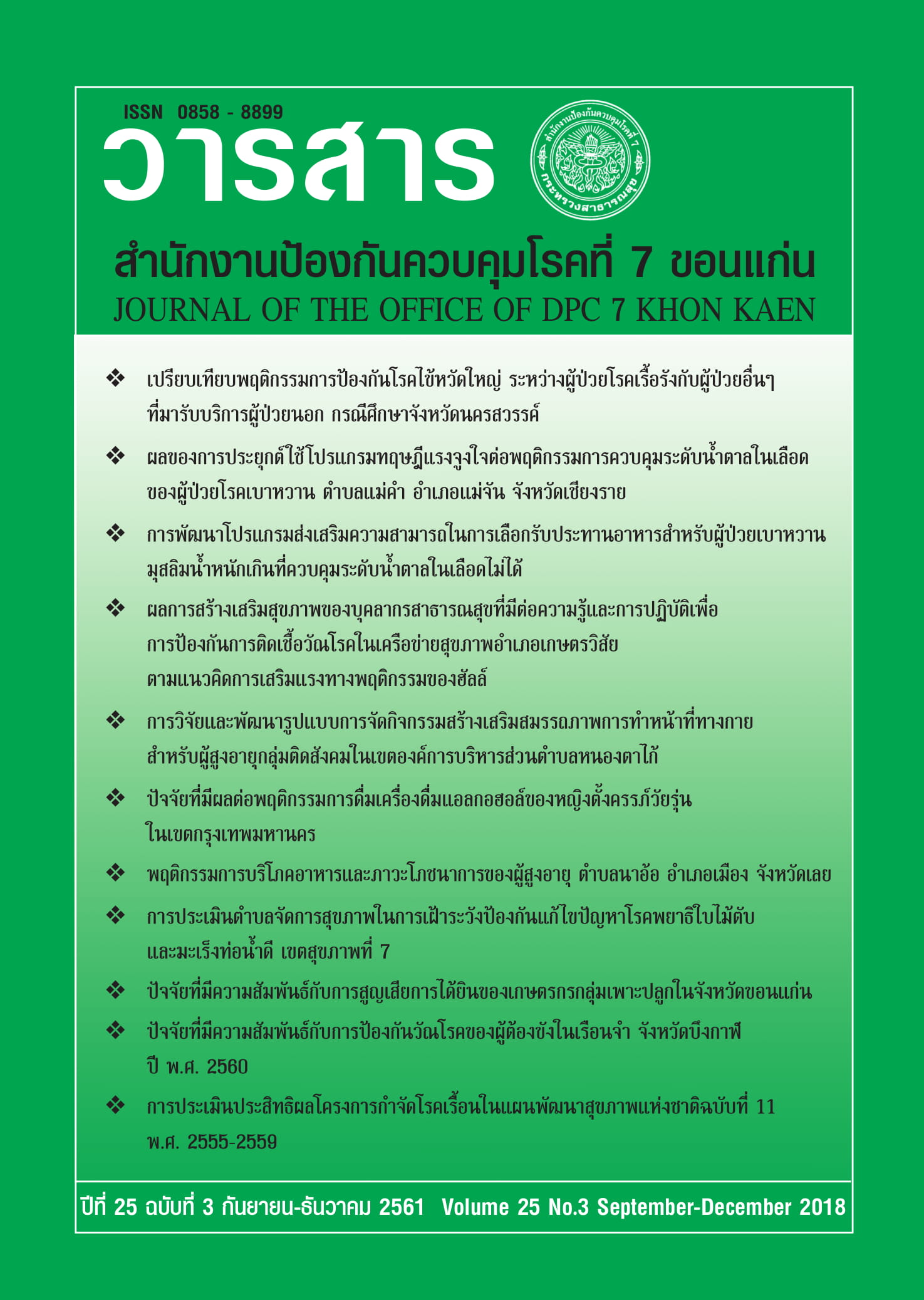
การวิจัยและพัฒนารูปแบบการจัดกิจกรรมสร้างเสริมสมรรถภาพการทำหน้าที่ทางกาย สำหรับผู้สูงอายุ กลุ่มติดสังคมในเขตองค์การบริหารส่วนตำบลหนองตาไก้
คำสำคัญ:
กิจกรรมสร้างเสริมสุขภาพ, สมรรถภาพการทำหน้าที่ทางกาย, ผู้สูงอายุกลุ่มติดสังคมบทคัดย่อ
การวิจัยครั้งนี้มีวัตถุประสงค์เพื่อศึกษาสมรรถภาพการทำหน้าที่ทางกายของผู้สูงอายุกลุ่มติดสังคม พัฒนารูปแบบการจัดกิจกรรมสร้างเสริมสมรรถภาพการทำหน้าที่ทางกายของผู้สูงอายุกลุ่มติดสังคมสุขภาพ และเพื่อศึกษาประสิทธิผลการจัดกิจกรรมเพื่อสร้างเสริมสมรรถภาพการทำหน้าที่ทางกายของผู้สูงอายุกลุ่มติดสังคม กลุ่มตัวอย่างเป็นผู้สูงอายุกลุ่มติดสังคม จำนวน 65 คน ที่ได้มาจากการเลือกแบบเจาะจง เครื่องมือที่ใช้ในการวิจัยเป็นขั้นตอนการจัดกิจกรรมสร้างเสริมสมรรถภาพการทำหน้าที่ทางกายของผู้สูงอายุกลุ่มติดสังคม 5 ขั้นตอน และแบบประเมินสมรรถภาพการทำหน้าที่ทางกายผู้สูงอายุ วิเคราะห์ข้อมูลโดยใช้ความถี่ ร้อยละ ค่าเฉลี่ย ส่วนเบี่ยงเบนมาตรฐาน และสถิติทดสอบ student’s t
ผลการวิจัยพบว่า 1) สมรรถนะการทำหน้าที่ทางกายของผู้สูงอายุก่อนเข้าร่วมกิจกรรมสร้างเสริมสมรรถภาพการทำหน้าที่ทางกายของผู้สูงอายุเมื่อเทียบกับเกณฑ์มาตรฐาน พบว่า ผู้สูงอายุกลุ่มติดสังคมมีสมรรถภาพการทำหน้าที่ ทางกาย จำนวน 9 สมรรถนะ ได้แก่ ความดันโลหิตบน (mmHg) อัตราการเต้นของหัวใจ (ครั้ง/นาที) เส้นรอบเอว (ซม.) เดิน 6 นาที (เมตร) ลุกนั่ง 30 วินาที (วินาที) งอแขนพับศอก (ครั้ง) ยื่นแขนแตะปลายเท้า (นิ้ว) เอื้อมแขนแตะมื้อด้านหลัง (นิ้ว) และลุกเดินไปกลับ (วินาที) แตกต่างจากเกณฑ์มาตรฐานผู้สูงอายุไทย (p<0.001) แต่อีก 3 รายการ ได้แก่ ความดันโลหิตล่าง (mmHg) ดัชนีมวลกาย (BMI) และเดินย่ำเท้า (ครั้ง) ไม่แตกต่าง 2) กิจกรรมสร้างเสริมสมรรถภาพการทำหน้าที่ทางกายของผู้สูงอายุกลุ่มติดสังคมประกอบด้วย 5 ขั้น คือ ขั้นแรกเป็นการคืนข้อมูล เสนอ ตัวแบบ สาธิตการออกกำลังกายและการฝึกปฏิบัติวางแผนกิจกรรม และเสริมแรงด้วยคำพูด หรือ REEPEM model และกิจกรรมมีความเหมาะสมและความเป็นไปได้กิจกรรมโดยรวมอยู่ในระดับมาก (M=2.86, SD=0.42) และ 3)หลังจากการเข้าร่วมกิจกรรมสร้างเสริมสมรรถภาพการทำหน้าที่ทางกายของผู้สูงอายุ พบว่า ผู้สูงอายุกลุ่มติดสังคมมีสมรรถภาพการทำหน้าที่ทางกาย จำนวน 10 สมรรถนะ ได้แก่ ความดันโลหิตล่าง (mmHg) แตกต่างจากก่อนเข้าร่วมกิจกรรมสร้างเสริมสมรรถภาพการทำหน้าที่ทางกายของผู้สูงอายุ (p=0.020) และอัตราการเต้นของหัวใจ (ครั้ง/นาที)เส้นรอบเอว (ซม.) เดิน 6 นาที (เมตร)เดินย่ำเท้า (ครั้ง) ลุกนั่ง 30 วินาที (วินาที) งอแขนพับศอก (ครั้ง) ยื่นแขนแตะปลายเท้า (นิ้ว) ลุกเดินไปกลับ (วินาที) และความเสี่ยงของการหกล้มแตกต่างจากก่อนเข้าร่วมกิจกรรม (p <0.001) แต่สมรรถภาพการทำหน้าที่ทางกายอีกจำนวน 5 รายการ ได้แก่ ความดันโลหิตบน (mmHg) น้ำหนัก (นน.) ส่วนสูง (ซม.) ดัชนีมวลกาย (BMI) และเอื้อมแขนแตะมื้อด้านหลัง (นิ้ว) ไม่แตกต่างกัน และผู้สูงอายุกลุ่มติดสังคมมีความพึงพอใจต่อกิจกรรมสร้างเสริมสมรรถภาพการทำหน้าที่ทางกาย โดยรวมอยู่ในระดับมาก (M= 4.10, SD=0.50)
Downloads
เอกสารอ้างอิง
2. มินตรา สาระรักษ์. การส่งเสริมกิจกรรมทางกายในวัยสูงอายุ.วารสารวิทยาศาสตร์และเทคโนโลยีมหาวิทยาลัยอุบลราชธานี 2558; 17(1): 24-35.
3. Ellingson, T. Exercise and quality of life inelderly individuals. J Gerontol Nurs. 2002;18(1): 18-25.
4. Bendall SC, Hughes C, Campbell JL, StewartMH, Pittock P, Liu S, et al. An enhanced massspectrometry approach reveals human embryonic
stem cell growth factors in culture. Mol CellProteom 2009; 8(3): 421-32.
5. Sommers JM, Andress FF, Price JH. Perceptionsof exercise of mall walkers utilizing of health belief model. J Health Educ 1995; 26(3):158-66.
6. ศรีนวล สถิตวิทยานันท์. การดูแลสุขภาพผู้สูงอายุ แบบองค์รวม. กรุงเทพฯ:มหาวิทยาลัยสุโขทัย-ธรรมาธิราช; 2552.
7. วิไล คุปต์นิรัติศัยกุล. ผลการฝึกการทรงตัวอย่างง่ายในผู้สูงอายุที่มีประวัติการล้มป่วย. กรุงเทพฯ:แพทยศาสตร์ ศิริราชพยาบาล มหาวิทยาลัยมหิดล;2553.
8. George LK. Still happy after all these years:Research frontiers on subjective well-being inlater life. J Gerontol: Soc Sci 2010; (3): 229-331.
9. กุลธิดา เชิงฉลาด. ความต้องการของประชาชนเกี่ยวกับการให้บริการทางด้านการออกกำลังกายและกีฬาของวิทยาลัยพลศึกษาจังหวัดสมุทรปราการสมุทรปราการ: วิทยาลัยพลศึกษาจังหวัดสมุทรปราการ; 2546.
10. Di Blasio A. Effects of the time of day of walkingon dietary behavior, body composition and aerobicftness in post-menopausal women. J Sports MedPhys Fitness 2010; 50(2): 196-201.
11. สุพิตร สมาหิโต. การสร้างแบบทดสอบสมรรถภาพทางกายที่สัมพันธ์กับสุขภาพสำหรับผู้สูงอายุ.วารสารวิทยาสารเกษตรศาสตร์ สาขาสังคมศาสตร์2548; 26(2): 224-38.
12. กฤตติกา อาภรณ์รัตน์. ผลของการฝึกก้าวขึ้นลงในน้ำลึกด้วยรองเท้าที่มีต่อความแข็งแรงของกล้ามเนื้อต้นขาและการทรงตัวในผู้สูงวัยเพศหญิงอายุ 56-65 ปี
[วิทยานิพนธ์วิทยาศาสตร์มหาบัณฑิต]. กรุงเทพฯ:มหาวิทยาลัยเกษตรศาสตร์; 2551.
13. รุ่งทิวา อัจฉละฐิติ. การออกกำลังกายในผู้สูงอายุ.วารสารเบาหวาน 2542; 31(1): 81-56.
14. กริชเพชร นนทโคตร. กระบวนการพัฒนาการออกกำลังกายเพื่อเสริมสร้างสุขภาพและสมรรถภาพทางกายของผู้สูงอายุ อำเภอเมือง จังหวัดบุรีรัมย์.วารสารวิชาการของมหาวิทยาลัยราชภัฏอุตรดิตถ์2559; 11(3): 70-9.
15. นริศรา เปรมศรี, สุทธิรักษ์ วิเศษสังข์, ประชาชาติอ่อนคำ, วัฒนพงษ์ คงสืบเสาะ, ชยานนท์อวิคุณประเสริฐ. การศึกษาสมรรถภาพทางกายและสุขภาพจิตในกลุ่มผู้สูงอายุกรณีศึกษาผู้สูงอายุในเขตอำเภอเมือง จังหวัดนครพนม. วารสารมหาวิทยาลัยนครพนม 2559; 6(3):18-25
16. เชียงเภาชิต,พรรณรายเทียมทัน.การพัฒนารูปแบบกิจกรรมส่งเสริมสุขภาพผู้สูงอายุในจังหวัดนครสวรรค์. สุทธิปริทัศน์ 2559; 30 (94):12-117.
17. Wiltsey SS, Kimberly J, Cook N, Calloway A,Castro F, Charns M. The sustainability of new programs and innovations: a review of the empirical literature and recommendations forfuture research. [internet]. [cited 2017 Nov 19]. Availablefrom https://www.ncbi.nlm.nih.gov/pubmed/22417162.
18. Vassiliki B. Anthropometry, physical activity and hip fractures in the elderly. Injury Int J Care Injuried 2011; 42: 188-93.
19. Goodwin V, Jones-Hughes T, Thompson Coon J,Boddy K, Stein K. Implementing the evidence for preventing falls among community dwelling
older people: A systematic review. J Safety Res 2011; 42(6): 443-51.
20. อัจฉรา ปุราคม. การพัฒนารูปแบบกิจกรรมทางกาย เพื่อลดการเสื่อมถอยของสมรรถภาพการทำหน้าที่ทางกายสำหรับผู้สูงอายุ. ศูนย์วิจัยทางกายเพื่อสุขภาพ สำนักงานกองทุนสร้างเสริมสุขภาพ (สสส.);2559.
21. กมลรัตน์ กิตติพิมพานนท์, ผจงจิต ไกรถาวร.ประสิทธิผลของรูปแบบการป้องกันการหกล้มที่ใช้ชุมชนเป็นฐานต่อสมรรถภาพทางกายและการพลัดตกหกล้มของผู้สูงอายุที่อาศัยอยู่ในชุมชนเมืองกรุงเทพฯ: การศึกษาติดตามผล. วารสารพยาบาลสาธารณสุข 2558; 29(1): 98-113.
22. Hacker K,Tendulkar SA, Rideout C, Bhuiya N,Trinh-Shevrin C, Savage CP, et al. Community capacity building and sustainability: outcomes of
community-based participatory research. PCHP2012; 6(3): 349-60.
23. Hanson HM, Salmoni AW. Stakeholders’perceptions of programme sustainability: Findings from a community-based fall prevention programme. Public Health 2011; 125(8):525-32.
24. Lovarini M, Clemson L, Dean C. Sustainability of community-based fall prevention programs:A systematic review. J Safety Res 2013; 47:9-17.
25. Peel NM, Travers C, Bell RA R, Smith K.Evaluation of a health service delivery intervention to promote falls prevention in older people across the care continuum. J Eval Clin Pract 2010;16(6): 1254-61.
26. ธชา รุญเจริญ. ผลของโปรแกรมนันทนาการที่มีต่อคุณภาพชีวิตและสมรรถภาพทางกายของผู้สูงอายุภาคตะวันออกเฉียงเหนือประเทศไทย. วารสารวิชาการมหาวิทยาลัยธนบุรี 2560; 11(24):56-64.
27. Perula CJ. Effectiveness of a multifactorialintervention program to reduce falls incidence among community-living older adults: a randomized controlled trial. Arch Phys MedRehabil 2012; 93(10):1677–84.
28. อวยพร ตั้งธงชัย, ณัฐยา แก้วมุกดา, พีระเดช มาลีหอม มาสริน ศุกลปักษ์. การพัฒนารูปแบบการส่งเสริมกิจกรรมทางกายเพื่อพัฒนาความอยู่ดีมีสุขเชิงอัตวิสัยของผู้สูงอายุ. ภาควิชาพลศึกษาคณะศึกษาศาสตร์ มหาวิทยาลัยเกษตรศาสตร์; 2559.
29. Pender NJ. Health promotion in nursing practice.2nd ed. Option and Lange, norwalk, connection.Los Angelis California; 1987.
30. ภัทรธิรา ผลงาม. การวิจัยและพัฒนานวัตกรรมในการส่งเสริมสุขภาวะผู้สูงอายุในชุมชน: กรณีศึกษาในอำเภอเมืองจังหวัดเลย. มหาวิทยาลัยราชภัฏเลย;2557
ดาวน์โหลด
เผยแพร่แล้ว
รูปแบบการอ้างอิง
ฉบับ
ประเภทบทความ
สัญญาอนุญาต
ความรับผิดชอบ
บทความที่ลงพิมพ์ในวารสารสำนักงานป้องกันควบคุมโรคที่ 7 ขอนแก่น ถือเป็นผลงานทางวิชาการหรือวิจัย และวิเคราะห์ตลอดจนเป็นความเห็นส่วนตัวของผู้เขียน ไม่ใช่ความเห็นของวารสารสำนักงาน ป้องกันควบคุมโรคที่ 7 จังหวัดขอนแก่น หรือ ของกองบรรณาธิการแต่ประการใด ผู้เขียนต้องรับผิดชอบต่อบทความของตนเอง
ลิขสิทธ์บทความ
บทความที่ได้รับการตีพิมพ์จะถือเป็นลิขสิทธิ์ของสำนักงานป้องกันตวบคุมโรคที่ 7 จังหวัดขอนแก่น