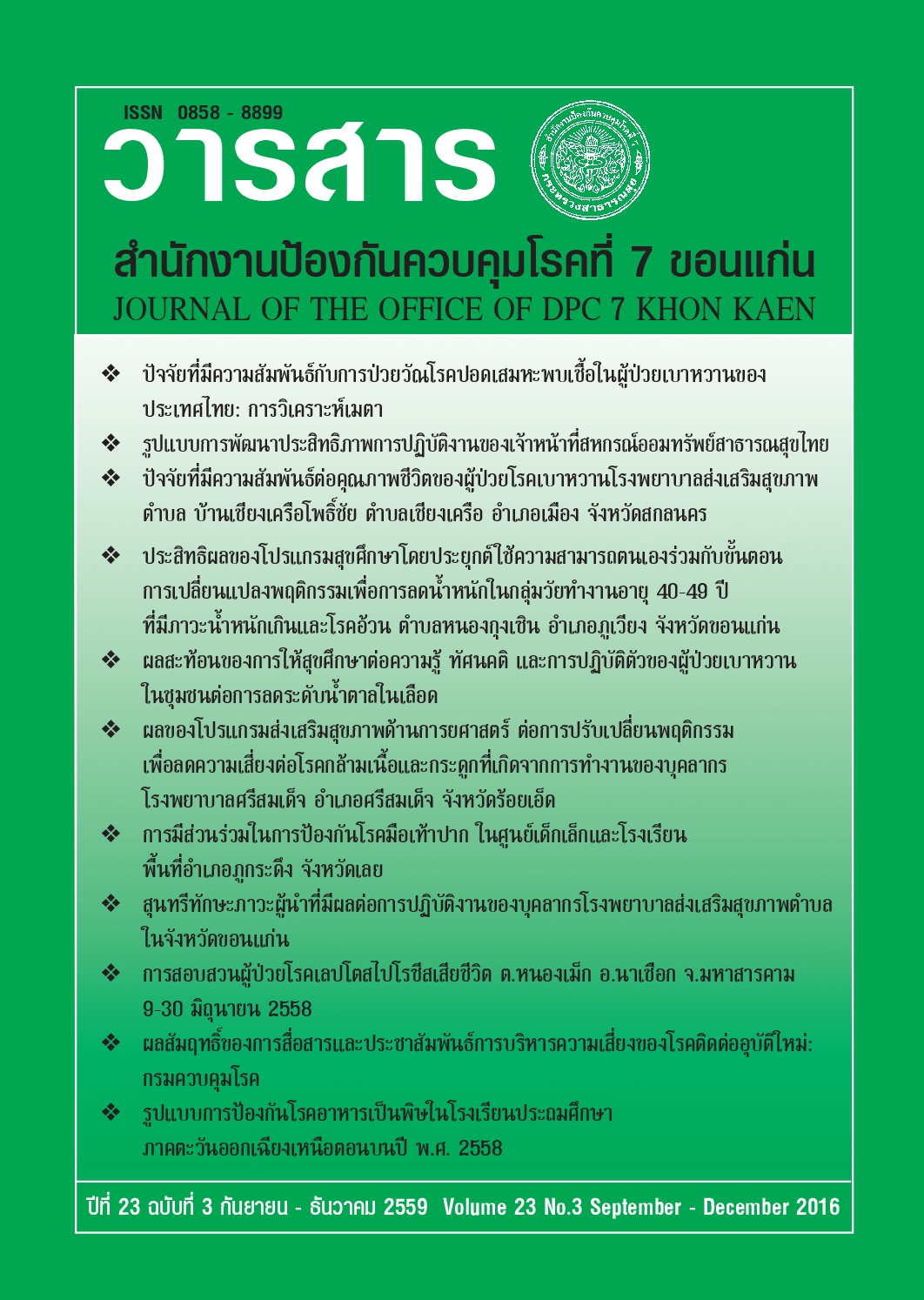
รูปแบบการป้องกันโรคอาหารเป็นพิษในโรงเรียนประถมศึกษา ภาคตะวันออกเฉียงเหนือตอนบนปี พ.ศ.2558
คำสำคัญ:
รูปแบบการป้องกันโรคอาหารเป็นพิษ, โรงเรียน, ภาคตะวันออกเฉียงเหนือตอนบนบทคัดย่อ
การวิจัยนี้ เป็นการวิจัยเชิงปฏิบัติการ มีวัตถุประสงค์ เพื่อศึกษารูปแบบการป้องกันโรคอาหารเป็นพิษในโรงเรียนประถมศึกษา ภาคตะวันออกเฉียงเหนือตอนบน พ.ศ.2558 ประชากรที่ศึกษาคือ โรงเรียนประถมศึกษาในจังหวัดตะวันออกเฉียงเหนือตอนบน รวม 4 จังหวัด จำนวนทั้งสิ้น 14แห่งผู้ร่วมดำเนินการในพื้นที่เลือกแบบเจาะจง ประกอบด้วย ผู้บริหารโรงเรียน ( 14คน) ครู(22คน) เจ้าหน้าที่สาธารณสุข ( 9 คน) นักเรียน(250 คน) ผู้ประกอบการ (45 คน) รวมทั้งหมด 340คน ดำเนินการในช่วงเดือนมีนาคม พ.ศ. 2557 ถึง กันยายน พ.ศ. 2558 แบ่งการศึกษาเป็น 3ระยะ คือ 1) การศึกษาสภาพการดำเนินงานการป้องกันโรคอาหารเป็นพิษในโรงเรียน 2) การจัดทำรูปแบบการป้องกันโรคอาหารเป็นพิษในโรงเรียนและดำเนินการ3) การประเมินผลรูปแบบการป้องกันโรคอาหารเป็นพิษในโรงเรียน เก็บรวบรวมข้อมูลโดยใช้แบบสอบถาม การสัมภาษณ์ การสนทนากลุ่ม การประชุมระดมสมองข้อมูลเชิงปริมาณวิเคราะห์ข้อมูลโดยใช้การแจกแจงความถี่และร้อยละ ส่วนข้อมูลเชิงคุณภาพใช้การวิเคราะห์เชิงเนื้อหา
ผลการศึกษา 1.สภาพการดำเนินงานการป้องกันโรคอาหารเป็นพิษในโรงเรียน พบว่านักเรียนและผู้ประกอบการมีความรู้เรื่องโรคอาหารเป็นพิษอยู่ในระดับต่ำ ร้อยละ 71.6, 40.0 ตามลำดับ มีทัศนคติต่อการป้องกันควบคุมโรคอยู่ในระดับปานกลางร้อยละ 62.4, 77.8 ตามลำดับ การปฏิบัติตนในการป้องกันควบคุมโรคอยู่ในระดับปานกลาง ร้อยละ 70.0, 53.3 ตามลำดับ กิจกรรมการเฝ้าระวังป้องกันโรคอาหารเป็นพิษในโรงเรียนไม่เป็นรูปธรรมชัดเจน ตลอดจนนโยบายการดำเนินงานส่วนใหญ่เน้นการสร้างเสริมสุขภาพมากกว่าการเฝ้าระวังป้องกันไม่ให้เกิดโรคในโรงเรียน
หลังดำเนินการประชุมระดมสมอง แลกเปลี่ยนเรียนรู้และเสวนากลุ่มเพื่อพัฒนารูปแบบการป้องกันโรคอาหารเป็นพิษในโรงเรียนได้รูปแบบการป้องกันโรคอาหารเป็นพิษในโรงเรียน ดังนี้1. การเฝ้าระวังป้องกันโรคอาหารเป็นพิษในโรงเรียน มี3 วิธีได้แก่ 1.1) การเฝ้าระวังนมโรงเรียน การเก็บตัวอย่างอาหารส่งตรวจ และการตรวจหาคลอรีนตกค้างในน้ำประปา 1.2) การป้องกันโรคอาหารเป็นพิษในโรงเรียน ประกอบด้วยการล้างมือ ล้างห้องน้ำ สายตรวจพาข้าวปิ่นโต นักข่าวเสียงตามสายในโรงเรียน รณรงค์อาหารปลอดภัยในโรงเรียน สุกก็แซ่บรณรงค์ทำความสะอาดในโรงเรียน ครอบครัวอาหารปลอดภัยและนักสื่อสารมวลชนอาสา และ 1.3) การบูรณาการจัดกิจกรรมพัฒนาผู้เรียนการเฝ้าระวังป้องกันโรคอาหารเป็นพิษในโรงเรียนมี 2 ลักษณะคือมีการจัดการเรียนการสอนโดยบูรณาการเข้าในวิชาสุขศึกษาและพละศึกษา อาหารสอนเทอมละ 6 ชั่วโมงและการจัดการเรียนการสอนโดยบูรณาการเข้าในวิชาสอนเสริม ชุมนุมต่างๆ 2. เครือข่ายเฝ้าระวังป้องกันโรคอาหารเป็นพิษในโรงเรียนมี 2 เครือข่ายที่ดำเนินการเฝ้าระวังป้องกันโรคอาหารเป็นพิษในโรงเรียน คือ เครือข่ายแกนนำนักเรียนภายในโรงเรียน และเครือข่ายครูและเจ้าหน้าที่ผู้ที่เกี่ยวข้องในโรงเรียน
ผลลัพธ์หลังการดำเนินการพัฒนารูปแบบการป้องกันโรคอาหารเป็นพิษในโรงเรียน ตามกระบวนการแล้วได้ค้นพบนักเรียนมีความรู้เรื่องโรคอาหารเป็นพิษ มีทัศนคติและการปฏิบัติตนในการป้องกันโรคเพิ่มขึ้นเมื่อเปรียบเทียบก่อนหลังดำเนินการมีความแตกต่างกันอย่างมีนัยสำคัญทางสถิติ (p< 0.001) ส่วนผู้ประกอบการในโรงเรียนมีความรู้เรื่องโรคอาหารเป็นพิษ มีทัศนคติและการปฏิบัติตนในการป้องกันโรคเพิ่มขึ้นเมื่อเปรียบเทียบก่อนหลังดำเนินการมีความแตกต่างกันอย่างมีนัยสำคัญทางสถิติ (p< 0.001)ยกเว้นการปฏิบัติตนในการป้องกันควบคุมโรคที่มีความแตกต่างกันอย่างไม่มีนัยสำคัญทางสถิติ โรงเรียนมีกิจกรรมเฝ้าระวังป้องกันโรคอาหารเป็นพิษที่เป็นรูปธรรมชัดเจนมี 5แห่ง ส่วนโรงเรียนอีก9แห่งเน้นกิจกรรมการป้องกันโรค ทุกโรงเรียนผู้บริหารให้ความสำคัญต่อการดำเนินงาน และมีการจัดสภาพแวดล้อมไม่ให้เอื้อต่อการเกิดโรคส่งผลให้อัตราป่วยโรคอาหารเป็นพิษในตำบลที่โรงเรียนตั้งอยู่ลดลง เมื่อเปรียบเทียบก่อนและหลังดำเนินการโรงเรียนทุกแห่งไม่มีการระบาดของโรคอาหารเป็นพิษเกิดขึ้นในระหว่างดำเนินการและเมื่อสิ้นสุดการดำเนินงาน
ดาวน์โหลด
เผยแพร่แล้ว
รูปแบบการอ้างอิง
ฉบับ
ประเภทบทความ
สัญญาอนุญาต
ความรับผิดชอบ
บทความที่ลงพิมพ์ในวารสารสำนักงานป้องกันควบคุมโรคที่ 7 ขอนแก่น ถือเป็นผลงานทางวิชาการหรือวิจัย และวิเคราะห์ตลอดจนเป็นความเห็นส่วนตัวของผู้เขียน ไม่ใช่ความเห็นของวารสารสำนักงาน ป้องกันควบคุมโรคที่ 7 จังหวัดขอนแก่น หรือ ของกองบรรณาธิการแต่ประการใด ผู้เขียนต้องรับผิดชอบต่อบทความของตนเอง
ลิขสิทธ์บทความ
บทความที่ได้รับการตีพิมพ์จะถือเป็นลิขสิทธิ์ของสำนักงานป้องกันตวบคุมโรคที่ 7 จังหวัดขอนแก่น