
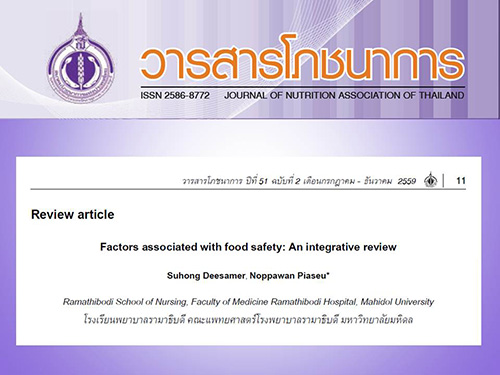
Factors associated with food safety: An integrative review
Keywords:
Integrative review, Food safety, Foodborne illnessAbstract
This integrative review focused on factors associated with food safety in home kitchens. Six factors were found to be associated with food safety including knowledge, gender, age, education, perceived risk and perceived control, and attitude are discussed. Due to gap of knowledge on food safety education, further research is needed to implement plans to address the above factors.
References
1. FAO, WHO. Codex Alimentarius: Food hygiene. Rome: FAO; 2009.
2. Beulens AJM, Broens DF, Folstar P, Hofstede GJ. Food safety and transparency in food chains and networks relationships and challenges. Food Control. 2005;16(6):481-6.
3. Carvalho FP. Agriculture, pesticides, food security and food safety. Environ Sci Policy. 2006;9(7-8):685-92.
4. Elmi M. Food Safety. East Mediterr Health J. 2008;14:S143-9.
5. Mead PS, Slutsker L, Dietz V, McCaig LF, Bresee JS, Sahpiro C. Food-related illness and death in the United States. Emerg Infect Dis. 1999;5(5):607-25.
6. Raspor P. Total food chain safety: How good practices can contribute? Trends Food Sci Tech. 2008;19(8):405-12.
7. Scharff RL. Health-related costs from foodborne illness in the United States. 2010 [cited 2013 December 21]. Available from: https://publichealth.lacounty.gov/eh/docs/ReportPublication/HlthRelatedCostsFromFoodborneIllinessUS.pdf.
8. Kongsaengdao S, Samintarapanya K, Rusmeechan S, Wongsa A, Pothirat C, Permpikul C, et al. An outbreak of botulism in Thailand: Clinical manifestations and management of severe respiratory failure. Clin Infect Dis. 2006;43(10):1247-56.
9. Wangroongsarb P, Jittaprasartsin C, Suthivarakom K, Kamthalang T, Yeesoonsang S, Sangkitporn S. An outbreak of foodborne botulism in Surat Thani Province, Thailand 2012. Jpn J Infect Dis. 2013;66(4):353-4.
10. Swaddiwudhipong W, Hannarong S, Peanumlom P, Pittayawonganon C, Sitthi. Two consecutive outbreaks of food-borne cholera associated with consumption of chicken rice in northwestern Thailand. Southeast Asian J Trop Med Public Health. 2012;43(4):927-32.
11. Nyachuba DG. Foodborne illness: Is it on the rise? Nutr Rev. 2010;68(5):257-69.
12. Burlingame B, Pineiro M. The essential balance: Risks and benefits in food safety and quality. J Food Comp and Anal. 2007;20(3-4):139-46.
13. Schlundt J. Principles of food safety risk management. Food Control. 1999;10(4-5):299-302.
14. Byrd-Bredbenner C, Berning J, Martin-Biggers J, Quick V. Food safety in home kitchens: A synthesis of the literature. Int J Environ R Public Health. 2013;10(9):4060-85.
15. Scott ES. Food safety and foodborne disease in 21st century homes. Can J Infect Dis. 2003;14(5):277-80.
16. Whittemore R, Knafl K. The integrative review: Update methodology. J Adv Nurs. 2005;52(5):546-53.
17. Ovca A, Jevsnik M. Maintaining a cold chain from purchase to the home and at home: Consumer opinions. Food Control. 2009;20(2):167-72.
18. Shapiro Ma, Porticella M, Jiang LC, Gravani RB. Predicting intentions to adopt safe home food handling practices: Applying the theory of planned behavior. Appetite. 2011;56(1):96-103.
19. Jevsnik M, Hlebec V, Raspor P. Consumers’ awareness of food safety from shopping to eating. Food Control. 2008;19(8):737-45.
20. Anderson AL, Verrill LA, Sahyoun NR. Food safety perceptions and practices of older adults. Public Health Rep. 2011;126(2):220-7.
21. Zorba NND, Kaptan M. Consumer food safety perception and practices in a Turkish community. J Food Protect. 2011;74(11):1922-9.
22. Bas M, Turker P, Koseler E, Saka M. Adolescents as a consumer: The food safety knowledge and practices. Health Med. 2012;6(9):2973-82.
23. Hearty AP, McCarthy SN, Kearney JM, Gibney MJ. Relationship between attitudes towards healthy eating and dietary behavior, lifestyle and demographic factors in a representative sample of Irish adults. Appetite. 2007;48(1):1-11.
24. Abbot JM, Byrd-Bredbenner C, Schaffner D, Bruhn CM, Blalock L. Comparison of food safety cognitions and self-reported food-handling behaviors with observed food safety behaviors of young adults. Eur J Clin Nutr. 2009;63(4):572-9.
25. Redmond Ec, Griffith CJ. Consumer perceptions of food safety risk, control and responsibility. Appetite. 2004;4(3):309-13.
26. Karabudak E, Bas M, Kiziltan G. Food safety in the home consumption of meat in Turkey. Food Control. 2008;19(3):320-7.
27. Sanlier N. The knowledge and practice of food safety by young and adult consumer. Food Control. 2009;20(6):538-42.
28. Langiano E, Ferrara M, Lanni L, Viscardi V, Abbatecola AM, Vito ED. Food safety at home: Knowledge and practices of consumers. J Public Health. 2012;20(1):47-57.
29. Xayaseng V, Phongluxa K, Eeuwijk PV, Akkhavong K, Odermatt P. Raw fish consumption in liver fluke endemic areas in rural southern Laos. Acta Trop. 2013;127(2):105-11.
30. Redmond EC, Griffith CJ. Consumer food handling in the home; A review of food safety studies. J Food Protect. 2003;66(1):130-61.
31. Donkor ES. Application of the WHO five keys of food safety to improve food handling practices of food vendors in a poor resource community in GHNA. E Afr J Public Health. 2009;6(2):148-51.
32. Losassoa C, Cibina V, Cappaa V, Roccatoa A, Vanzob A, IAndrighettoa I, et al. Food safety and nutrition: Improving consumer behavior. Food Control. 2012;26(2):252-8.
33. Salt B. Baby boomer culture gets its comeuppance. Institute of Public Affairs. 2003;55:10-1.
34. Kendall PA, Hillers VV, Medeiros LC. Food safety guidance for older adults. Clin Infect Dis. 2006;42(9):1298-304.
2. Beulens AJM, Broens DF, Folstar P, Hofstede GJ. Food safety and transparency in food chains and networks relationships and challenges. Food Control. 2005;16(6):481-6.
3. Carvalho FP. Agriculture, pesticides, food security and food safety. Environ Sci Policy. 2006;9(7-8):685-92.
4. Elmi M. Food Safety. East Mediterr Health J. 2008;14:S143-9.
5. Mead PS, Slutsker L, Dietz V, McCaig LF, Bresee JS, Sahpiro C. Food-related illness and death in the United States. Emerg Infect Dis. 1999;5(5):607-25.
6. Raspor P. Total food chain safety: How good practices can contribute? Trends Food Sci Tech. 2008;19(8):405-12.
7. Scharff RL. Health-related costs from foodborne illness in the United States. 2010 [cited 2013 December 21]. Available from: https://publichealth.lacounty.gov/eh/docs/ReportPublication/HlthRelatedCostsFromFoodborneIllinessUS.pdf.
8. Kongsaengdao S, Samintarapanya K, Rusmeechan S, Wongsa A, Pothirat C, Permpikul C, et al. An outbreak of botulism in Thailand: Clinical manifestations and management of severe respiratory failure. Clin Infect Dis. 2006;43(10):1247-56.
9. Wangroongsarb P, Jittaprasartsin C, Suthivarakom K, Kamthalang T, Yeesoonsang S, Sangkitporn S. An outbreak of foodborne botulism in Surat Thani Province, Thailand 2012. Jpn J Infect Dis. 2013;66(4):353-4.
10. Swaddiwudhipong W, Hannarong S, Peanumlom P, Pittayawonganon C, Sitthi. Two consecutive outbreaks of food-borne cholera associated with consumption of chicken rice in northwestern Thailand. Southeast Asian J Trop Med Public Health. 2012;43(4):927-32.
11. Nyachuba DG. Foodborne illness: Is it on the rise? Nutr Rev. 2010;68(5):257-69.
12. Burlingame B, Pineiro M. The essential balance: Risks and benefits in food safety and quality. J Food Comp and Anal. 2007;20(3-4):139-46.
13. Schlundt J. Principles of food safety risk management. Food Control. 1999;10(4-5):299-302.
14. Byrd-Bredbenner C, Berning J, Martin-Biggers J, Quick V. Food safety in home kitchens: A synthesis of the literature. Int J Environ R Public Health. 2013;10(9):4060-85.
15. Scott ES. Food safety and foodborne disease in 21st century homes. Can J Infect Dis. 2003;14(5):277-80.
16. Whittemore R, Knafl K. The integrative review: Update methodology. J Adv Nurs. 2005;52(5):546-53.
17. Ovca A, Jevsnik M. Maintaining a cold chain from purchase to the home and at home: Consumer opinions. Food Control. 2009;20(2):167-72.
18. Shapiro Ma, Porticella M, Jiang LC, Gravani RB. Predicting intentions to adopt safe home food handling practices: Applying the theory of planned behavior. Appetite. 2011;56(1):96-103.
19. Jevsnik M, Hlebec V, Raspor P. Consumers’ awareness of food safety from shopping to eating. Food Control. 2008;19(8):737-45.
20. Anderson AL, Verrill LA, Sahyoun NR. Food safety perceptions and practices of older adults. Public Health Rep. 2011;126(2):220-7.
21. Zorba NND, Kaptan M. Consumer food safety perception and practices in a Turkish community. J Food Protect. 2011;74(11):1922-9.
22. Bas M, Turker P, Koseler E, Saka M. Adolescents as a consumer: The food safety knowledge and practices. Health Med. 2012;6(9):2973-82.
23. Hearty AP, McCarthy SN, Kearney JM, Gibney MJ. Relationship between attitudes towards healthy eating and dietary behavior, lifestyle and demographic factors in a representative sample of Irish adults. Appetite. 2007;48(1):1-11.
24. Abbot JM, Byrd-Bredbenner C, Schaffner D, Bruhn CM, Blalock L. Comparison of food safety cognitions and self-reported food-handling behaviors with observed food safety behaviors of young adults. Eur J Clin Nutr. 2009;63(4):572-9.
25. Redmond Ec, Griffith CJ. Consumer perceptions of food safety risk, control and responsibility. Appetite. 2004;4(3):309-13.
26. Karabudak E, Bas M, Kiziltan G. Food safety in the home consumption of meat in Turkey. Food Control. 2008;19(3):320-7.
27. Sanlier N. The knowledge and practice of food safety by young and adult consumer. Food Control. 2009;20(6):538-42.
28. Langiano E, Ferrara M, Lanni L, Viscardi V, Abbatecola AM, Vito ED. Food safety at home: Knowledge and practices of consumers. J Public Health. 2012;20(1):47-57.
29. Xayaseng V, Phongluxa K, Eeuwijk PV, Akkhavong K, Odermatt P. Raw fish consumption in liver fluke endemic areas in rural southern Laos. Acta Trop. 2013;127(2):105-11.
30. Redmond EC, Griffith CJ. Consumer food handling in the home; A review of food safety studies. J Food Protect. 2003;66(1):130-61.
31. Donkor ES. Application of the WHO five keys of food safety to improve food handling practices of food vendors in a poor resource community in GHNA. E Afr J Public Health. 2009;6(2):148-51.
32. Losassoa C, Cibina V, Cappaa V, Roccatoa A, Vanzob A, IAndrighettoa I, et al. Food safety and nutrition: Improving consumer behavior. Food Control. 2012;26(2):252-8.
33. Salt B. Baby boomer culture gets its comeuppance. Institute of Public Affairs. 2003;55:10-1.
34. Kendall PA, Hillers VV, Medeiros LC. Food safety guidance for older adults. Clin Infect Dis. 2006;42(9):1298-304.
Downloads
Published
2016-12-28
How to Cite
Piaseu, N., & Deesamer, S. (2016). Factors associated with food safety: An integrative review. Journal of Nutrition Association of Thailand (Online), 51(2), 11–28. retrieved from https://he01.tci-thaijo.org/index.php/JNAT/article/view/117059
Issue
Section
Review article
License
Upon acceptance of an article, copyright is belonging to the Nutrition Association of Thailand.

