การศึกษาย้อนหลังเชิงพรรณนาลักษณะผู้ป่วยโรคหนองในที่ดื้อยาปฏิชีวนะ ในคลินิกโรคติดต่อทางเพศสัมพันธ์
คำสำคัญ:
โรคหนองใน, การดื้อยาต้านจุลชีพ, โรคติดต่อทางเพศสัมพันธ์บทคัดย่อ
การวิจัยครั้งนี้เป็นการวิจัยสืบย้อนจากเวชระเบียนเพื่อศึกษาลักษณะประชากร พฤติกรรมเสี่ยง และลักษณะทางคลินิกของผู้ป่วยโรคหนองในดื้อยาปฏิชีวนะ ณ ศูนย์การแพทย์บางรักด้านโรคติดต่อทางเพศสัมพันธ์ ประชากรเป้าหมายเป็นผู้ป่วยโรคหนองในที่มีผลการทดสอบความไวต่อยาปฏิชีวนะตามเกณฑ์ EUCAST ที่มารับบริการ ณ คลินิกโรคติดต่อทางเพศสัมพันธ์ ของศูนย์การแพทย์บางรัก ตั้งแต่ 1 มกราคม พ.ศ.2563 ถึง 30 เมษายน พ.ศ.2568 จำนวน 38 ราย เก็บรวบรวมข้อมูลโดยใช้แบบบันทึกข้อมูลเวชระเบียน ประกอบด้วย ข้อมูลทั่วไป พฤติกรรมทางเพศ ผลการตรวจทางห้องปฏิบัติการ และผลการรักษา วิเคราะห์ข้อมูล
โดยใช้สถิติพรรณนา ได้แก่ ความถี่ ร้อยละ ค่าเฉลี่ย และส่วนเบี่ยงเบนมาตรฐาน
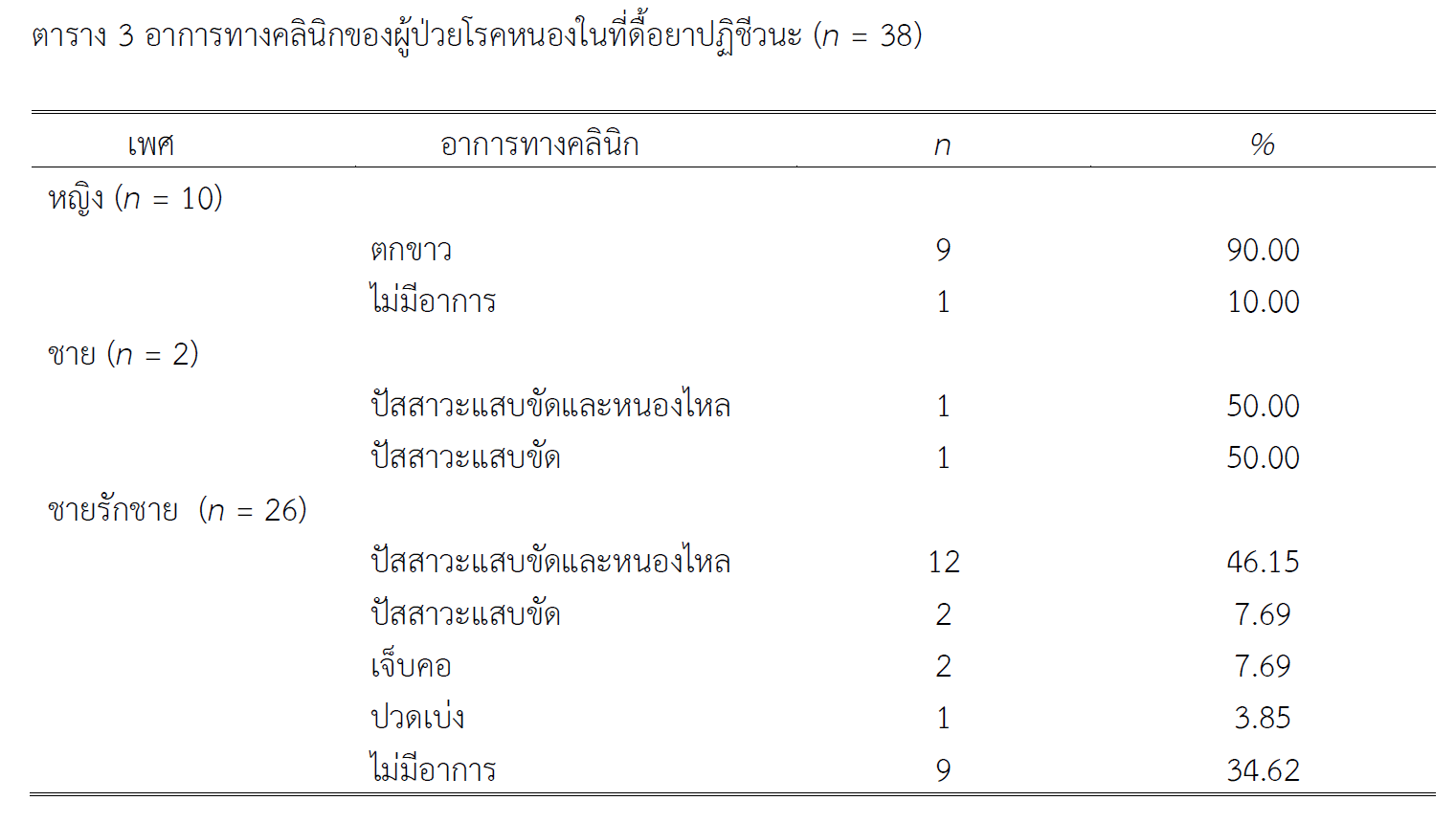
ผลการศึกษาพบว่า ผู้ป่วยโรคหนองในที่ดื้อยาปฏิชีวนะใน มีอายุเฉลี่ย 31.74 ปี (SD = 10.43) ส่วนใหญ่เป็นกลุ่มชายรักชาย ร้อยละ 68.42 มีประวัติเคยป่วยเป็นโรคหนองในช่วง 3 เดือนที่ผ่านมา ร้อยละ 31.71 พฤติกรรมการป้องกันโรคทางเพศสัมพันธ์พบว่าการมีเพศสัมพันธ์โดยไม่ใช้ถุงยางอนามัย ร้อยละ 36.84 มีจำนวนคู่นอน 2 – 5 คน ร้อยละ 52.63 เป็นคู่นอนชั่วคราว ร้อยละ 47.37 ส่วนลักษณะทางคลินิก พบว่า ผู้หญิงมีอาการตกขาว ร้อยละ 90 และผู้ชายมีอาการปัสสาวะแสบขัดและหนองไหล ร้อยละ 50 และกลุ่มชายรักชายมีปัสสาวะแสบขัดร่วมกับมีหนองไหล ร้อยละ 46.15 ซึ่งข้อมูลหลังการรักษาพบว่า มีการหายจากการติดเชื้อ ร้อยละ 89.47 แต่ยังพบปัญหาการติดตามผู้ป่วยและคู่นอนที่ขาดการติดต่อ ร้อยละ 86.84
ข้อเสนอแนะ ควรมีการพัฒนาระบบติดตามผู้ป่วยและคู่นอนเพื่อป้องกันการแพร่เชื้อซ้ำ รวมทั้งเฝ้าระวังการดื้อยา
อย่างต่อเนื่อง และการสร้างภูมิคุ้มกันทางความรู้ด้านการป้องกัน เช่น การใช้ถุงยางอนามัยและการรักษาคู่นอนร่วมด้วย อย่างเป็นระบบ
Downloads
เอกสารอ้างอิง
Alhusseini, L. B., Hasani, B., Jaafar, F. N., Beig, M., Abbasian, S., & Azizian, K. (2025). Temporal and geographic trends in extended-spectrum cephalosporins resistance among Neisseria gonorrhoeae isolates worldwide: A systematic review and meta-analysis. BMC Infectious Diseases, 25(1), 1175. https://doi.org/10.1186/s12879-025-11601-2
Buasakul, P., Sangprasert, P., & Kittiyaowamarn, R. (2020). Antimicrobial susceptibility in N. Gonorrhoeae during 2012–2018. Thai AIDS Journal, 32(2), 42–53.
Centers for Disease Control and Prevention. (2021). Sexually transmitted infections treatment guidelines, 2021: Gonococcal infections among adolescents and adults. Retrieved from https://www.cdc.gov/std/treatment-guidelines/gonorrhea-adults.htm
Department of Disease Control. (2023). Guidelines for the management of sexually transmitted infections B.E. 2567 (2024). Bangkok: Bangrak Medical Center for Sexually Transmitted Infections, Division of AIDS and Sexually Transmitted Diseases.
European Committee on Antimicrobial Susceptibility Testing. (2026). European Committee on Antimicrobial Susceptibility Testing: Breakpoint tables for interpretation of MICs and zone diametersVersion 16.0, valid from 2026-01-01. EUCAST. Retrieved from https://www.eucast.org/fileadmin/eucast/pdf/breakpoints/v_16.0_Breakpoint_Tables.pdf
Kittiyaowamarn, R., Girdthep, N., Cherdtrakulkia, T., Sangprasert, P., Tongtoyai, J., Weston, E., . . . Wi, T. (2023). Neisseria gonorrhoeae antimicrobial susceptibility trends in Bangkok, Thailand, 2015–21: Enhanced Gonococcal Antimicrobial Surveillance programme (EGASP). JAC-Antimicrobial Resistance, 5(6), dlad139. https://doi.org/10.1093/jacamr/dlad139
Laumen, J. G. E., Hieu, V. N., Nhung, P. H., Vandelannoote, K., Nguyen, T. T., Nguyen, T. T., . . . Adamson, P. C. (2025). High prevalence of ceftriaxone-resistant Neisseria gonorrhoeae in Hanoi, Vietnam, 2023–2024. The Journal of Infectious Diseases, 232(1), e73–e77. https://doi.org/10.1093/infdis/jiaf071
Putthawong, P., Jantaramanee, S., & Yingyong, T. (2025). Situation report of Gonorrhea, 2024. Weekly Epidemiologicak Surveillance Report, 56(2), 1-3.
Unemo, M., Ross, J. D. C., Serwin, A. B., Gomberg, M., Cusini, M., & Jensen, J. S. (2020). 2020 European guideline for the diagnosis and treatment of gonorrhoea in adults. International Journal of STD & AIDS, 31(10). https://doi.org/10.1177/0956462420949126
Wi, T., Lahra, M. M., Ndowa, F., Bala, M., Dillon, J.-A. R., Ramon-Pardo, P., . . . Unemo, M. (2017). Antimicrobial resistance in Neisseria gonorrhoeae: Global surveillance and a call for international collaborative action. PLoS Medicine, 14(7), e1002344. https://doi.org/10.1371/journal.pmed.1002344
World Health Organization. (2022). WHO Gonococcal AMR Surveillance Programme. Retrieved from https://www.who.int/data/gho/data/themes/topics/who-gonococcal-amr-surveillance-programme-who-gasp
World Health Organization. (2023). Global antimicrobial resistance and use surveillance system (GLASS) report: 2023. Retrieved from https://www.who.int/publications/i/item/9789240062702
World Health Organization. (2025). Multi-drug resistant gonorrhoea. Retrieved from https://www.who.int/news-room/fact-sheets/detail/multi-drug-resistant-gonorrhoea
ดาวน์โหลด
เผยแพร่แล้ว
รูปแบบการอ้างอิง
ฉบับ
ประเภทบทความ
สัญญาอนุญาต
ลิขสิทธิ์ (c) 2026 วารสารพยาบาลตำรวจและวิทยาศาสตร์สุขภาพ

อนุญาตภายใต้เงื่อนไข Creative Commons Attribution-NonCommercial-NoDerivatives 4.0 International License.
ผลงานที่ได้ตีพิมพ์แล้วจะเป็นลิขสิทธิ์ของวารสารพยาบาลตำรวจ