ผลของโปรแกรมกลุ่มช่วยเหลือตนเองต่อคุณภาพชีวิตของผู้ดูแลเด็กที่มีความบกพร่องทางด้านร่างกาย จังหวัดอุดรธานี
คำสำคัญ:
คุณภาพชีวิต, กลุ่มช่วยเหลือตนเอง, เด็กมีความบกพร่องทางด้านร่างกายบทคัดย่อ
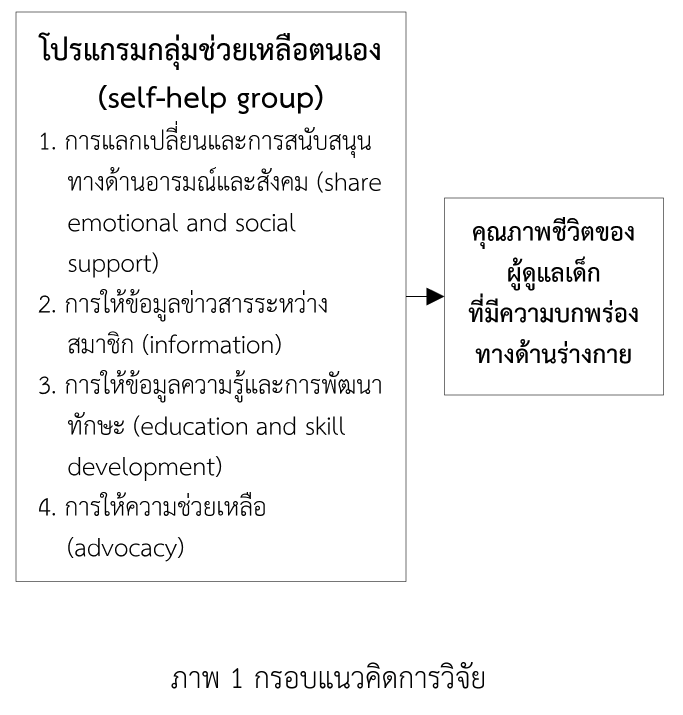
การวิจัยครั้งนี้เป็นการวิจัยกึ่งทดลองเพื่อศึกษาผลของโปรแกรมกลุ่มช่วยเหลือตนเองต่อคุณภาพชีวิตของผู้ดูแลเด็กที่มีความบกพร่องทางด้านร่างกาย ตัวอย่าง คือ ผู้ดูแลหลักซึ่งทำหน้าที่ดูแลเด็กที่มีความบกพร่องทางด้านร่างกายที่เข้ารับบริการต่อเนื่องของศูนย์การศึกษาพิเศษประจำจังหวัดอุดรธานี จำนวน 30 คนได้มาโดยการเลือกแบบเฉพาะเจาะจง เครื่องมือที่ใช้ในการวิจัย คือ โปรแกรมกลุ่มช่วยเหลือตนเอง มี 4 กิจกรรม ได้แก่ การแลกเปลี่ยนสนับสนุนด้านอารมณ์และสังคม การให้ข้อมูลข่าวสาร การให้ความรู้และการพัฒนาทักษะ และ การช่วยเหลือ ใช้เวลาในการทดลองใช้ 12 สัปดาห์ ตรวจสอบความตรงของโปรแกรโดยผู้ทรงคุณวุฒิ จำนวน 3 ท่าน มีค่าดัชนีความตรงเชิงเนื้อหาเท่ากับ .67 – 1.00 เครื่องมือที่ใช้ในการเก็บรวบรวมข้อมูล คือ แบบสอบถามคุณภาพชีวิตขององค์การอนามัยโลกชุดย่อ ฉบับภาษาไทย (WHOQL-BREF-THAI) มีค่าความเชื่อมั่นเท่ากับ .84 วิเคราะห์ข้อมูลโดยหาร้อยละ ค่าเฉลี่ย ส่วนเบี่ยงเบนมาตรฐาน และ Paired t-test
ผลการวิจัยพบว่า ผู้ดูแลหลักซึ่งทำหน้าที่ดูแลเด็กที่มีความบกพร่องทางด้านร่างกายมีคะแนนเฉลี่ยคุณภาพชีวิตโดยรวมสูงกว่าก่อนการทดลอง อย่างมีนัยสำคัญทางสถิติที่ระดับ .05 ดังนั้น พยาบาลและทีมสุขภาพควรมีการจัดตั้งกลุ่มช่วยเหลือตนเองของผู้ดูแลเด็กที่มีความบกพร่องทางด้านร่างกายในชุมชน และนำโปรแกรมกลุ่มช่วยเหลือตนเองไปใช้กับผู้ดูแลผู้ป่วยอื่น ๆ เพื่อให้ผู้ดูแลผู้ป่วยในชุมชนมีความรู้ ในการดูแลผู้ป่วยที่ดีขึ้น และส่งเสริมคุณภาพชีวิตด้านสุขภาพกาย ด้านจิตใจ ด้านสัมพันธภาพทางสังคม และด้านสิ่งแวดล้อมของผู้ดูแลผู้ป่วยต่อไป
Downloads
เอกสารอ้างอิง
Boonvas, K., Supanunt, T., Chunhabordee, A., & Wae, N. (2017). Caregiver stress and needs in caring disable. The Southern College Network Journal of Nursing and Public Health, 4(1), 205-216.
Department of Empowerment of Persons with Disabilities. (2019). Annual report 2019 of department of empowerment of persons with disabilities. Bangkok: Department of Empowerment of Persons with Disabilities.
Department of Mental Health, Ministry of Public Health. (2002). WHOQOL–BREF–THAI. Retrieved from https://www.dmh.go.th/test/download/view.asp?id=17
Hansakunachai, T., Rungpiwal, R., Sutchritpongsa, S., & Chonchaiya, W. (2013). Child development and behavior textbook, volume 3, healthy child care. Bangkok: Beyond Enterprise.
Homjandee, J., & Dangdomyouth, P. (2019). The effect of social support emphasizing community participation program on burden of community schizophrenic patient’s caregivers. Journal of the Police Nurses,11(2), 433-443.
Hongtiyanon, T., & Tipawong, A. (2018). Relationships Between social support and quality of life in schizophrenia patient. Journal of The Royal Thai Army Nurse, 19(special edition), 487-494.
Jaroennon, P., & Kongplee, L. (2018). Knowledge, attitude and practice in obesity prevention among public health students, Valaya Alongkorn Rajabhat University under the Royal Patronage, Pathum Thani province. Nakhon Phanom University Journal, Academic Conference 25th Anniversary Edition of Boromarajonani College of Nursing, Nakhon Phanom, special edition, 87-94.
Kingkaew, J. (2014). Group therapy and psychiatric nurses. The Journal of Psychiatric Nursing and Mental Health, 28(1), 1-15.
Ministry of Education. (2009). Announcement Subject: Determination of categories and criteria for persons with disabilities in education 2009. Bangkok: Ministry of Education.
Namprom, N., & Suklerttrakul, T. (2020). Nursing of newborns and children with specific health problems. Chiang Mai: Faculty of Nursing, Chiang Mai University.
Ngocharit, N., & Kumhom, N. (2017). Parents' viewpoints towards educational management, special education center of Mukdahan province, special education, Northeast. Academic Journal of Mahamakut Buddhist University Isan Campus, 1(2), 24-42.
Nontapan, P. (2018). Factors related to behaviors promoting preschooler development among child care providers, Songkhla province. Journal of Prachomklao College of Nursing, Phetchaburi Province, 1(3), 10–24.
Nursing Division, Ministry of Public Health. (2016). Organizing self-care promotion services using a group process. NP.
Sinhachotsukpat, L. (2022). Effects of self-help group program on the mental health self-care behaviors of schizophrenic patients’ caregivers in Nawung sub-district community, Mueang District, Phetchaburi. The Journal of Psychiatric Nursing and MentalHealth, 36(1), 19-32.
Suntaphun, P. (2022). The effects of using self–help group on the mental health self–care behavior of elderly with hypertension in the community. Regional Health Promotion Center 9 Journal, 17(3), 50–61.
Suntaphun, P., Bussahong, S., Srisoem, C., & Vongtree, A. (2020). The effects of using self –help group on the mental health self–care behavior of schizophrenia patients, caregivers in community. UMT-Poly Journal, 17(2), 50-61.
Takpho, A., Somprasert, C., & Imkome, E. (2017). The effects of a self-help group program on the mental health self-care of schizophrenic patients’ primary caregivers. Journal of Nursing and Health care, 35(3), 171–119.
Teepapal, T., & Saetew, P. (2018). The conducting of self-help group in adolescents with cancer: Nurses’s roles. Journal of Health Research and Innovation, 1–14.
Tharakham, E., & Chaichanasang, T. (2020). Effects a self-help group on quality of life of caregivers of child with cerebral palsy. Journal of Nursing and Health care, 43(3), 171–179.
Thongsri, K. (2021). Best quality of life according to Buddhist psychology. Journal of MCU Humanities Review, 7(2), 325-377.
UNICEF Thailand. (2021). Data: Monitoring the situation of children and women. Retrieved from https://data.unicef.org/resources/children-with-disabilities-report-2021
Walz, G., & Bleue, C. (1992). Developing support groups for students: Helping students cope with crises. Michigan: ERIC.
ดาวน์โหลด
เผยแพร่แล้ว
รูปแบบการอ้างอิง
ฉบับ
ประเภทบทความ
สัญญาอนุญาต
ลิขสิทธิ์ (c) 2023 วารสารพยาบาลตำรวจ

อนุญาตภายใต้เงื่อนไข Creative Commons Attribution-NonCommercial-NoDerivatives 4.0 International License.
ผลงานที่ได้ตีพิมพ์แล้วจะเป็นลิขสิทธิ์ของวารสารพยาบาลตำรวจ