The Effect of Dohsa-hou on Reducing Attention Deficit and Hyperactivity in 6- to 12-Year-Old Children and Adolescents
DOI:
https://doi.org/10.12982/BSCM.2026.25Keywords:
Dohsa-hou, hyperactivity, attention deficitAbstract
Objective To investigate the effect of Dohsa-hou relaxation on reducing attention deficit and hyperactivity.
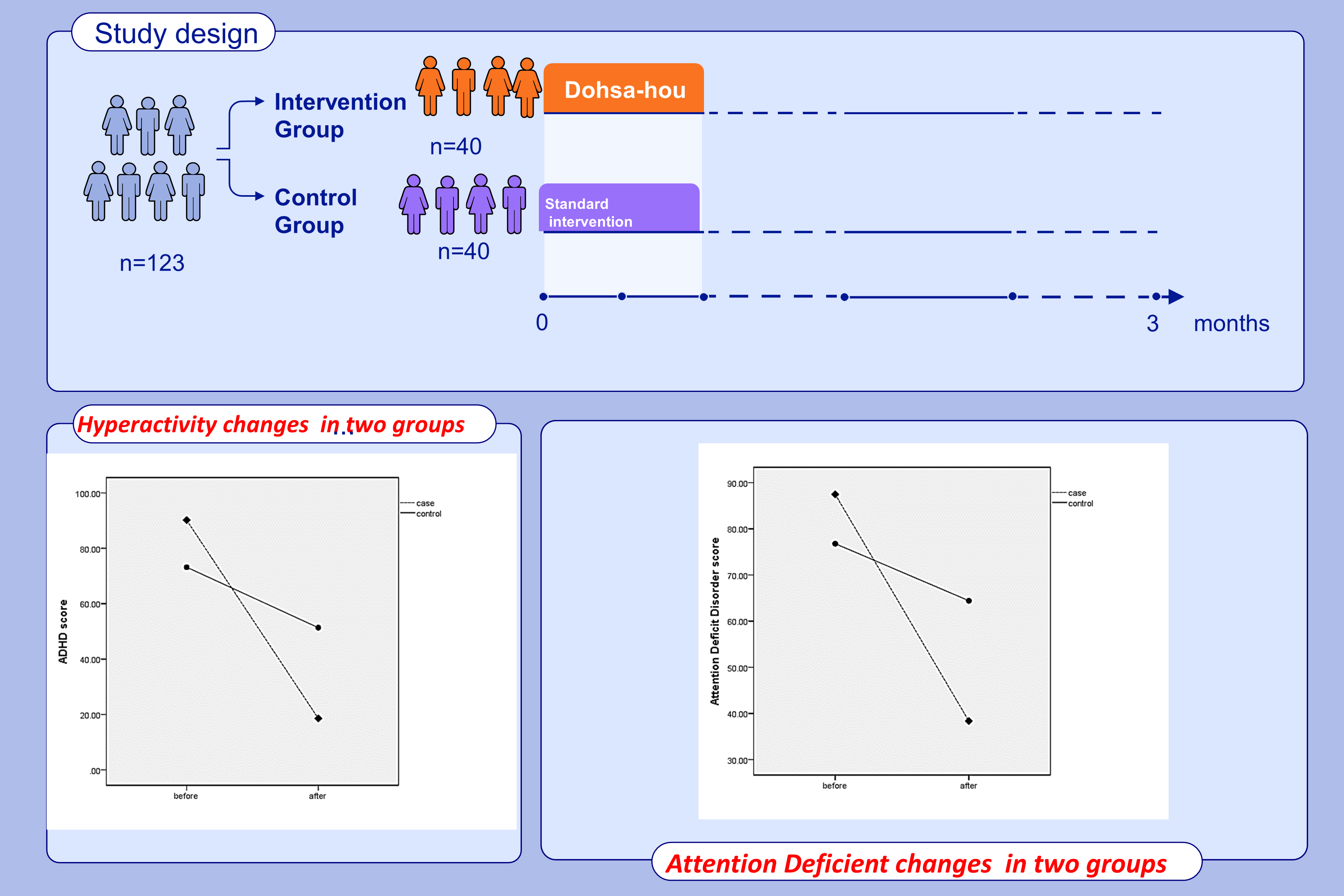
Methods Eighty attention-deficit/hyperactivity disorder (ADHD) children aged 6-12 years were selected by the block randomization method and assigned to one of two groups, either the experimental or the control groups. The data collection tools included a demographic questionnaire, Conners’ parent rating scale and Conners’ (CPRS-RS) child attention deficit index.
Results The mean score of the children’s hyperactivity and attention deficit decreased after the intervention, which was statistically significant (p < 0.001). The children’s hyperactivity scores were significantly different before and after the intervention in the two groups: a greater reduction was observed in the intervention group than in the control group. Although hyperactivity decreased in both groups, it was more pronounced in the intervention group (p < 0.001). The comparison of children’s attention deficit scores before and after the intervention in the two groups also showed that Dohsa-hou treatment led to a more significant decrease in the scores of the intervention group (p < 0.001).
Conclusion Dohsa-hou exercises can lead to reduced hyperactivity and attention deficit in most children with ADHD.
References
Wodka EL, Loftis C, Mostofsky SH, Prahme C, Larson JC, Denckla MB, Mahone EM. Prediction of ADHD in boys and girls using the D-KEFS. Arch Clin Neuropsychol. 2008;23:283-93.
Woodard R. The diagnosis and medical treatment of ADHD in children and adolescents in primary care: a practical guide. Pediatr Nurs. 2006;32:363-70.
Woodard R. The diagnosis and medical treatment of ADHD in children and adolescents in primary care: a practical guide. Pediatr Nurs. 2006;32:363-70.
Lotfizadeh M, Safavi P, Sedehi M, Shahidi F. The effect of direct and indirect education on attitudes of parents of children with attention deficit disorder and hyperactivity towards medication treatments. European Health Psychologist. 2014;16:104-12.
Dadkhah A. The effect of psychorehabilitation program on children with physical and mental disability. Rehabilitation J. 2007;8:57-62.
Dadkhah A, Sazmand AH, Behnia F, Karimlou M. Madan M. Comparing pre-writing skills in childern having attention deficit and hyperactivity disorder (ADHD) with normal children of 4-6 years of old in Arak city in 2003-2004. Archives of Rehabilitation. 2005;6:11-6.
Mirzaie H, Hassani Mehraban A, Hosseini SA, Ghasemi Fard F, Jafari Oori M. Comparison of the effect of filial and adlerian play therapy on attention and hyperactivity of children with attention deficit hyperactivity disorder: A randomized clinical trial. Iran Rehabil J. 2019;17:341-50.
Karimzadeh M, Khodabakhshi-koolaee A, Davoodi H, Heidari H. Experiences and worries in mothers with children suffering from ADHD: a grounded theory study. Caspian Journal of Pediatrics. 2020;6:390-8
Fabiano GA, Chacko A, Pelham Jr WE, Robb J, Walker KS, Wymbs F, Sastry AL, Flammer L, Keenan JK, Visweswaraiah H, Shulman S. A comparison of behavioral parent training programs for fathers of children with attention-deficit/hyperactivity disorder. Behav Ther. 2009;40:190-204.
Peck HL, Kehle TJ, Bray MA, Theodore LA. Yoga as an intervention for children with attention problems. School Psychology Review. 2005;34:415-24.
Troksa K, Kovacich N, Moro M, Chavez B. Impact of central nervous system stimulant medication use on growth in pediatric populations with attention‐deficit/hyperactivity disorder: a review. Pharmacotherapy. 2019;39:665-76.
Shahim S, Mehrangiz L, Yousefi F. Prevalence of attention deficit hyperactivity disorder in a group of elementary school children. Iranian Journal of Pediatrics. 2007;17(s2):211-6.
Hasan SS, Bal N, Baker I, Kow CS, Khan MU. Adverse drug reaction reporting and prescribing trends of drugs for attention deficit hyperactivity disorder in primary care england, 2010–2019. J Atten Dis. 2022; 26:467-75.
Ornoy A. The impact of intrauterine exposure versus postnatal environment in neurodevelopmental toxicity: long-term neurobehavioral studies in children at risk for developmental disorders. Toxicol Lett. 2003; 140:171-81.
Poursadoughi A, Dadkhah A, Pourmohamadreza-Tajrishi M, Biglarian A. Psycho-rehabilitation method (Dohsa-hou) and quality of life in children with cerebral palsy. Iranian Rehabilitation Journal. 2015;13:28-33.
Kabir RS, Haramaki Y, Ki H, Ohno H. Self-active relaxation therapy (SART) and self-regulation: a comprehensive review and comparison of the Japanese body movement approach. Front Hum Neurosci. 2018;12:21. PubMed PMID: 29472851
Pourkamali T, Yazdkhasti F, Oreizi HR, Chitsaz A. Compare the effectiveness of Dosah-hou treatment and Massage Therapy on improvement of happiness, social adjustment, hope, mental health and quality of life in patients with Parkinson’s disease. Health Psychol. 2017;6(22):145-62.
Fujino H. Effects of Dohsa‐hou relaxation on body awareness and psychological distress 1. Jpn Psychol Res. 2012;54:388-99.
Dehkordi A, Dadkhah A, Mehrdadfar F, Mohtashami T, Kordestani D. The effectiveness of Dohsa-hou psychorehabilitation on social interaction in children with cerebral palsy. Iranian Journal of Exceptional Children. 2011;11:245-54.
Toshiro I. On the application of the Dohsa-hou (motor action therapy) for patients with panic attack disorder. Rehabil Psychol. 2001;29:1–10.
Azari A, Kazemi-Zahrani H, Mohammadi Khashouei M. The Effectiveness of Dohsa Psycho-Motor Rehabilitation Method on Fatigue Severity, Sleep Quality, and Resilience Promotion of Patients with Multiple Sclerosis (MS). Glob J Health Sci. 2017;9:201-7.
Tsuru M. The experiencing to make the most effective use of oneself ability of a chronic schizophrenia person to clinical application of Dohsa‐hou. Rehabil Psychol. 1993;21:1–9.
Ohno H, Takeshita PD K, & Dadkhah A. The application of Dohsa-Hou to children with attention deficit hyperactivity disorder (ADHD). Saudi Journal Disability and Rehabilitation. 1999;11:18-24
Naoki E. Process of emotional control by Dohsa-hou in a schizophrenia patient. Rehabil Psychol. 2003;30:21–9.
Ghuman JK, Arnold LE, Anthony BJ. Psychopharmacological and other treatments in preschool children with attention-deficit/hyperactivity disorder: current evidence and practice. J Child Adolesc Psychopharmacol. 2008;18:413-47.
Khoushabi K, Pouretemad HR, Mohammadi M, Mohammadkhani P. The Prevalence of ADHD in primary school students in Tehran. Medical Journal of the Islamic Republic of Iran. 2006;20:147-50.
Alizadeh H. A theoretical explanation on attention deficit/hyperactivity disorder: Behavioral inhibition model and nature of self-control. Except Child. 2005; 5:323-48.
Imura O, Furukawa T, Fujino H, Sugao S, Chervenkova V, Teruta E, Harada S, Nihei Y, Hibi Y. Introduction to Dohsa-hou: An integrated Japanese body-mind therapy. Osaka: Osaka University. 2016.
Yazdkhasti F, Shahbazi M. The effect of Dohsa-hou psychic rehabilitation on reduction of attention deficit hyperactivity Disorder and increase of social skills among students with ADHD age 6 to 11. Journal of Research in Rehabilitation Sciences. 2013;8:877-87.
Adachi M. Study of a cognitive effects model in Dohsa‐hou for the elderly. Japanese Psychological Research. 2015;57:218-30.
Haramaki Y, Kabir RS, Abe K, Yoshitake T. Promoting self-regulatory management of chronic pain through dohsa-hou: single-case series of low-functioning hemodialysis patients. Front Psychol. 2019; 10:1394. PubMed PMID: 31281283
Kangarlou M, Lotfi Kashani F, Vaziri S. Investigating the effects of parents training on decreasing behavioral problems of children suffering from attention deficit and hyperactivity disorder (ADHD). Medical Science Journal of Islamic Azad Univesity-Tehran Medical Branch. 2012;22:216-20.
Nejatifar S, Babarabi M. The Effectiveness of psycho-rehabilitation dohsa-hou on improving sleep problems in children with attention deficit/hyperactivity disorder. Empowering Exceptional Children. 2022;12:14-25.
Kuwashima R, Sakakibara M, Yoshikawa Y. Dohsa‐hou relaxation enhances cardiac parasympathetic activity assessed by analysis of heart rate variability. Jpn Psychol Res. 2023;65:124-32.
Danforth JS, Harvey E, Ulaszek WR, McKee TE. The outcome of group parent training for families of children with attention-deficit hyperactivity disorder and defiant/aggressive behavior. J Behav Ther Exp Psychiatry. 2006;37:188-205.
Konno Y. Psychotherapeutic approach of Dohsa-hou in Japan. Journal of Special Education Research. 2016; 5:11-7.
Kamikura Y, Shimizu R. The Development of Japanese Body Psychotherapy. International Body Psychotherapy Journal. 2021;20:124-9.