The Pivotal Role of Forensic Medicine in Disaster Management and Mass Casualty Incidents: Lessons Learned from the Hat Yai Flood Disaster
Hat Yai Flood Forensic Lessons
DOI:
https://doi.org/10.31584/jhsmr.20261447Keywords:
disaster victim identification (DVI), forensic medicine, Hat Yai Flood, humanitarian forensic action (HFA), mass casualty incidents (MCIs), post-mortem examinationAbstract
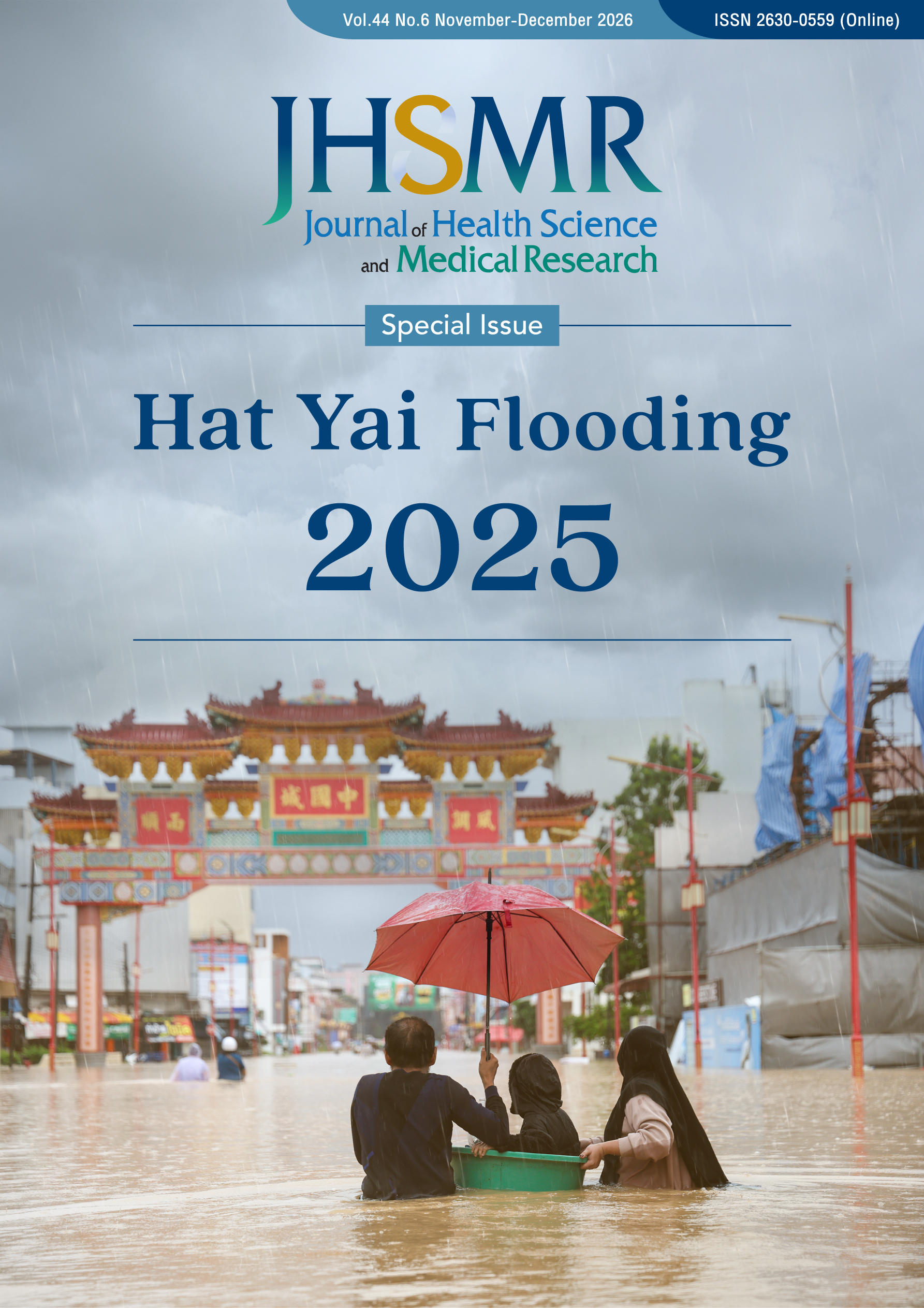
Disaster management is an intricate, multi-layered public health and security challenge that scales exponentially during mass casualty incidents (MCIs). While emergency medical services and clinical teams prioritize the immediate triage, stabilization, and treatment of survivors, forensic medicine is tasked with the systematic management, examination, documentation, and identification of the deceased. This article comprehensively examines the critical, multidisciplinary responsibilities of forensic practitioners in the wake of natural catastrophes and anthropogenic crises. It details the operational execution of Disaster Victim Identification (DVI) protocols, evaluates the role of forensic pathology in determining the cause and mechanism of death, and discusses the evolving paradigm of Humanitarian Forensic Action (HFA). Using the Hat Yai flood disaster in Southern Thailand as a primary case study, this paper critically analyzes the unique logistical adaptations, multidisciplinary coordination, and operational challenges encountered during real-world flooding responses. Furthermore, this paper addresses how contemporary scientific technologies intersect with international human rights law and legal frameworks to restore dignity to victims and provide closure to grieving communities.
References
National Institute of Justice. Mass fatality incidents: a guide for human forensic identification. Washington (DC): U.S. Department of Justice, Office of Justice Programs; 2005.
Hilaris Publisher. Forensic medicine in mass casualty events and disaster management. J Forensic Med 2024;15:114-23.
Schuliar Y, Knudsen PJ. The role of the forensic pathologist in mass disasters. Forensic Sci Med Pathol 2012;8:164-73.
International Committee of the Red Cross. Management of dead bodies after disasters: a field manual for first responders. 2nd ed. Geneva: International Committee of the Red Cross; 2020.
Cordner S, Tidball-Binz M. Humanitarian forensic action-its origins and future. Forensic Sci Int 2017;279:65-71.
INTERPOL. Disaster victim identification guide. Lyon: INTERPOL; 2023.
Blenkin M, Evans W. Forensic odontology in disaster victim identification (DVI). Forensic Sci Int 2010;201:3-8.
Dirkmaat DC, Cabo LL, Ousley SD, Symes SA. New perspectives in forensic anthropology. Am J Phys Anthropol 2008;137(Suppl 47):33-52.
Downloads
Published
How to Cite
Issue
Section
License
Copyright (c) 2026 Prince of Songkla University, Thailand

This work is licensed under a Creative Commons Attribution-NonCommercial-NoDerivatives 4.0 International License.