
การบริหารสารน้ำทางหลอดเลือดดำในผู้ป่วยวิกฤต
Article Sidebar
Main Article Content
บทคัดย่อ
การบริหารสารน้ำทางหลอดเลือดดำเป็นหนึ่งในการรักษาที่ใช้กันอย่างแพร่หลายทั้งผู้ป่วยในแผนกฉุกเฉินและหอผู้ป่วยวิกฤต ซึ่งเป็นกลุ่มผู้ป่วยที่มีความเสี่ยงต่อการเกิดไตวายเฉียบพลัน หลายครั้งการให้สารน้ำมีความจำเป็นเพื่อป้องกันการเกิดไตวายเฉียบพลัน เนื่องจากสามารถช่วยเพิ่มปริมาตรในระบบไหลเวียนโลหิตเพื่อให้ไตได้รับเลือดไปเลี้ยงอย่างเพียงพอ ในทางกลับกันการได้รับสารน้ำมากเกินไปอาจส่งผลเสียต่อผู้ป่วยภาวะวิกฤตได้โดยเฉพาะทำให้เกิดภาวะน้ำเกินหรือน้ำท่วมปอด ในการให้สารน้ำต้องคำนึงถึงสาเหตุของภาวะไตวายเฉียบพลัน สมดุลสารน้ำในร่างกายผู้ป่วย ชนิดของสารน้ำ และปริมาตรสารน้ำ ปัจจุบันมีการศึกษาเกี่ยวกับการให้สารน้ำชนิดต่างๆ ในผู้ป่วยวิกฤตซึ่งผลลัพธ์ที่ได้อาจนำมาสู่การเปลี่ยนแปลงการบริหารสารน้ำในอนาคต บทความนี้ได้รวบรวมถึงวิธีการบริหารสารน้ำในผู้ป่วยภาวะวิกฤต และผลกระทบของสารน้ำแต่ละชนิด รวมถึงผลเสียจากการได้รับสารน้ำมากเกินไปต่อผลลัพธ์ทางคลินิก
Article Details

อนุญาตภายใต้เงื่อนไข Creative Commons Attribution-NonCommercial-NoDerivatives 4.0 International License.
บทความนี้ตีพิมพ์ภายไต้การอนุญาต CC BY-NC-ND 4.0 ซึ่งอนุญาตให้สามารถใช้บทความนี้พื่อวัตถุประสงค์ใดๆ ก็ตามที่ไม่ใช่เชิงพาณิชย์ โดยต้องมีการอ้างถึงที่มาของบทความอย่างครบถ้วน ใครก็ตามสามารถคัดลอกและแจกจ่ายทุกส่วนของบทความนี้โดยไม่ต้องขออนุญาตจากผู้ประพันธ์หรือสมาคมโรคไตแห่งประเทศไทย
เอกสารอ้างอิง
Finfer S, Myburgh J, Bellomo R. Intravenous fluid therapy in critically ill adults. Nat Rev Nephrol. 2018;14(9):541–57.
Hoste EAJ, Bagshaw SM, Bellomo R, Cely CM, Colman R, Cruz DN, et al. Epidemiology of acute kidney injury in critically ill patients: the multinational AKI-EPI study. Intensive Care Med. 2015;41(8):1411–23.
McConnell KW, Coopersmith CM. Pathophysiology of Septic Shock: From Bench to Bedside. Presse Med. 2016;45 (4 Pt 2):e93–8.
Hoste EA, Maitland K, Brudney CS, Mehta R, Vincent J-L, Yates D, et al. Four phases of intravenous fluid therapy: a conceptual model. Br J Anaesth. 2014;113(5):740–7.
Myburgh JA, Mythen MG. Resuscitation Fluids. N Engl J Med. 2013;369(13):1243–51.
Evans L, Rhodes A, Alhazzani W, Antonelli M, Coopersmith CM, French C, et al. Surviving sepsis campaign: international guidelines for management of sepsis and septic shock 2021. Intensive Care Med. 2021;47(11):1181–247.
Asfar P, Teboul J-L, Radermacher P. High versus low blood-pressure target in septic shock. N Engl J Med. 2014;371(3):283–4.
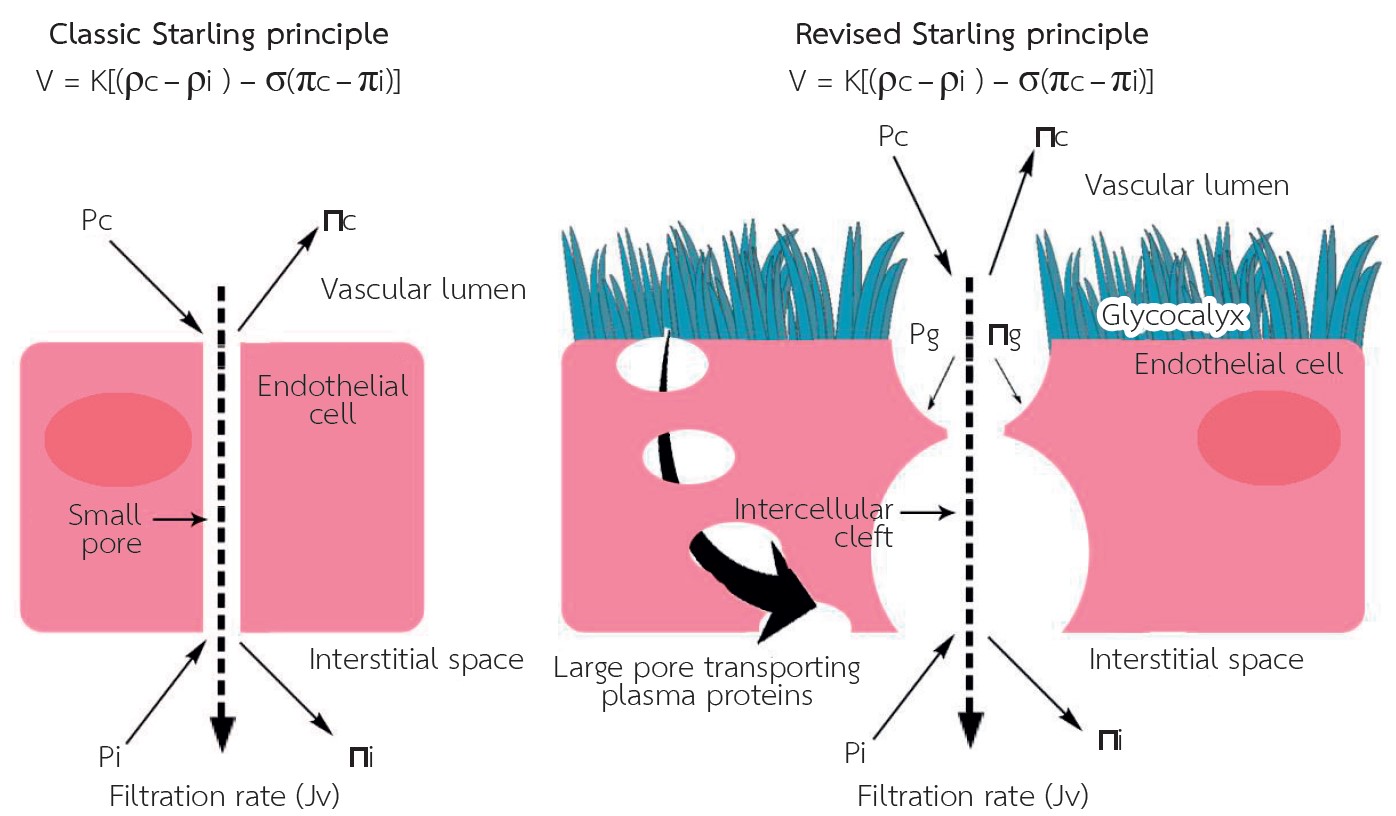
Woodcock TE, Woodcock TM. Revised Starling equation and the glycocalyx model of transvascular fluid exchange: an improved paradigm for prescribing intravenous fluid therapy. Br J Anaesth. 2012;108(3):384–94.
Perner A, Prowle J, Joannidis M, Young P, Hjortrup PB, Pettilä V. Fluid management in acute kidney injury. Intensive Care Med. 2017;43(6):807–15.
Brunkhorst FM, Meier-Hellmann A, Moerer O, Grond S, Rossaint R, Kuhnt E, et al. Intensive Insulin Therapy and Pentastarch Resuscitation
in Severe Sepsis. N Engl J Med. 2008;358(2):125-39.
Myburgh JA, Finfer S, Bellomo R, Billot L, Cass A, Gattas D, et al. Hydroxyethyl Starch or Saline for Fluid Resuscitation in Intensive Care. N Engl J Med. 2012;367(20):1901–11.
Perner A, Haase N, Guttormsen AB, Tenhunen J, Klemenzson G, Åneman A, et al. Hydroxyethyl starch 130/0.42 versus Ringer’s acetate in severe sepsis. N Engl J Med. 2012;367(2):124–34.
Caironi P, Gattinoni L. The clinical use of albumin: the point of view of a specialist in intensive care. Blood Transfuse. 2009;7(4):259–67.
Finfer S, Bellomo R, Boyce N, French J, Myburgh J, Norton R, et al. A comparison of albumin and saline for fluid resuscitation in the intensive care unit. N Engl J Med. 2004;350(22):2247–56.
Caironi P, Tognoni G, Masson S, Fumagalli R, Pesenti A, Romero M, et al. Albumin replacement in patients with severe sepsis or septic shock. N Engl J Med. 2014;370(15):1412–21.
Lobo DN, Awad S. Should chloride-rich crystalloids remain the mainstay of fluid resuscitation to prevent “pre-renal” acute kidney injury?: con. Kidney Int. 2014;86(6):1096–105.
Sen A, Keener CM, Sileanu FE, Foldes E, Clermont G, Murugan R, et al. Chloride content of fluids used for large volume resuscitation is associated with reduced survival. Crit Care Med. 2017;45(2):e146–53.
Pfortmueller CA, Fleischmann E. Acetate-buffered crystalloid fluids: Current knowledge, a systematic review. J Crit Care. 2016;35:96–104.
Shaw AD, Bagshaw SM, Goldstein SL, Scherer LA, Duan M, Schermer CR, et al. Major complications, mortality, and resource utilization after open abdominal surgery: 0.9% saline compared to Plasma-Lyte. Ann Surg. 2012;255(5):821–9.
Young P, Bailey M, Beasley R, Henderson S, Mackle D, McArthur C, et al. Effect of a Buffered Crystalloid Solution vs Saline on Acute Kidney Injury Among Patients in the Intensive Care Unit: The SPLIT Randomized Clinical Trial. JAMA. 2015;314(16):1701–10.
Self WH, Semler MW, Wanderer JP, Wang L, Byrne DW, Collins SP, et al. Balanced Crystalloids versus Saline in Noncritically Ill Adults. N Engl J Med. 2018;378(9):819–28.
Semler MW, Self WH, Wanderer JP, Ehrenfeld JM, Wang L, Byrne DW, et al. Balanced Crystalloids versus Saline in Critically Ill Adults. N Engl J Med. 2018;378(9):829–39.
Zampieri FG, Machado FR, Biondi RS, Freitas FGR, Veiga VC, Figueiredo RC, et al. Effect of Slower vs Faster Intravenous Fluid Bolus Rates on Mortality in Critically Ill Patients: The BaSICS Randomized Clinical Trial. JAMA. 2021;326(9):830–8.
Finfer S, Micallef S, Hammond N, Navarra L, Bellomo R, Billot L, et al. Balanced Multielectrolyte Solution versus Saline in Critically Ill Adults. N Engl J Med. 2022.
Hammond DA, Lam SW, Rech MA, Smith MN, Westrick J, Trivedi AP, et al. Balanced Crystalloids Versus Saline in Critically Ill Adults: A Systematic Review and Meta-analysis. Ann Pharmacother. 2020;54(1):5–13.
Ichai C, Vinsonneau C, Souweine B, Armando F, Canet E, Clec’h C, et al. Acute kidney injury in the perioperative period and in intensive care units (excluding renal replacement therapies). Ann Intensive Care. 2016;35(2):151-65.
Joannidis M, Druml W, Forni LG, Groeneveld ABJ, Honore PM, Hoste E, et al. Prevention of acute kidney injury and protection of renal function in the intensive care unit: update 2017 : Expert opinion of the Working Group on Prevention, AKI section, European Society of Intensive Care Medicine. Intensive Care Med. 2017;43(6):730–49.
Malbrain MLNG, Langer T, Annane D, Gattinoni L, Elbers P, Hahn RG, et al. Intravenous fluid therapy in the perioperative and critical care setting: Executive summary of the International Fluid Academy (IFA). Ann Intensive Care. 2020;10:64.
Annane D, Siami S, Jaber S, Martin C, Elatrous S, Declère AD, et al. Effects of fluid resuscitation with colloids vs crystalloids on mortality in critically ill patients presenting with hypovolemic shock: the CRISTAL randomized trial. JAMA. 2013;310(17):1809–17.
