Role of Village Health Volunteers on Acceptance of Basic Vaccines by Thai Muslim Parents in the Three Southern Border Provinces of Thailand
Keywords:
Three Southern Border Provinces, Vaccine Acceptance, Basic VaccinesAbstract
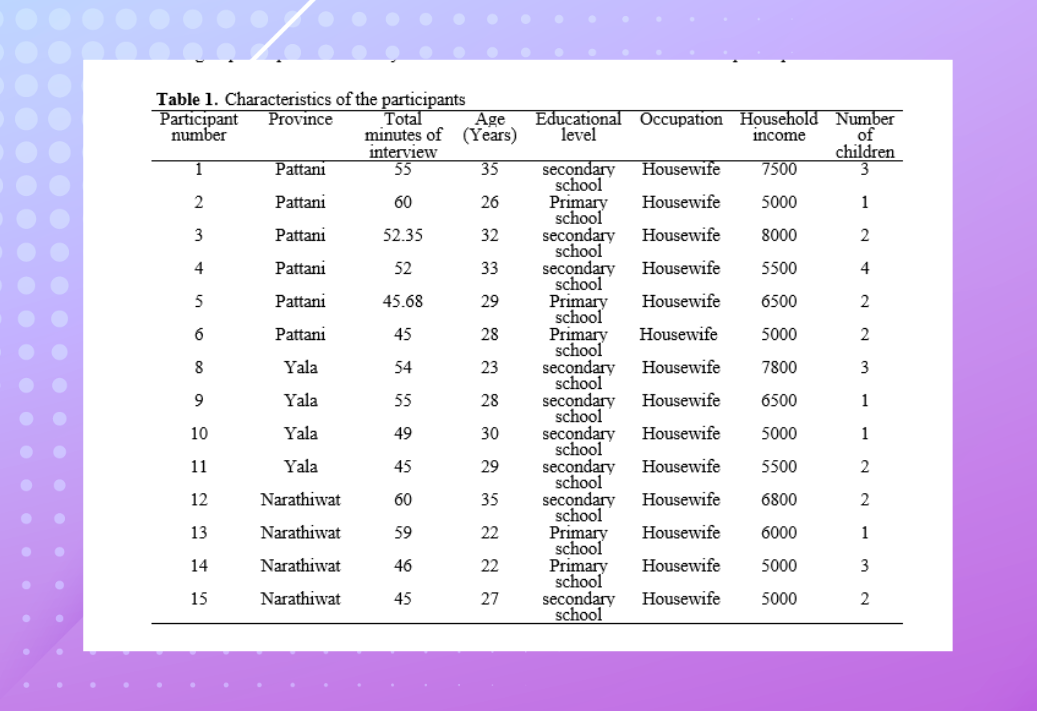
Vaccine hesitancy and refusal is still the predominant problem in the three southern border provinces of Thailand. Despite the availability of immunization services, vaccine hesitancy and refusal remain a pressing public health challenge in the three southern border provinces of Thailand, particularly among Muslim communities. This study employed a qualitative phenomenological approach to depict role of VHVs on acceptance of basic vaccines in the three southern border provinces of Thailand, through the perspectives by Thai Muslim parents. Fifteen participants were selected through purposive sampling based on the inclusion criteria. In-depth, face-to-face, semi-structured interviews were conducted. After data saturation, data were then thematically analyzed using a modified Colaizzi's seven-step method for data analysis. Thematic analysis generated five key themes in relation to explore an important role of VHVs on acceptance of basic vaccines in the three southern border provinces of Thailand, through the perspectives by Thai Muslim parents, comprised: Theme 1: The role of building trust; Theme2: Effective communication; Theme 3: Being a role model; Theme 4: Working with service mind; and Theme 5: Having work ability. The results will be beneficial for strategies or planning related to promoting basic vaccine coverage in children in the Muslim majority regions.
References
Cohen, A., & Cohen, P. T. (2024). Paradigm Conflict: Village Health Volunteers and Public Health in Thailand. Asia Pacific Journal of Anthropology, 25(3), 251–265. https://doi.org/10.1080/14442213.2024.2357104;SUBPAGE:STRING:FULL
Colaizzi, P. (1978). Psychological research as the phenomenologist views it. Retrieved from https://philpapers.org/rec/COLPRA-5
Daya, S., Lillahkul, N., No-in, J. (2018). Experience of Parents of Thai Muslim Childhood Aged 0 - 5 Years in Yala Province Who Rejected the Service of Expanded Program Immunization with Vaccine. He02.Tci-Thaijo.Org. Retrieved from https://he02.tci thaijo.org/index.php/JDMS/article/view/247857
Domeng, R, & Prateepko, T, (2019). Factors Affecting Parents on Seeking Basic Immunization Program for Their Children Aged 0-5 Years in Pattani Province. Journal of Health Science, 28(2), 224–235.
Hajietae, P., & Langputeh, I. (2020). A model of vaccine coverage promotion in children aged 0–5 years in Yala. Al-Hikmah Journal, 10(20), 137–148.
Jewjinda, C., & Chalermnirundorn, N. (2018). The Development of Village Health Volunteers (VHVs) Model with a Participatory Process.
Jiaviriyaboonya, P. (2022). Anthropological study of village health volunteers’ (VHVs’) socio-political network in minimizing risk and managing the crisis during COVID-19. Heliyon, 8(1). https://doi.org/10.1016/j.heliyon.2021.e08654
Jinarong, T., Chootong, R., Vichitkunakorn, P., & Songwathana, P. (2023). Muslim parents’ beliefs and factors influencing complete immunization of children aged 0–5 years in a Thai rural community: a qualitative study. BMC Public Health, 23(1), 1–10. https://doi.org/10.1186/S12889-023-15273-Y/FIGURES/1
Kowitt, S. D., Emmerling, D., Fisher, E. B., & Tanasugarn, C. (2015). Community health workers as agents of health promotion: analyzing Thailand’s village health volunteer program. SpringerSD Kowitt, D Emmerling, EB Fisher, C TanasugarnJournal of Community Health, 2015•Springer, 40(4), 780–788. https://doi.org/10.1007/S10900-015-9999-Y
Krassanairawiwong, T., Suvannit, C., Pongpirul, K., & Tungsanga, K. (2021). Roles of subdistrict health office personnel and village health volunteers in Thailand during the COVID-19 pandemic. BMJ Case Reports CP, 14(9), e244765. https://doi.org/10.1136/BCR-2021-244765
Li, Z., & Sun, X. (2025). Social factors influencing behavioral intentions to vaccinate: personality traits and cues to action. Frontiers in Psychology, 16, 1481147. https://doi.org/10.3389/FPSYG.2025.1481147/BIBTEX
Langputeh, P., Ranee, S., & Langputeh, S. (2023). Kabah model: A community participation model for vaccine coverage promotion in children aged 0–5 years in the southern border provinces, Thailand. Disease Control Journal, 49(2), 407–417.
Liku, N., Mburu, C., Lafond, K. E., Ebama, M., Athman, M., Swaleh, S., … Dawa, J. (2024). A qualitative assessment of influenza vaccine uptake among children in Kenya. Vaccine: X, 19, 100507. https://doi.org/10.1016/J.JVACX.2024.100507
Ogutu, E. A., Ellis, A. S., Hester, K. A., Rodriguez, K., Sakas, Z., Jaishwal, C., … Freeman, M. C. (2024). Success in vaccination programming through community health workers: a qualitative analysis of interviews and focus group discussions from Nepal, Senegal and Zambia. BMJ Open, 14(4), e079358. https://doi.org/10.1136/BMJOPEN-2023-079358
Phiriyasart, F., Aimyong, N., Jirapongsuwan, A., & Roseh, N. (2023). COVID-19 vaccine hesitancy among older adult Thai Muslim people: A case-control study. Vaccine, 41(41), 6048–6054. https://doi.org/10.1016/J.VACCINE.2023.08.050
Shumba, C. S., Kiraithe, P., Kambo, I., & Shaibu, S. (2024). Community Health Volunteers’ experiences of implementing COVID-19 vaccine education and promotion in Kenya: a qualitative descriptive study. Frontiersin.OrgCS Shumba, P Kiraithe, I Kambo, S ShaibuFrontiers in Public Health, 2024•frontiersin.Org, 12. https://doi.org/10.3389/FPUBH.2024.1406959/FULL
Sirithammaphan, U., Chaisang, U., & Pongrattanamarn, K. (2023). Barriers to measles mumps rubella vaccine acceptance in the three southern border provinces of Thailand. Clinical and Experimental Vaccine Research, 12(4), 298. https://doi.org/10.7774/CEVR.2023.12.4.298
Stamidis, K. V., Bologna, L., Bisrat, F., Tadesse, T., Tessema, F., & Kang, E. (2019). Trust, Communication, and Community Networks: How the CORE Group Polio Project Community Volunteers Led the Fight against Polio in Ethiopia’s Most At-Risk Areas. The American Journal of Tropical Medicine and Hygiene, 101(4 Suppl), 59. https://doi.org/10.4269/AJTMH.19-0038
Tepsing, P., Laeheem, K., & Chelong, A. (2024). Reasons for non-acceptance of the COVID-19 vaccination by some Muslims in the three southern border provinces of Thailand. Journal of Health and Social Sciences, 14(1), 67–78.
Vanderslott, S., Joynes-Burgess, K., Kadambari, S., O’Dwyer, E., Alidu, L., & Vandrevala, T. (2024). Examining the role of community champions to promote vaccine uptake in under-served communities in the United Kingdom: Lessons from the COVID-19 pandemic. SSM-Qualitative Research in Health, 5, 100436. https://doi.org/10.1016/J.SSMQR.2024.100436
WHO. (n.d.). Ten threats to global health in 2019. Retrieved June 2, 2025, from https://www.who.int/news-room/spotlight/ten-threats-to-global-health-in-2019
Downloads
Published
Issue
Section
License
Copyright (c) 2025 International Journal of Public Health and Health Sciences

This work is licensed under a Creative Commons Attribution-NonCommercial-NoDerivatives 4.0 International License.
If the manuscript is accepted for publication, copyright of the article shall be assigned to the IJPHS. After acceptance of a manuscript, the authors will be requested to complete a copyright transfer agreement form