Microscopic Characteristics, Total Phenolic Content and Antioxidant Activities of Root and Stem from Sida acuta Burm. F. extracts
Keywords:
Antioxidant activity, Microscopic Characteristics, Sida acuta, Total phenolic contentAbstract
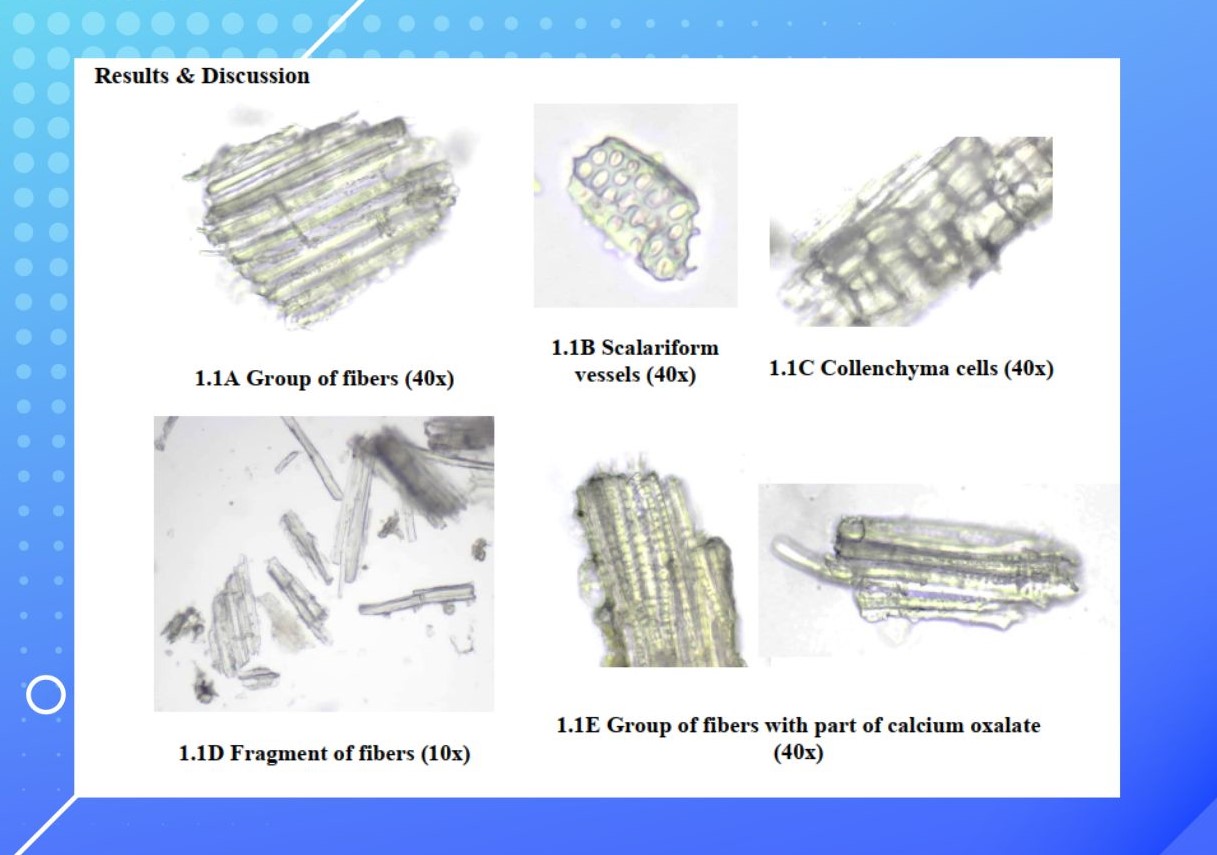
Sida acuta (SA) belongs to the family Malvaceae. It is a medicinal plant that has long been used in Thai traditional and alternative medicine. It is used in the composition of various medicinal formulations such as anti-edema, analgesic and nourishing elements. The objectives for this study were to characterize microscopically, analyze the total phenolic content by Folin-Ciocalteu method and investigate antioxidant activities by DPPH and FRAP methods of roots and stems from SA extracts. SA were extracted using three methods as follows; maceration with 95% ethanol, maceration with 50% ethanol and decoction. The microscopical characteristics of SA powder have distinguishing features such as a large number of fibers and vascular bundles both in stems and roots. The most vascular bundle types are bordered pitted and reticulate vessels. The result of total phenolic content found that the roots and stems extract from SA are in the range of 16.97±0.42 to 86.19±1.00 mg GAE/g extract. The 95% ethanolic extract from roots of (SARE95) showed the highest total phenolic content of 86.19±1.00 mg GAE/g extract. The DPPH method showed that the roots had better antioxidant activity than the stems compared to extraction with the same solvent. It was determined that 50% ethanolic extract of the root (SARE50) had the best antioxidant activity, followed by 95% ethanolic extract of the root (SARE95) with EC50 values of 48.05±1.23 and 55.38±0.56 µg/mL, respectively. The 95% ethanolic extract of roots (SARE95) contained the highest FRAP and TEAC (137.07±2.73 mg Fe(II)/g extract and 57.77±1.31 mg Trolox/g extract). The roots and stems extracts demonstrated good antioxidant activities. Therefore, future investigations of the active substances and other biological activities are warranted.
References
Gulcin, I. (2020). Antioxidants and antioxidant methods: An updated overview. Archives of toxicology, 94(3): 651-715.
Bouayed, J., Piri, K., Rammal, H., Dicko, A., Desor, F., Younos, C. & Soulimani, R. (2007). Comparative evaluation of the antioxidant potential of some Iranian medicinal plants. Food Chemistry, 104(1): 364-368.
Soobrattee, M. A., Neergheen, V. S., Luximon-Ramma, A., Aruoma, O. I. & Bahorun, T. (2005). Phenolics as potential antioxidant therapeutic agents: mechanism and actions. Mutation Research/Fundamental and Molecular mechanisms of mutagenesis, 579(1-2): 200-213.
Thondawada, M., Mulukutla, S., Raju, K. R. S., Dhanabal, S. P. & Wadhwani, A. D. (2016). In vitro and In vivo Evaluation of Sida Acuta burm. f. (Malvaceae) for its Anti-oxidant and Anti-Cancer Activity. Der. Pharma. Chem, 8, 396-402.
Senthilkumar, R. P., Bhuvaneshwari, V., Malayaman, V., Ranjithkumar, R. & Sathiyavimal, S. (2018). Phytochemical screening of aqueous leaf extract of Sida acuta Burm. F. and its antibacterial activity. Journal of Emerging Technologies and Innovative Research, 5(8), 474-478.
Palaksha, M.B, & K. Ravishankar. (2012). Phytochemical Screening and Evaluation of in vitro Antibacterial and Antihelminthic Activities of S. acuta Leaf Extracts, J. Chem, 4(11), 4757 – 4761.
Nalini, T.J., Ramesh Babu, H.N., Rajeshwari, N. & Manjunath, K. M. (2024). GCMS Profile, Antioxidant and Cytotoxic Properties of Sida acuta (Burm f.). International Quarterly Journal of Life Sciences, 19(2), 250-257.
Srinivasan, N. & Murali, R. (2022). An overview of the traditional importance, phytochemistry, and pharmacological properties of Sida acuta Burm. f. Annals of Phytomedicine, 11(2), 245-54.
Bureau of Drug and Narcotic, Department of Medical Sciences, Ministry of Public Health. (2017). Handbook of data preparation for prescribing herbal medicine standards (Thai Herbal Pharmacopoeia, THP), bangkok: 1241 Miraculus.
Folin, O. & Ciocalteu, V. (1927). On tyrosine and tryptophane determinations in proteins. The Journal of Biological Chemistry, 73(2): 627-650.
Yamazaki, K., Hashimoto, A., Kokusenya, Y., Miyamoto, T. & Sato, T. (1994). Electrochemical method for estimating the antioxidative effects of methanol extracts of crude drugs. Chemical and pharmaceutical bulletin, 42(8): 1663-1665.
Brand-Williams, W., Cuvelier, M. E. & Berset, C. L. W. T. (1995). Use of a free radical method to evaluate antioxidant activity. LWT-Food science and Technology, 28(1): 25-30.
Benzie, I. F. & Strain, J. J. (1999). Ferric reducing/antioxidant power assay: direct measure of total antioxidant activity of biological fluids and modified version for simultaneous measurement of total antioxidant power and ascorbic acid concentration. In Methods in enzymology, Vol. 299, pp. 15-27.
Firuzi, O., Lacanna, A., Petrucci, R., Marrosu, G. & Saso, L. (2005). Evaluation of the antioxidant activity of flavonoids by “ferric reducing antioxidant power” assay and cyclic voltammetry. Biochimica et Biophysica Acta (BBA)-General Subjects, 1721(1-3): 174-184.
Mohideen, S., Sasikala, E. & Gopal, V. (2002). Pharmacognostic studies on Sida acuta burm. f. Ancient science of life, 22(1): 57.
Nduche, M. U. & Offor, I. C. (2019). Anatomical studies of Sida acuta Burm, Spigelia anthelmia Linn, Centrosema pubescens Benth, Pueraria phaseoloides (ROXB) Benth, Justicia carnea Lindl and their taxonomic significance. International Journal of Research in Pharmacy and Biosciences, 6(2): 21-32.
Antony, A. & Farid, M. (2022). Effect of temperatures on polyphenols during extraction. Applied Sciences, 12(4), 2107.
Muneeswari, P., Bhaskaran, S. K. & Poornima, K. (2019). Identification of Active Pharmaceuticals of Sida acuta Burm. F Leaves using GC-MS and HPTLC Fingerprinting. International Journal of Pharmaceutical Science and Research, 10(3): 1194-07.
Subramanya, M. D., Pai, S. R., Upadhya, V., Ankad, G. M., Bhagwat, S. S. & Hegde, H. V. (2015). Total polyphenolic contents and in vitro antioxidant properties of eight Sida species from Western Ghats, India. Journal of Ayurveda and integrative medicine, 6(1): 24.
Bahar, E., Alam, M., Hossain, M., Nath, B. & Ara, J. (2013). Antioxidant (In-vitro) and Thrombolytic (In-Vitro) activity of Petroleum ether extract of Sida acuta. The Pharma Innovation, 2(3, Part A): 89.
Thondawada, M., Mulukutla, S., Raju, K. R. S., Dhanabal, S. P. & Wadhwani, A. D. (2016). In vitro and In vivo Evaluation of Sida Acuta burm. f. (Malvaceae) for its Anti-oxidant and Anti-Cancer Activity. Der. Pharma. Chem., 8: 396-402.
Downloads
Published
Issue
Section
License
Copyright (c) 2025 International Journal of Public Health and Health Sciences

This work is licensed under a Creative Commons Attribution-NonCommercial-NoDerivatives 4.0 International License.
If the manuscript is accepted for publication, copyright of the article shall be assigned to the IJPHS. After acceptance of a manuscript, the authors will be requested to complete a copyright transfer agreement form